2026 Best Automatic Valves for Global Buyers Guide?
The demand for automatic valves continues to rise among global buyers. These devices play a crucial role in various industries, enhancing efficiency and control. Their automatic mechanisms streamline processes, reducing manual intervention and saving time. Factors like reliability and durability are essential when selecting automatic valves.
Choosing the right automatic valve can be challenging. There are numerous options available in the market. Buyers must consider specifications such as size, material, and pressure ratings. Understanding these technical details can lead to better purchasing decisions. However, it's easy to overlook quality for cost.
The 2026 Best Automatic Valves Guide aims to simplify this process. It offers insights based on expert analysis and field experience. This guide encompasses various models, ensuring informed choices for global buyers. Emphasizing both performance and value, it encourages reflection on specific needs and long-term benefits.

Overview of Automatic Valves in the Global Market
The global market for automatic valves is expanding rapidly. These essential components play a crucial role in various industries, including oil and gas, water treatment, and manufacturing. Automatic valves enhance system efficiency, reduce the risk of leaks, and improve safety measures. As concerns about energy conservation grow, the demand for reliable automatic valves continues to rise.
However, not all automatic valves are created equal. Buyers must consider several factors before making a purchase. A key concern is the materials used in construction. Different environments demand different materials for durability and corrosion resistance. Moreover, performance specifications vary widely. Some valves are better suited for high pressures, while others excel in handling varying temperature ranges. It is essential for companies to assess their specific needs carefully.
Knowledge of local regulations is also critical. Compliance ensures smooth operation and reduces liability risks. Many buyers feel overwhelmed by choices available in the market. Each option has its advantages and drawbacks. Some may require more maintenance, while others may have higher upfront costs. A well-informed decision will ultimately save time and money in the long run. Buyers are encouraged to seek expert consultation for personalized guidance.
Key Features and Benefits of Automatic Valves
Automatic valves are essential components in various industries, controlling the flow of liquids and gases. These valves enhance efficiency and safety in systems like water treatment, oil and gas, and chemical processing. One key feature of automatic valves is their ability to operate without manual intervention. This reduces the risk of human error and ensures consistent performance.
Another significant benefit is real-time monitoring. Many automatic valves come equipped with sensors that provide feedback on operational status. This allows for quick adjustments and timely maintenance, which can reduce downtime significantly. In some cases, their remote operation capabilities improve accessibility to challenging areas in a facility.
However, automatic valves are not without challenges. Installation can require specialized knowledge, and initial costs might be higher than manual alternatives. Additionally, users must remain vigilant about calibration and maintenance, as neglect can lead to malfunctions. Striking a balance between automation and manual oversight often results in the best operational outcomes. Understanding these dynamics is crucial for those considering automatic valves in their systems.
Top Manufacturers and Brands of Automatic Valves in 2026
In 2026, the demand for automatic valves continues to rise. This trend can be attributed to their essential role in industries such as water treatment, oil, and gas. According to a recent industry report, the global automatic valve market is projected to reach $9 billion by 2026, reflecting a CAGR of 5.6%. Companies are increasingly investing in automation, which enhances efficiency and reduces human error.
Leading manufacturers in this sector prioritize innovation and durability. They focus on providing valves that can withstand extreme conditions. However, challenges remain. Many buyers struggle to choose the right product amidst a crowded market. The plethora of options makes it difficult to assess quality and reliability. Accurate information is crucial for making informed decisions. Reports suggest that up to 30% of buyers feel overwhelmed by options.
Experts recommend evaluating suppliers based on their certifications and customer reviews. Understanding product specifications and performance metrics is vital. This knowledge allows buyers to avoid pitfalls and select the best automatic valves for their needs. A well-informed decision can lead to long-lasting efficiency and reduced operational costs. Automation is not without its complexities, and careful contemplation is essential in this evolving market.
Comparative Analysis of Different Types of Automatic Valves
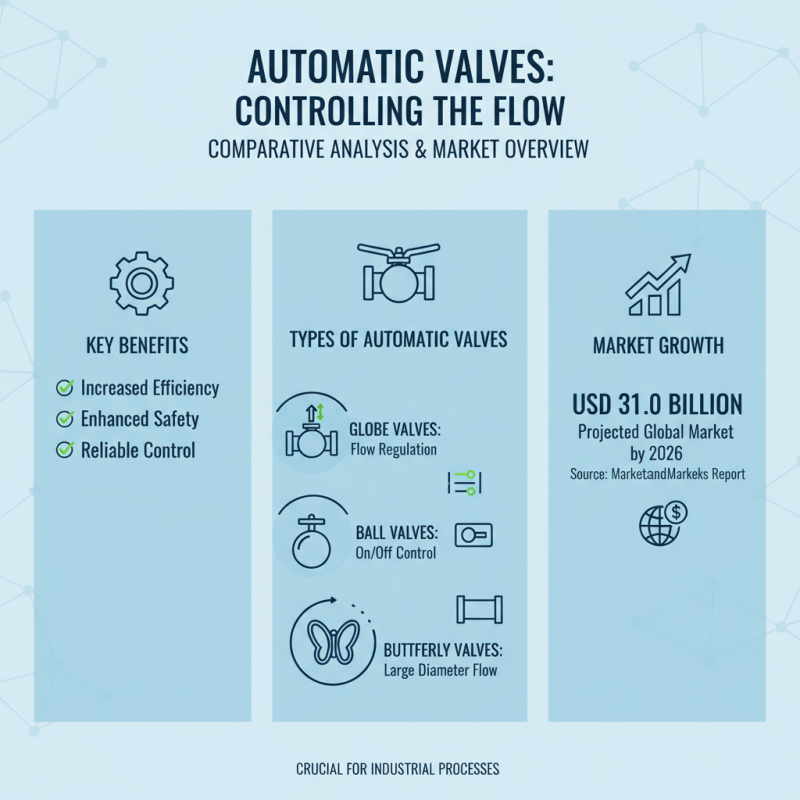
Automatic valves play a crucial role in various industrial processes. Their functionality can greatly affect efficiency and safety. According to a report by MarketsandMarkets, the global demand for automatic valves is projected to reach USD 31.0 billion by 2026. This growing market reflects the need for reliable control methods across sectors.
Different types of automatic valves include globe, ball, and butterfly valves, each with unique advantages. Globe valves offer precise flow control, making them ideal for throttling applications. In contrast, ball valves provide quick shut-off capabilities, enhancing operational safety. Butterfly valves are often lighter and more cost-effective, suitable for large volume applications. However, each type has limitations. Globe valves can be pressure drop-heavy, while ball valves may require more frequent maintenance.
Industry professionals emphasize the importance of selecting the right valve type based on application. A survey found that 70% of engineers admitted to challenges in making the best choice. Understanding the specific conditions and requirements of a system is vital. Effective valve selection can lead to long-term savings and improved efficiency, yet many still overlook this critical step in system design.
Guidelines for Selecting the Right Automatic Valve for Your Needs
Selecting the right automatic valve is crucial for various applications. When evaluating options, consider factors like fluid type, operating pressure, and temperature. Each valve serves specific needs. Understanding your requirements helps narrow choices.
Evaluate the materials used in the valve construction. Corrosion resistance and compatibility with fluids are critical. Not all materials perform equally well in every environment. Research the specifications thoroughly to ensure longevity and effectiveness. Safety features are also essential for reliable operation.
Installation and maintenance should be manageable. Some valves are complex, requiring specialized skills. A simple design often leads to better reliability but may lack advanced features. Regular checks will ensure they function optimally. Learning from past experiences can guide future decisions. Consider reviews and real-world applications for guidance.