Please upgrade your web browser now. Internet Explorer 6 is no longer supported.>

2026 Best Solar Motion Flood Light for Outdoor Security

A dark driveway can change in seconds: a car turns in, a gate shifts, or someone crosses the edge of a garden. A Solar Motion Flood Light offers targeted illumination without a wired power connection, but its real value depends on more than a bright product photo. Sensor response, battery capacity, panel placement, weather resistance, and beam coverage all shape what happens after sunset.

The wider energy trend is encouraging, though it does not guarantee any individual light will perform well. IEA PVPS’ Trends in Photovoltaic Applications 2024 reports that global installed solar photovoltaic capacity exceeded 1.6 terawatts by the end of 2023. IEA Executive Director Fatih Birol described solar as “the new king of the world’s electricity markets.” That is a statement about solar energy’s growing role, not an endorsement of a specific security light.

Small details matter. A panel shaded by an eave may collect less energy; a sensor aimed at a busy sidewalk may trigger too often. Winter daylight can also shorten charging time. Check the claimed lumen output, battery specifications, detection range, and ingress-protection rating against the actual site. Then consider where the panel will face and whether its cable can reach the light. Real conditions vary. Even a well-reviewed model may disappoint in deep shade or prolonged cloudy weather. This guide compares key features and trade-offs to help identify a dependable option for 2026, without treating marketing claims as field-test results.
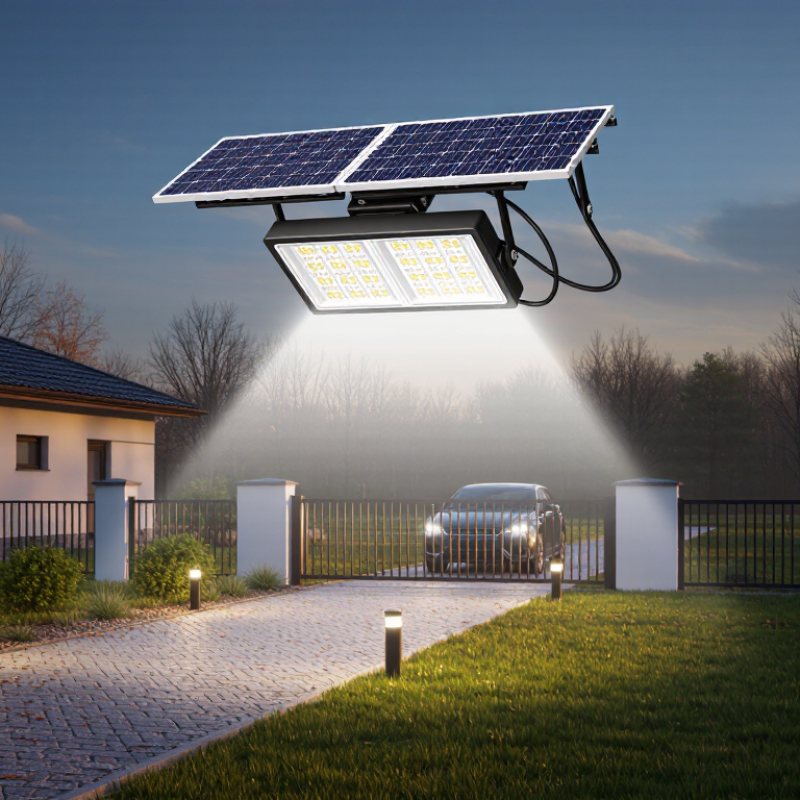
2026 Best Solar Motion Flood Light for Outdoor Security

What Solar Motion Flood Lights Are and How They Support Outdoor Security

Solar motion flood lights combine a photovoltaic panel, rechargeable battery, motion sensor, and bright LED array. During daylight, the panel converts sunlight into stored energy. After dark, the sensor detects movement and switches on the light, often for a set period. The exact detection range and brightness vary by model, so check product specifications before choosing one.

That matters. A sudden wash of light can make a person approaching a side gate or driveway easier to notice from indoors. It can also help visitors find a path without leaving a light on all night. But a flood light is only one part of outdoor security; it does not replace sturdy locks, clear sightlines, or attentive neighbors. Windblown branches, passing pets, and warm moving objects may trigger some sensors.

Placement affects how well the light works. Mount it high enough to cover the entry, but aim it away from bedroom windows and nearby roads. Keep the solar panel clear of roof shadows, leaves, and dust. Cloudy weather and winter days can reduce charging, so runtime may drop when illumination is needed most. Testing the sensor after installation helps reveal blind spots. A little patience helps.

How Solar Panels, Batteries, and Motion Sensors Work Together

A solar motion floodlight works as a small energy chain. In daylight, the panel converts sunlight into electricity, and a charge controller stores it in the battery. After dark, a passive infrared sensor detects changes in heat, such as a person crossing the driveway. The controller then switches on the LEDs. That handoff matters: keeping the light dim or off between detections can preserve stored energy. The U.S. Department of Energy’s Energy Saver guide reports that LEDs use at least 75% less energy than incandescent bulbs. That comparison helps explain why efficient LEDs suit battery-powered lighting, but it does not promise a specific runtime.

The battery’s usable capacity must cover cloudy-day charging gaps and repeated nighttime activations. NREL’s PVWatts documentation models solar output using local weather and panel orientation, underscoring why rated panel wattage alone cannot predict performance. A panel shaded by a roof edge may charge slowly, even on a bright day. Sensor range and light duration also need attention; an overly sensitive setting can trigger the lamp for passing branches or small animals. Easy to miss. IEA’s Renewables 2024 report recorded nearly 510 GW of renewable capacity additions worldwide in 2023, with solar PV supplying about three-quarters. That growth reflects wider solar adoption, though a compact security light still depends on careful placement and realistic expectations.

2026 Best Solar Motion Flood Light for Outdoor Security

How the solar panel, battery, and motion sensor work together

Example energy balance: A system starts the evening with 30 Wh of usable battery energy. Over 12 hours, a 0.2 W standby load uses 2.4 Wh, while a 20 W light switched on for 10 minutes in total uses about 3.3 Wh. About 24.3 Wh remains. The solar panel charges the battery during daylight; the motion sensor helps limit lighting to periods when movement is detected.

Illustrative calculation, not a product specification. Actual energy use and solar charging vary with hardware, settings, sunlight, and motion activity.

Which Features Matter Most in a 2026 Solar Flood Light

A useful solar flood light starts with a panel and battery suited to the installation site. A shaded porch may receive far less charging sunlight than an open driveway. Check whether the panel can be angled toward direct sun, and whether its cable reaches a bright mounting spot. Battery capacity matters on long winter nights, when charging time is shorter. A high brightness rating looks impressive, but sustained light may drain the battery faster. Balance output with the area you need to see.

Motion detection should be adjustable, not merely powerful. Look for controls for sensitivity, detection distance, and how long the light stays on. A narrow path may need a shorter range than a wide yard. Adjustable lamp heads can direct light toward a gate without shining into a neighbor’s window. Check the stated weather resistance and mounting hardware, too; wind and driving rain expose weak fittings quickly. Real performance still depends on sunlight, temperature, and placement. That part is easy to underestimate. A sensor can also trigger on passing branches or pets, so some trial and adjustment may be needed after installation.

2026 Best Solar Motion Flood Light for Outdoor Security - Which Features Matter Most in a 2026 Solar Flood Light

Feature What to Look For Why It Matters Practical Guidance
Brightness and light distribution A clearly stated lumen rating, with beam coverage or head-adjustment details Lumens indicate total light output, while beam shape and mounting position determine how well the area is illuminated. Around 1,000–3,000 lumens can suit many residential entrances and yards. Compare coverage as well as the headline lumen figure; output may vary by operating mode.
Motion detection PIR detection, an adjustable detection zone, and a stated range and angle A configurable sensor can reduce false triggers and help cover likely approach paths. Many outdoor units specify roughly 20–40 ft of detection and a wide-angle field of view. Actual performance depends on mounting height, temperature, and the direction of movement.
Solar panel and placement A panel that can face the sun, with a cable long enough to reach a sunny location if the light is shaded Available sunlight affects charging; a well-positioned separate panel can help when the fixture itself is under an eave or tree cover. Check the panel’s orientation and the installation instructions. Shade, short winter days, and cloudy weather can reduce charging, so advertised runtime is not guaranteed in every location.
Battery capacity and runtime Battery capacity, replaceability where available, and runtime conditions or modes A larger stored-energy capacity can provide more reserve, but runtime also depends on brightness, trigger frequency, and solar charging. Compare watt-hours (Wh) when listed; milliamp-hours (mAh) alone can be misleading because battery voltage differs. Look for separate runtime details for motion-only and continuous-light modes.
Weather resistance A clearly stated IP rating for the assembled product The rating helps indicate protection from dust and water exposure outdoors. IP65 indicates dust-tight protection and protection against water jets under specified test conditions; it does not mean the light is designed for submersion. Follow the installation guidance.
Lighting modes and controls Selectable motion-only, dim-to-bright, or dusk-to-dawn modes, plus adjustable sensitivity or timer settings Different modes balance visibility, convenience, and stored energy. Check which settings can be adjusted and whether continuous or all-night lighting uses more energy than motion-triggered operation.
Color temperature A stated color temperature in kelvins (K), or selectable white-light settings Color temperature affects the appearance of the light and how it fits the surroundings. About 3,000 K looks warmer; about 4,000–5,000 K appears more neutral to cool. Choose based on preference and nearby lighting rather than assuming one setting is universally best.
Adjustable light heads Independently aimable heads or a fixture designed to direct light away from windows and neighboring properties Aiming helps cover entrances and paths while limiting unwanted glare and light spill. Check the adjustment range and mount the fixture where the beam can be directed toward the target area.
Installation and mounting Included mounting hardware, clear instructions, and a suitable location for both sensor and solar panel Correct positioning affects sun exposure, detection, and light coverage. Before installation, confirm the recommended mounting height, panel cable reach, and whether the wall or eave receives direct sunlight.
Specifications and support Published test conditions, warranty terms, and replacement or service information Clear specifications make performance easier to compare and help set realistic expectations. Prefer listings that explain how brightness and runtime were measured instead of relying on unsupported claims such as “all-night” operation.

Note: Figures are general comparison guidelines, not guarantees. Solar charging and runtime vary with season, weather, shade, installation, and usage.

How to Choose a Light for Your Property and Security Needs

Choosing a solar motion flood light starts with the place it must cover. Measure the driveway, gate, or side path, then check the maker’s stated beam angle and sensor range. A wide beam can leave a dark strip if mounted too high. Aim for useful coverage, not the largest lumen number. A bright beam pointed at a neighbor’s window is poor placement.

Solar performance depends on daylight at the panel, not just the lamp’s rating. The National Renewable Energy Laboratory’s National Solar Radiation Database provides hourly solar and weather data for site-level assessment. Check shade across the panel’s actual position, especially in winter. A panel under tree branches may collect less energy than its location suggests. It happens.

Match battery capacity and operating mode to your routine. A busy entrance may trigger dozens of activations nightly; a dim standby setting can help preserve runtime. Look for adjustable sensitivity, a practical timer, and a clear battery replacement policy. For wet or dusty locations, verify the stated IP rating and installation limits. DOE guidance on outdoor lighting emphasizes choosing light levels suited to the task; more brightness is not automatically better security. I would still test the sensor after installation: passing cars, swaying branches, or a small misalignment can cause unwanted triggers.

How to Install, Maintain, and Position Solar Motion Flood Lights

Choose a location with a clear view of the area you want to protect. Check for trees, roof edges, and fences that could block sunlight or trigger the sensor unnecessarily. Direct midday sun helps charging, but seasonal shade can be easy to overlook.

Before mounting, test the light at the planned spot. Follow the supplied instructions, and keep the solar panel facing the sun for your location. Keep it clear. Mount the fixture securely at the recommended height, using suitable fixings for the wall or post. A small level helps prevent a visibly crooked installation. Angle the sensor toward likely approaches, not toward a busy road or swaying branches. Walk through the detection zone after dark and adjust the angle or sensitivity if needed.

Keep the panel and sensor free of dust, leaves, and spiderwebs. A soft, damp cloth is usually enough; avoid abrasive cleaners. Check the mount and fasteners every few months, especially after strong winds. If the light dims, confirm the panel gets enough sun before assuming the battery has failed. Cloudy weeks can reduce charge. It is tempting to point the floodlight too high for maximum coverage, but that may leave nearby steps or doorways in shadow. Test the actual ground area, then make one small adjustment at a time.