What is the Best Actuator Valve for 2026 Applications?
As industries evolve, the demand for efficient and reliable actuator valves continues to grow. In 2026, selecting the best actuator valve becomes crucial for various applications. This choice impacts numerous sectors, including manufacturing, oil and gas, and water treatment.
Different actuator valve types offer unique features. Electric, pneumatic, and hydraulic actuators each have specific strengths and weaknesses. Businesses must carefully consider these factors. Finding the right actuator valve can be challenging, as performance varies. For instance, the wrong valve could lead to inefficiencies or even failures.
In the ever-changing landscape of technology, staying updated is vital. New materials and designs emerge frequently, reshaping market standards. However, not all innovations are worthwhile. Some may promise better performance but fail in real-life applications. It's essential to approach these advancements with a critical eye. Future applications will demand even more from actuator valves, pushing boundaries and requiring continuous assessment.

Factors Influencing Actuator Valve Selection for 2026 Applications
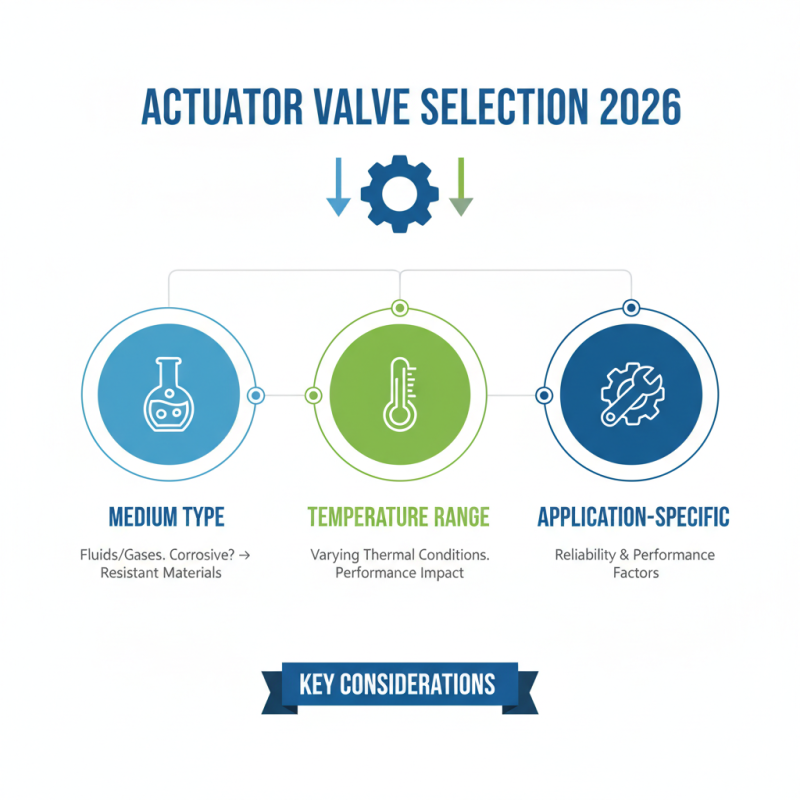
Selecting the right actuator valve for 2026 applications involves several critical factors. One key consideration is the type of medium the valve will control. Different fluids or gases require specific materials to ensure reliability and performance. For example, corrosive substances need resistant materials. Temperature range also plays an essential role. Each application has varying thermal conditions, impacting valve performance.
Another influential factor is the required speed and response time. Some applications may demand quick adjustments, while others can function with slower responses. Matching these needs with the actuator valve's specifications is vital. Additionally, the environment in which the valve operates should not be overlooked. Extreme conditions, such as high humidity or dust, can affect the valve over time.
Lastly, operational costs are always in play. While a more expensive valve might offer better features, it’s crucial to evaluate the long-term benefits. Balancing initial investment with durability and performance can be challenging. Thus, understanding these factors is essential for making informed choices in actuator valve selection for future applications.
Emerging Technologies in Actuator Valves: Trends to Watch in 2026
As we approach 2026, actuator valves are evolving rapidly alongside emerging technologies. The increasing demand for automation is transforming industries. Innovations in materials and designs are making actuator valves more efficient and reliable. Smart actuators, equipped with advanced sensors, can provide real-time data. This data aids in predictive maintenance, reducing downtime significantly.
Trends indicate a shift towards sustainability. Many designs now incorporate eco-friendly materials. Yet, challenges remain. The integration of artificial intelligence can complicate implementation. Not all facilities are ready for these advancements. There’s also the issue of compatibility with existing systems. Not every organization can or should rush into these technologies without careful planning.
Another interesting development is the rise of wireless control systems. These systems enhance flexibility and reduce installation costs. However, security concerns are significant. Protecting against cyber threats is crucial. Proper training for staff will be essential as well. Many companies may find this step daunting, leading to delays in adoption.
Emerging Technologies in Actuator Valves: Trends to Watch in 2026
Comparison of Electric, Pneumatic, and Hydraulic Actuator Valves
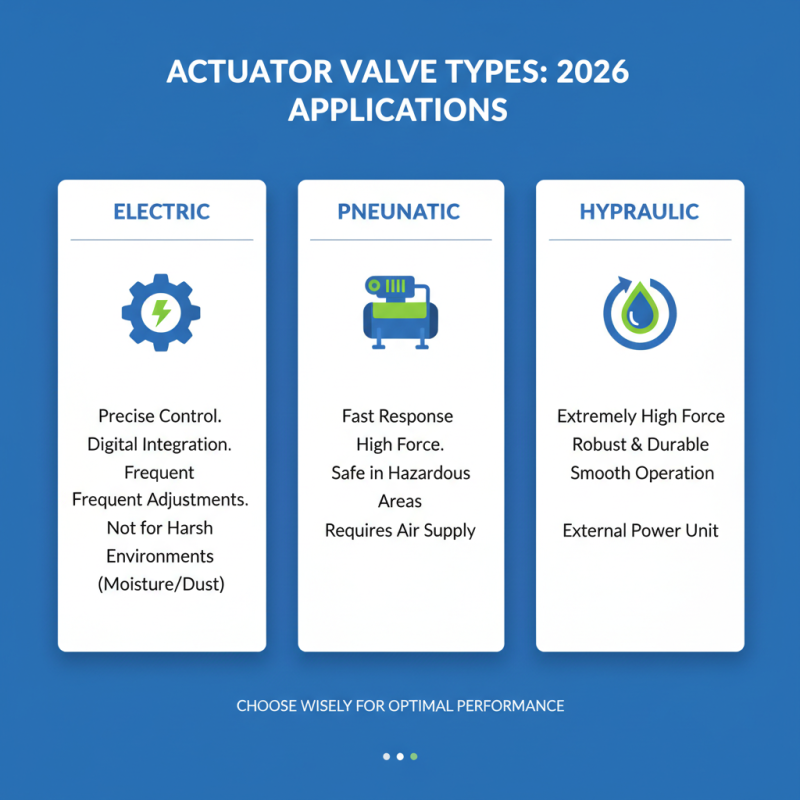
When selecting an actuator valve for 2026 applications, consider the three main types: electric, pneumatic, and hydraulic. Each type has unique features that influence performance and suitability. Electric actuators offer precise control and are easy to integrate with digital systems. They are efficient for applications requiring frequent adjustments. However, they may struggle in harsh environments where moisture and dust are present.
Pneumatic actuators use compressed air to operate valves. They are quick and efficient, making them ideal for high-speed applications. Still, their reliance on air supply can be a limitation. Maintenance is typically required to keep the air lines clear. Additionally, pneumatic systems can be less precise compared to electric options.
Hydraulic actuators excel in high-pressure environments. They provide strong force and are useful in heavy-duty applications. Yet, their complexity can lead to potential leaks and maintenance challenges. The choice between these actuator valves will depend on the specific application requirements, environment, and performance needs. Each type comes with its drawbacks, emphasizing the importance of thoughtful evaluation.
Industry-Specific Applications of Actuator Valves in 2026
In 2026, actuator valves are critical across various industries. Data shows the chemical processing sector will require innovative solutions. The report indicates a 15% increase in demand for precise control systems. Large-scale operators seek efficiency and reliability in their valve systems. A wrong choice can lead to costly downtimes.
Food and beverage industries are evolving too. Hygiene regulations are tight. Actuator valves must meet stringent safety standards. Research points to a potential 20% growth in automation adoption by 2026. This reflects a shift toward streamlined operations. Yet, some sectors still hesitate. They struggle with the integration of new technologies. Understanding specific needs is essential.
Water treatment facilities face unique challenges. Aging infrastructure demands more robust solutions. Actuator valves are pivotal for quality control. Predictions suggest a steady rise in the need for automated systems. Operators often overlook maintenance issues. This can lead to unexpected failures. Investing in smart technology can help minimize such risks. The market will benefit from improved designs that increase durability and performance.
Predictive Maintenance and Its Impact on Actuator Valve Performance
Predictive maintenance is reshaping actuator valve performance in 2026 applications. By leveraging data analytics, companies can foresee potential failures. Traditionally, maintenance relied on schedules or reactive measures. However, this approach often led to unexpected downtimes. A report by the International Society of Automation suggests that predictive maintenance can reduce downtime by up to 30%. This efficiency is crucial for industries reliant on precise actuator valve operations.
Data from industry leaders show that employing predictive maintenance strategies enhances overall system reliability. In a surveyed cohort, 85% indicated improved performance. Yet, implementing these strategies isn't without challenges. Companies need a robust data infrastructure. Many struggle with integrating new technologies into existing systems. A lack of skilled personnel to analyze data adds to the struggle. It’s essential for industries to invest in training their workforce and upgrading processes if they want to thrive.
What is the Best Actuator Valve for 2026 Applications? - Predictive Maintenance and Its Impact on Actuator Valve Performance
| Actuator Valve Type |
Power Source |
Control Type |
Predictive Maintenance Impact |
Expected Lifespan |
| Electric Actuator |
Electric Power |
On/Off |
Reduces downtime by predicting failures |
10-15 years |
| Pneumatic Actuator |
Compressed Air |
Modulating |
Improves responsiveness and efficiency |
8-12 years |
| Hydraulic Actuator |
Hydraulic Fluid |
On/Off |
Maximizes system performance |
10-15 years |
| Smart Actuator |
Electric Power |
IoT-Enabled |
Enables real-time monitoring and predictive analysis |
15-20 years |