What Is the Best Grab Hook for Global Buyers?
Choosing the best Grab Hook for global buyers is not simply a price comparison. It is a safety and application decision. A hook that performs well on a construction site may be unsuitable for forestry, marine handling, or controlled warehouse lifting. Field experience shows that chain size, working load limit, jaw design, material grade, and connection method must match the complete lifting system. Small details matter. A worn chain seat can change the load path.
International guidance provides a reliable starting point. OSHA 1910.184 requires employers to inspect alloy steel chain slings and remove unsafe components from service. EN 818-2 defines important requirements for short-link lifting chains, including strength and marking expectations. The International Labour Organization’s 2024 report, A Call for Safer and Healthier Working Environments, estimates 2.93 million work-related deaths annually worldwide. That figure reinforces the need for traceable, properly rated lifting hardware, not just attractive catalog images. Industry outlooks from Grand View Research and MarketsandMarkets also identify construction, logistics, and industrial handling as major demand areas for lifting equipment. However, market growth does not prove product quality.
The best Grab Hook should offer clear markings, compatible chain geometry, corrosion-resistant finishing, and documented test records. Ask for proof load information. Check the working load limit under the intended angle. Confirm whether the hook is designed for grab shortening or general connection. There is no universal winner. A lower-cost hook may be acceptable for light, controlled work, but that assumption needs evidence. Buyers should compare standards, inspection support, warranty terms, and supplier experience before ordering. A perfect specification is unlikely. Careful questioning is more dependable.
What Is a Grab Hook? Key Parts, Chain Fit, and WLL Markings
What Is the Best Grab Hook for Global Buyers?
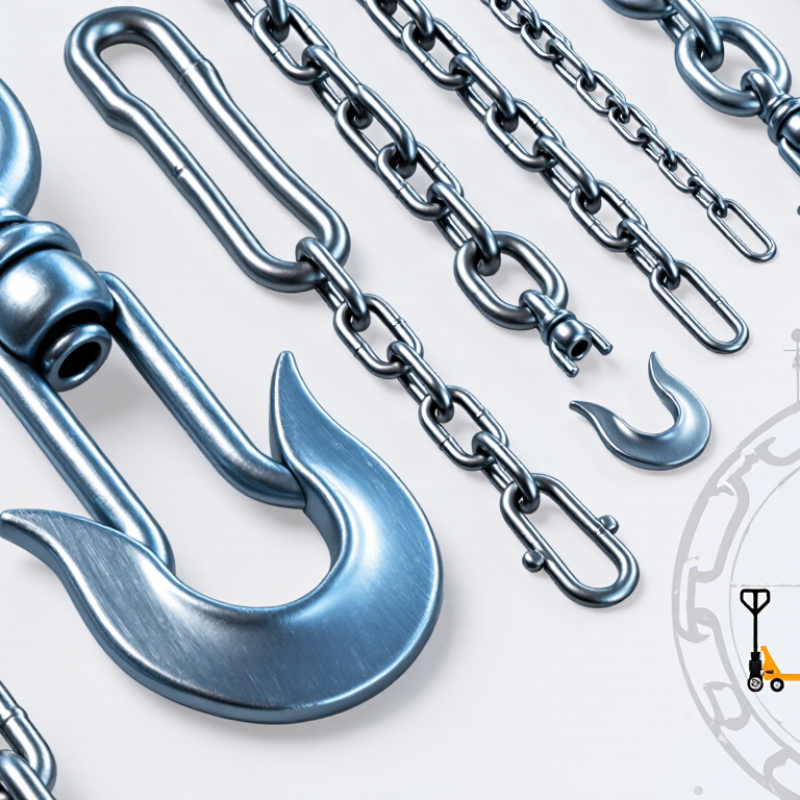
A grab hook is a chain component designed to shorten or secure a load chain. Its narrow throat captures a selected chain link. The hook must match the chain diameter, grade, and working load limit (WLL). A 10 mm hook is not automatically suitable for every 10 mm chain. Link shape and steel grade also matter.
Look for permanent markings showing size, grade, manufacturer identification, and WLL. These details support traceability during purchasing and inspections. OSHA 1910.184 requires alloy steel chain slings to carry durable identification with size, grade, rated capacity, and reach. EN 1677 guidance also emphasizes compatible components and marked working limits. Never calculate WLL from appearance alone. That shortcut feels practical, but it is unreliable.
For global buyers, the best grab hook has a verified chain fit, readable markings, and test documentation. The ILO reported about 2.93 million work-related deaths worldwide in 2019, showing why small lifting decisions deserve serious attention. Inspect the throat for spreading, cracks, bending, and heavy wear. Check the chain link seating, too. A hook can look clean while fitting poorly. I would also question vague certificates and unclear grade markings. Regional standards differ, so confirm the required standard before shipment. Safe selection is less about the largest hook and more about matched, documented capacity.
Which Hook Grade Fits the Job? Grade 70, 80, and 100 Load Ratings
What Is the Best Grab Hook for Global Buyers?
Which Hook Grade Fits the Job? Grade 70, 80, and 100 Load Ratings
Choosing a grab hook starts with the working load limit, not the highest grade number. Grade 70 hooks suit many transport and tie-down applications. They are strong, practical, and often easier to source. However, they are not automatically suitable for overhead lifting. Check the hook’s marked use and supplied documentation.
Grade 80 is widely selected for lifting systems. It offers a dependable balance between strength, weight, and availability. Grade 100 provides greater capacity for a similar chain size. That advantage can reduce equipment weight, but only when the entire lifting assembly supports it. A grade 100 hook connected to weaker chain is still a weak system.
The load angle matters greatly. A 2,000-kilogram vertical rating may change under side loading or an uneven connection. Inspect the latch, throat, weld area, and identification marks before use. Look for cracks, stretching, deep gouges, or distorted openings. Temperature, sharp edges, and sudden loading also affect performance. Global buyers should request material information, proof-test records, and clear working load tables. I once treated grade selection as a simple strength comparison. That view was incomplete. Hook geometry, chain diameter, connection method, and inspection history can matter just as much.
How Is Safety Rated? EN 818-2 Sets 2× Proof and 4× Break Force
What Is the Best Grab Hook for Global Buyers?
For global buyers, the best grab hook is not simply the largest or heaviest model. It must match the chain grade, working load limit, connection size, and lifting angle. EN 818-2 provides a useful safety benchmark for chain lifting components. Under this standard, the hook should withstand a proof force of twice its working load limit. Its minimum breaking force is four times that limit. These figures create a safety margin, but they do not permit overloading.
A practical example makes the rating clearer. A hook rated for a 2,000-kilogram working load should handle a 4,000-kilogram proof force. Its minimum breaking force should reach 8,000 kilograms. Proof testing is not the same as daily operating capacity. The rated load remains 2,000 kilograms. Never increase it because the hook survived a stronger test. That mistake can damage the chain, latch, or supporting equipment.
Inspection details matter just as much. Check the latch, throat opening, weld area, and hook deformation before use. A widened throat may indicate overload or poor handling. The weakest point may not be the hook itself. Incorrect chain size can create dangerous contact and uneven loading. Buyers should request test certificates, traceability records, clear markings, and material information. A competent lifting professional should verify the selection for each application. EN 818-2 is valuable guidance, but local requirements may add further duties. Ratings help. They do not replace judgment.
What Should Global Buyers Compare? WLL, Material, Traceability, and Testing
What Is the Best Grab Hook for Global Buyers?
For global buyers, the best grab hook is not always the heaviest one. It is the hook with clear, repeatable, and documented performance. Start with the working load limit (WLL), not the breaking load. WLL defines the permitted service load under stated conditions. Confirm the chain diameter, chain grade, load angle, and connection method. A hook rated for two tonnes in a straight lift may not suit the same load at an angle. This detail is often missed.
Material also deserves careful comparison. Forged alloy steel is widely used for lifting grab hooks, but steel grade and heat treatment matter equally. Request certificates linked to a heat or batch number. Check the latch, throat opening, shank, and load-bearing surfaces. Coatings can improve corrosion resistance. Looks can mislead. Smooth paint does not prove structural strength, and a stainless appearance may hide unsuitable material.
Traceability should connect the hook to its production records. Markings should match inspection reports, certificates, and packing documents. Ask for proof-load testing, dimensional checks, and equipment calibration records. Independent inspection can add confidence for unfamiliar suppliers or critical lifts. Compare the stated standard with requirements at the installation site. Documents may look complete while missing revision dates or acceptance criteria. Leave room for doubt. A careful buyer should also ask how rejected hooks are isolated, because reliability depends on controlled processes, not paperwork alone.


