Selecting a spring return valve is not a simple catalog exercise. It affects shutdown behavior, maintenance time, and process safety. A pneumatic actuator with a return spring moves the valve to a defined position when air pressure fails. That detail matters beside a hot boiler, chemical pump, or dusty transfer line.
Industry reports show why this market deserves careful attention. Grand View Research estimates the global industrial valves market will continue growing through 2030, supported by water infrastructure, energy projects, and process industries. MarketsandMarkets also identifies automation and replacement demand as major growth drivers. Their market values differ, however. Definitions and regional coverage are not identical. Buyers should treat forecasts as direction, not certainty.
Dr. Béla G. Lipták, a respected process-control authority, wrote, “The control valve is the most common final control element.” His point remains practical. A valve may receive the correct signal, yet still fail through poor sizing, weak seals, unsuitable spring selection, or contaminated air. Small mistakes become expensive quickly.
This guide compares seven spring return valve options for global buyers. It considers fail-open and fail-closed action, pressure ratings, body materials, actuator torque, certifications, spare parts, and local service. Field experience suggests that availability can matter as much as laboratory performance. A technically excellent valve is less useful when its seal kit takes twelve weeks to arrive.
The comparison is not absolute. Pipeline conditions vary. Supplier claims also need verification. Check test records, cycle data, and installation requirements before purchase. A careful choice protects equipment, operators, and production continuity.
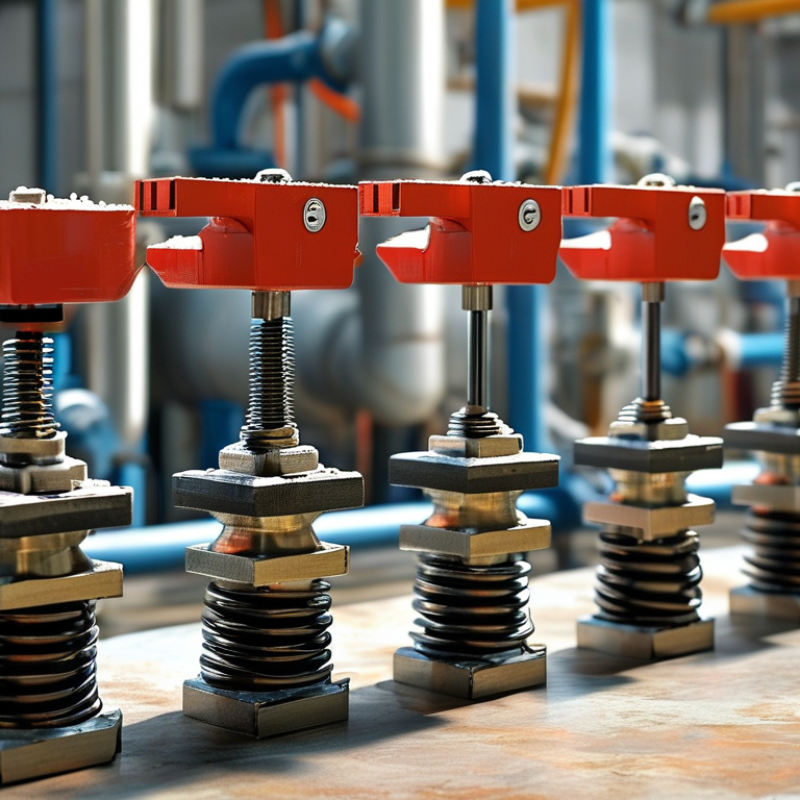
7 Best Spring Return Valves for Global Buyers
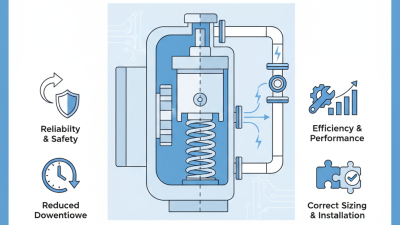
A spring return valve uses stored mechanical energy to move the valve when control power fails. During normal operation, compressed air or an electric actuator overcomes the spring force. When pressure or electricity disappears, the spring rotates the shaft toward a preset position. That position is usually fail-open or fail-closed. It depends on process risk, not personal preference. The mechanism is simple. The sizing is not.
The actuator must deliver enough torque throughout the valve’s travel. Friction, pressure differential, temperature, and seal aging can increase demand. The U.S. Department of Energy reports that motor-driven systems consume about 70% of industrial electricity. Reliable shutdown control therefore matters in many processing plants. The IEA’s Energy Efficiency 2023 report also estimates industry uses roughly 37% of global final energy. These figures do not measure valve failures directly, but they show why small control components deserve serious engineering attention.
Field inspections often find a weak point: the spring is selected from nominal torque only. A safer review checks the complete torque curve, cycling frequency, mounting interface, corrosion exposure, and available instrument air. The valve’s failure position must match the hazard assessment. A spring can close a fuel line safely, yet closing a cooling-water line may worsen an event. I would also question catalogue values without temperature and pressure conditions. Real installations are less tidy than test benches.
A practical comparison of common valve assemblies using spring-return pneumatic or electric actuators.
| No. | Spring-Return Valve Type | Recommended Service | How the Mechanism Works | Typical Size Range | Typical Temperature Range | Common Fail Position | Main Advantages | Key Buying Checks |
|---|---|---|---|---|---|---|---|---|
| 1 | Pneumatic Spring-Return Ball Valve Quarter-turn assembly |
Water, air, gas, oil, and general process isolation | Compressed air rotates the actuator to open or close the ball. A preloaded spring drives the actuator to its designated safe position when air pressure is lost. | DN8–DN300; approximately 1/4–12 in. | Approximately −20°C to 180°C, depending on seat and seal materials | Normally closed or normally open | Fast shutoff, compact design, low pressure drop, and reliable isolation | Ball and seat material, actuator torque margin, air quality, connection standard, and fire-safe or anti-static requirements |
| 2 | Pneumatic Spring-Return Butterfly Valve Quarter-turn assembly |
Large-diameter water, HVAC, air, cooling water, and low-to-moderate pressure fluids | The actuator rotates a disc through 90 degrees. The spring returns the disc to the selected fail-open or fail-closed position after loss of air. | DN50–DN1200; approximately 2–48 in. | Approximately −40°C to 150°C, depending on liner and seat | Normally closed or normally open | Lightweight, economical for large pipe sizes, and space-efficient | Disc clearance, liner compatibility, shaft torque, flange pattern, and allowable pressure differential |
| 3 | Spring-Return Globe Valve Linear control or isolation assembly |
Steam, hot water, fuel systems, and applications requiring throttling control | The actuator moves a stem and plug linearly against the seat. Spring force returns the plug to the preset safe position when the control signal or air supply fails. | DN15–DN300; approximately 1/2–12 in. | Approximately −29°C to 400°C, subject to packing, trim, and actuator limits | Normally closed, normally open, or position-specific | Accurate flow regulation, good shutoff capability, and broad trim options | Flow direction, required shutoff class, cavitation risk, actuator thrust, trim material, and steam rating |
| 4 | Spring-Return Plug Valve Quarter-turn assembly |
Gas, oil, wastewater, and services where a robust rotary shutoff is required | A cylindrical or tapered plug rotates inside the body. The spring-return actuator rotates it to the safe position when the power or air supply is interrupted. | DN15–DN600; approximately 1/2–24 in. | Approximately −29°C to 200°C, depending on lining and seals | Normally closed or normally open | Strong shutoff, compact flow path, and suitability for some dirty services | Lubricated or non-lubricated design, plug torque, seal system, pressure class, and emissions requirements |
| 5 | Spring-Return Diaphragm Valve Linear diaphragm assembly |
Corrosive liquids, ultrapure water, hygienic processing, and slurries | Actuator force moves a flexible diaphragm against a weir or full-bore seat. The spring returns the diaphragm to the preset safe position during supply failure. | DN15–DN300; approximately 1/2–12 in. | Approximately −20°C to 150°C, depending on diaphragm and lining material | Most commonly normally closed | Minimal dead space, reduced contamination risk, and good resistance to corrosive media | Diaphragm material, sterilization method, leakage requirements, vacuum capability, and cycle life |
| 6 | Spring-Return Angle-Seat Valve Pneumatic piston assembly |
Compressed air, water, neutral liquids, steam, and light-duty process control | A pneumatic piston lifts or closes the angled seat. An internal spring returns the piston to its configured fail position when pilot air is removed. | DN8–DN100; approximately 1/4–4 in. | Approximately 0°C to 180°C, depending on seal and body materials | Normally closed or normally open | High cycle capability, favorable flow path, and relatively low actuator air consumption | Minimum pilot pressure, flow direction, seat seal, steam suitability, and port connection type |
| 7 | Spring-Return Three-Way Ball Valve Diverting or selecting assembly |
Flow diversion, tank selection, bypass circuits, and basic process routing | A quarter-turn actuator rotates an L-port or T-port ball. The return spring moves the ball to the predefined routing position after loss of air or electrical power. | DN8–DN100; approximately 1/4–4 in. | Approximately −20°C to 180°C, depending on seat and seal materials | Defined by the selected L-port or T-port flow pattern | Compact routing solution, rapid switching, and clear fail-safe flow direction | Port configuration, allowable simultaneous flow paths, actuator torque, leakage direction, and installation orientation |



©Copyright 2020 Gosco Valves. All rights reserved.