Threaded Inserts are small components, but their failure can loosen a joint, damage a plastic housing, or interrupt assembly. For buyers comparing Chinese manufacturers, “best” should mean more than a low quoted price. It should include consistent dimensions, suitable materials, reliable production controls, and clear technical support. Small parts matter.
Demand across manufacturing makes careful supplier checks relevant. The China Association of Automobile Manufacturers reported that China produced 30.16 million vehicles in 2023. That figure is not a measure of threaded-insert sales, but it shows the scale of one major application sector. Inserts also serve electronics, appliances, machinery, and molded-plastic products, each with different load and installation requirements. A part designed for a hand-installed repair may not suit a high-volume molding line.
This guide compares manufacturers through practical evidence: product range, material options, quality documentation, customization capability, and communication during sampling. Buyers should request drawings, tolerances, test details, and samples that match the intended installation process. Certifications can help, but they do not prove that every batch meets a buyer’s specification. That distinction matters. No supplier is best for every application, and public company information can be incomplete or outdated. The shortlist should therefore be treated as a starting point, not a substitute for qualification testing.
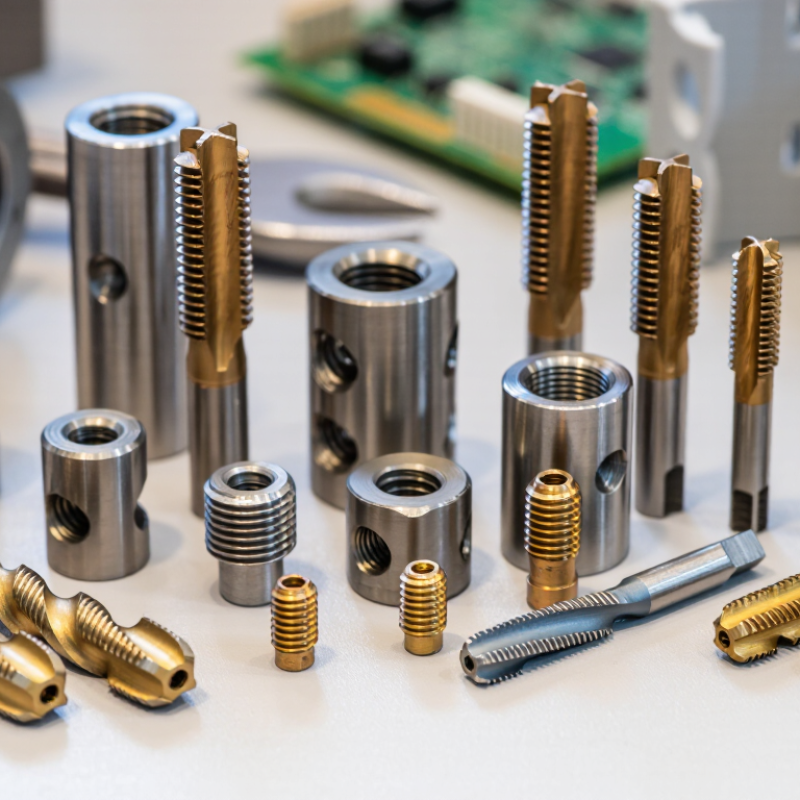
Threaded inserts are components that create durable internal threads in materials that may not hold a screw reliably on their own. They are commonly made from metal and installed in plastic, wood, or softer metals. Some are pressed into a prepared hole; others are heated into thermoplastic parts or secured with adhesive. Small details matter. The hole diameter, insert length, and installation method must match the material and expected load. A poor fit can loosen under repeated assembly.
These inserts serve in appliance housings, electronic enclosures, furniture panels, and vehicle interior components, where parts may need frequent fastening or replacement. In molded plastic, an insert can help prevent stripped threads when a screw is removed and reinstalled. In wood, it can provide a stronger connection for bolts in furniture joints. For each application, engineers should consider vibration, temperature, moisture, and pull-out force. Installation tests on sample parts are useful, because material behavior can vary between designs. The first selection is not always the right one; checking the finished joint often reveals a mismatch before production.
Threaded inserts provide durable internal threads in materials such as plastics, wood, composites, and light metals. Selecting the insert requires matching its thread size to the fastener and its design to the base material and application. The chart shows standard coarse pitches for common ISO metric thread sizes; it does not indicate manufacturer performance.
Reference: ISO 261, ISO general-purpose metric screw threads. Pitch values are in millimetres.China’s threaded insert industry is a layered supply network, not a single factory category. Some producers specialize in wire-thread inserts for repairing damaged metal threads. Others make self-tapping inserts for plastics or solid inserts for wood and light alloys. Buyers may also encounter trading companies that coordinate production across several workshops. Catalogues can look similar, while process control differs.
Insert makers rely on wire or bar stock suppliers, forming and machining teams, heat-treatment providers, finishers, and inspection services. Larger factories may keep more steps in-house and track production lots. Smaller specialists can offer flexible dimensions or low-volume runs, but inspection records may vary. Export-focused suppliers may provide drawings, packaging, and communication support. These are useful signals, not proof of consistent quality. Thread fit, hardness, pull-out strength, and corrosion resistance must suit the application.
Tips: Ask how samples are measured, whether thread gauges are checked after finishing, and how production lots are identified. Request material and test records for the exact part, not a similar item. Details get missed. Even experienced buyers can assume catalogue dimensions tell the whole story; they do not.
A leading threaded insert manufacturer is defined by fit, consistency, and verifiable process control—not by a polished catalog. Start with the application: base material, installation method, expected load, and service conditions. An insert for soft aluminum may need different knurling or geometry from one used in hardwood. Ask how the manufacturer checks dimensions, thread quality, and pull-out performance. Details matter.
Reliable suppliers can explain their material choices and provide inspection records for production batches. Look for clear specifications, traceability, and sample parts that match the drawings. A factory visit can reveal practical details, such as how parts are measured and whether rejected components are separated. If an audit is not possible, request recent quality documents and discuss how defects are handled. Ask for evidence.
Engineering support is another useful test. Can the team review a drawing, flag a risky wall thickness, or recommend a suitable installation tool? Compare response quality, not just speed. A quick answer is not always a good answer. Pricing, lead time, and minimum order quantities matter, but low cost alone says little about long-term reliability. No checklist is perfect; a sample can perform well while larger batches vary. Confirm requirements in writing, then validate parts under realistic assembly conditions.
China’s threaded-insert suppliers generally fall into several production groups. Specialized insert makers focus on wire-thread, solid, and self-tapping designs. Their work often includes forming, heat treatment, and dimensional inspection. Integrated fastener manufacturers make inserts alongside bolts, nuts, and other hardware. This can help with consolidated sourcing, though inserts may not be their main expertise. Custom machining shops handle low-volume or unusual parts, such as inserts with nonstandard lengths or unusual knurl patterns. Some suppliers mainly distribute products and coordinate outside production. Ask who actually makes the part.
The National Bureau of Statistics’ 2023 Statistical Communiqué reported about 483,000 industrial enterprises above designated size in China. This broad figure is not a count of insert manufacturers. It does, however, show the scale of the country’s industrial supplier base, where company capabilities can differ sharply. A supplier’s category alone cannot prove quality. Request a current drawing review, material and hardness records, and inspection results for thread fit and pull-out performance. For example, check how the insert seats in the actual base material, not only in a catalog sample. That boundary is messy. Smaller shops may offer useful flexibility, but their process documentation can be uneven; buyers should verify it rather than assume.
| Manufacturer Type | Typical Threaded Insert Products | Common Materials and Processes | Typical Applications | Useful Capability Checks |
|---|---|---|---|---|
| Threaded-insert specialists | Wire thread inserts and solid threaded inserts for repairing or reinforcing internal threads. | Wire inserts are commonly formed from stainless steel wire. Solid inserts may be made from steel, stainless steel, or brass using operations such as turning, threading, and surface finishing. | Thread repair, maintenance, and stronger internal threads in metal components, equipment, and assemblies. | Check thread-size coverage, dimensional inspection, material documentation, installation guidance, and consistency between production lots. |
| Fastener manufacturers with insert product lines | Self-tapping threaded inserts and other metal inserts designed to create or reinforce threads in a prepared hole. | Often produced from steel, stainless steel, or brass. Manufacturing may include forming or machining, thread production, and finishing; the exact process depends on the insert design. | Metal, plastic, and composite assemblies where a reusable or reinforced threaded connection is required. | Confirm hole specifications, installation method, pull-out or torque test options, material grade, and applicable drawing tolerances. |
| Precision machining and custom-component manufacturers | Custom solid inserts, sleeves, and threaded bushings made to specified dimensions or drawing requirements. | Common options include brass, carbon steel, alloy steel, and stainless steel. CNC turning, drilling, tapping, and secondary finishing may be used. | Special equipment, electrical and mechanical assemblies, and applications with non-standard dimensions or thread combinations. | Review drawing control, measurement equipment, sample approval procedures, traceability, and ability to maintain specified tolerances. |
| Plastic fastening-component manufacturers | Heat-set, press-fit, and molded-in threaded inserts for plastic parts. | Brass and stainless steel are common metal choices. Heat-set inserts are installed into compatible thermoplastics using heat; molded-in inserts are positioned in the mold before plastic is injected. | Plastic enclosures, housings, electronic products, consumer products, and other assemblies requiring metal threads in plastic. | Check compatibility with the plastic resin, installation recommendations, insert geometry, and test data for retention or installation performance. |
| Insert makers focused on assembly and installation solutions | Insert types supplied with matching installation tools or application-specific installation instructions, including wire and plastic inserts. | Materials and production methods vary by insert type. Tooling may be designed for manual, pneumatic, or automated installation. | Production lines and maintenance settings where repeatable insert installation is important. | Ask about tool compatibility, installation training, process controls, sample testing, and support for troubleshooting installation issues. |
These are supplier categories and product examples, not a company ranking. Product availability, materials, and manufacturing capabilities vary by supplier and should be confirmed against technical drawings and samples.
Comparing Chinese threaded insert manufacturers starts with a clear specification. Share the insert type, base material, thread size, installation method, and expected load. Include a drawing with dimensions and tolerances. Otherwise, suppliers may quote different products under the same description. Details matter.
Ask how each manufacturer controls material batches, thread dimensions, surface finish, and inspection frequency. Request relevant test reports and quality records, then check that they match the quoted product. A sample run can reveal issues that a polished catalog cannot: rough edges, inconsistent fit, or installation damage. Test samples in the actual host material when possible. Do not guess.
Compare more than unit price. Review tooling charges, minimum quantities, lead times, packaging, and how changes are documented. Ask who handles technical questions and how defects are investigated. If a supplier cannot explain a measurement method or provide a consistent answer, treat that as a point to verify, not automatic proof of poor quality. Factory visits or independent inspections may help, but they do not replace clear acceptance criteria. Even careful comparisons have limits; written specifications can still leave room for interpretation. Define critical dimensions and approval steps before production begins.
1272 Speers Rd Unit 4
Oakville ON Canada L6L 2X4
©Copyright 2020 Gosco Valves. All rights reserved.