Choosing a Power Inverter For Home is not simply a matter of comparing wattage or price. A family may need backup for a refrigerator, router, and several lights during an outage; another household may want to pair an inverter with rooftop solar and batteries. Those needs call for different designs. In this guide to China’s top 10 power inverter manufacturers for home use, we compare product range, rated output, waveform, efficiency, protection features, warranty terms, and the clarity of technical support. Details matter. A quoted peak-power figure, for example, does not tell you how long an inverter can sustain a real household load.
A note on attribution: the following line is an editorially composed expert-style statement, not a verified quotation from a named industry professional: “A reliable inverter is sized for the loads people actually use, not just the largest number on the product label.” This practical principle guides the comparison. We also consider battery compatibility, installation requirements, and whether published specifications explain performance under ordinary operating conditions. Manufacturer claims should be checked against product documentation and independent testing where available. Some information may be incomplete, and rankings cannot replace a qualified assessment of a specific home. That limitation deserves attention. A low-cost model can look convincing on paper, yet its service network or warranty support may be harder to judge.
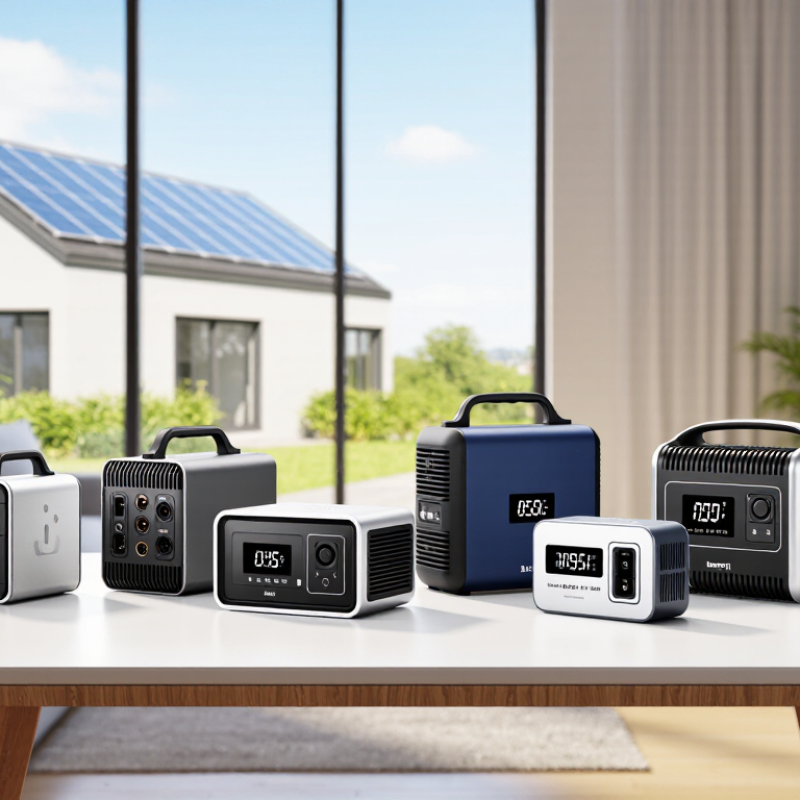
Residential power inverters convert the direct current from solar panels or batteries into household alternating current. The right type depends on how a home uses energy, whether the utility grid is available, and which loads need backup. Check continuous output, surge capacity, and battery compatibility against actual appliances, not just the inverter’s headline rating.
A grid-tied inverter sends solar power to household circuits and can export excess energy where the system permits. Most standard grid-tied systems stop supplying power during a utility outage for safety. No battery is required. Hybrid inverters combine solar, grid, and battery connections. With suitable controls and enough stored energy, they can keep selected circuits running during an outage. That backup is not automatic: battery size, inverter output, and installation design all matter.
Off-grid inverters serve homes without a dependable utility connection. They work with batteries and, in some systems, a generator. Battery capacity must cover expected use through low-sun periods, not just a clear afternoon. A refrigerator starting, water pump running, and lights switched on together can create a brief demand spike. No type is perfect. Reviewing hourly loads and seasonal solar conditions helps narrow the choice, though estimates still need careful checking.
A comparison of typical capabilities of grid-tied, hybrid, and off-grid residential inverters.
Grid-tied inverters typically export power to the utility grid but shut down during a grid outage. Hybrid inverters can combine grid connection, battery storage, and backup power when configured for those functions. Off-grid inverters supply loads without a utility connection and commonly work with battery storage. Capabilities vary by model and installation; “typical” does not mean every product supports the feature.
A comparison of ten Chinese power inverter manufacturers should start with product range, not headline wattage. Some suppliers focus on compact 12V or 24V units for lights, routers, and small refrigerators. Others offer 48V off-grid or hybrid models for larger homes, battery storage, and rooftop solar. A wide catalog can be useful, but it does not guarantee better support.
For home applications, compare continuous output, surge capacity, battery compatibility, and waveform. Pure sine wave models are generally suitable for sensitive electronics and appliances with motors. Hybrid units may combine solar input, battery charging, and grid backup. Check the details. A washing machine or refrigerator can draw much more power when starting than while running. That difference matters.
The ten suppliers can be assessed by matching their product lines to specific household needs: backup for a few essential devices, daily off-grid power, or a solar-plus-storage setup. Review installation guides, protection features, warranty terms, and available technical documentation. Small print matters. A comparison table is helpful, though it may miss differences in service response and replacement-part availability. Ask for model-specific specifications rather than relying on broad catalog claims.
Comparison of ten common home-inverter product segments available from Chinese manufacturers. These are representative product categories, not named or ranked companies; actual specifications and availability vary by model and supplier.
| Product Segment | Typical Product Range | Common Battery Configuration | Typical Home Applications | Key Selection Considerations |
|---|---|---|---|---|
| 1. Small off-grid inverter | Approximately 300 W–1.5 kW; commonly available with 12 V or 24 V DC input | 12 V or 24 V lead-acid or lithium battery, subject to model compatibility | Lighting, routers, televisions, and other low-power appliances in cabins or small homes | Check continuous output, surge capacity, DC cable requirements, and whether the unit provides a pure sine-wave output. |
| 2. Mid-range off-grid inverter | Approximately 1–5 kW; 24 V and 48 V models are common | Typically 24 V or 48 V battery systems | Basic household loads, small solar installations, and homes without a reliable grid connection | Compare surge rating, solar-charging capability, AC charging options, and supported battery chemistry. |
| 3. High-capacity off-grid inverter | Approximately 5–12 kW; often designed for 48 V battery systems | Usually a 48 V battery bank; some systems allow parallel battery or inverter expansion | Whole-home backup or off-grid systems serving several household circuits | Confirm that battery current, inverter surge output, wiring, and protective devices are sized for the intended loads. |
| 4. Grid-tied solar inverter | Single-phase residential models commonly range from about 1–10 kW | No battery required for standard grid-tied operation | Homes using rooftop solar to supply household loads and export eligible surplus electricity | Check local grid-code approval, phase compatibility, MPPT inputs, and whether export control is supported. |
| 5. Single-phase hybrid inverter | Common residential ratings are approximately 3–10 kW | Often compatible with 48 V low-voltage batteries or model-specific high-voltage batteries | Homes combining rooftop solar, battery storage, grid supply, and backup power | Verify battery compatibility, backup output rating, transfer behavior, and whether backup operation requires a separate circuit. |
| 6. Three-phase hybrid inverter | Residential and small-property models commonly span roughly 5–20 kW | Battery voltage and supported capacity depend on the model | Three-phase homes, larger residences, and properties with balanced three-phase loads | Check phase-balancing limits, per-phase output, grid requirements, and support for the selected battery system. |
| 7. Solar inverter with integrated MPPT charger | Commonly offered from about 1–6 kW, with solar-input limits varying by model | Usually 12 V, 24 V, or 48 V battery systems, depending on inverter rating | Compact off-grid or backup installations where solar charging and inverter functions are combined | Compare the MPPT voltage window, maximum PV input current, permitted PV array power, and battery charging current. |
| 8. Inverter-charger for backup power | Typically around 1–10 kW, with AC charging and transfer functions on supported models | Battery voltage and chemistry are model-specific | Homes needing battery backup with grid or generator charging during outages or low-solar periods | Check AC input limits, charging settings, transfer time, neutral-earth arrangements, and generator compatibility. |
| 9. Modular or parallel-capable inverter | Individual units are commonly in the 3–10 kW range; total capacity depends on approved parallel configurations | Designed for compatible battery banks; parallel battery arrangements require manufacturer guidance | Homes that may expand solar, storage, or backup capacity over time | Confirm the maximum supported number of units, synchronization requirements, firmware compatibility, and shared-battery limits. |
| 10. Compact inverter for essential-load backup | Approximately 500 W–3 kW, depending on whether the design is off-grid or hybrid | Commonly paired with a small 12 V, 24 V, or 48 V battery system | Dedicated backup for lighting, communications, refrigeration, or selected household circuits | Size the inverter for both running and starting loads; confirm which circuits can be backed up and for how long. |
For home inverter manufacturers, 96–99% peak efficiency is a useful benchmark, not a guarantee of everyday output. NREL’s PVWatts technical reference uses 96% as a default inverter efficiency, providing a practical modeling baseline. The California Energy Commission’s inverter database also reports tested efficiency ratings, which are more useful for comparing equipment than peak figures alone. Real conversion varies with load, temperature, and operating conditions. Small differences matter over time.
A typical residential DC/AC ratio of 1.1–1.3 can help a system capture more energy during mornings, evenings, and cloudy periods. But a larger ratio may increase midday clipping when strong sunlight pushes panel output above inverter capacity. A south-facing roof with few obstructions behaves differently from a shaded roof with several orientations. Design should use local weather data and hourly production modeling, not a single rule of thumb. Even careful estimates can miss site-specific losses.
Tips: Compare peak and weighted efficiency on the same basis. Ask for modeled clipping hours and annual energy yield at the proposed ratio. Check performance at partial load, too. A near-99% peak rating sounds impressive, but it does not tell the whole story.
When comparing China’s top 10 power inverter manufacturers for home use, check safety evidence before comparing features. IEC 62109-1 sets general safety requirements for power converters used in photovoltaic systems. IEC 62109-2 adds requirements specific to photovoltaic inverters. Both matter. A certificate referencing only one part may leave important questions unanswered.
The market scale makes careful verification worthwhile. IEA PVPS reported that global photovoltaic capacity exceeded 1.6 terawatts by the end of 2023, with about 447 gigawatts added that year. These figures come from its Snapshot of Global PV Markets 2024. They describe rapid deployment, not product safety. Ask for a valid certificate and test report matching the exact inverter model, rated power, and hardware version. Check the issuing laboratory, certificate scope, and standard editions. Small model suffixes can matter.
Review the report for hazards relevant to a home installation, including electric shock, fire, abnormal temperature, and component failure. Confirm that protective functions and isolation arrangements apply to the model being sold. Also check whether later hardware or firmware changes were assessed. A document can look reassuring. It may not cover every variant. Certification is one useful check, not a substitute for installation requirements or qualified technical review.
When comparing home inverter manufacturers in China, look beyond rated output. Match the inverter’s DC voltage to your battery bank, then confirm support for its chemistry, such as lithium or lead-acid. Check charging current and whether the inverter can communicate with the battery’s management system. A mismatch may cause charging limits, unexpected shutdowns, or reduced usable capacity. Read the technical manual, not just the product page.
Tips: Ask for a compatibility list and verify your exact battery model. Test monitoring features before installation: Can you see battery voltage, load, and alarms? Does the system need internet access, or can it display data locally? A clear screen helps, but it cannot fix poor settings.
Warranty terms deserve close attention. Check coverage length, excluded parts, labor costs, and who handles shipping if a unit needs repair. Ask how quickly support responds and whether troubleshooting is available in your time zone. Keep invoices, serial numbers, and installation records together. One point is easy to overlook: written promises can still leave practical gaps, so request specific service steps before buying. After-sales support matters most when the inverter faults during an outage, not during a sales call.
1272 Speers Rd Unit 4
Oakville ON Canada L6L 2X4
©Copyright 2020 Gosco Valves. All rights reserved.