How to Choose the Right Directional Valve for Your Needs?
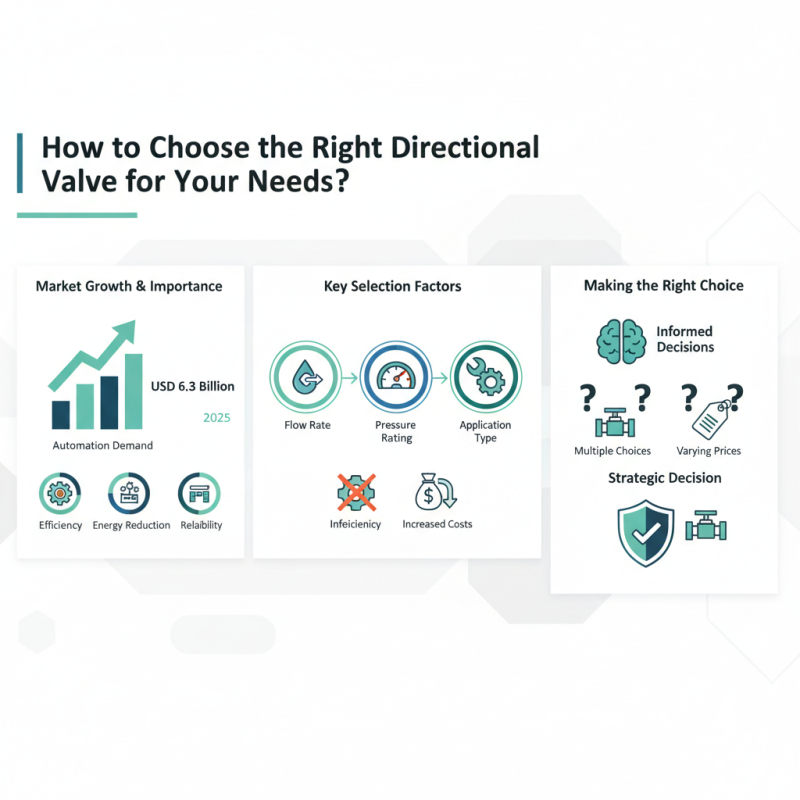
Choosing the right directional valve is crucial for optimal system performance. According to a report by Markets and Markets, the directional valve market is projected to reach USD 6.3 billion by 2025. This growth is driven by the increasing demand for automation across various industries. The right directional valve can improve efficiency, reduce energy consumption, and enhance system reliability.
When selecting a directional valve, factors like flow rate, pressure rating, and application type must be considered. Each application may require a specific valve design to meet operational requirements. A mismatch can lead to inefficiencies and increased maintenance costs. As highlighted by Hydraulic Global, even slight deviations in specifications can affect system functionality.
Understanding these facets helps in making informed decisions. However, manufacturers may offer multiple choices that complicate selection. Pricing can also vary widely, creating confusion. Therefore, it’s essential to analyze your needs carefully. In the world of fluid control, the right directional valve is not just a choice but a strategic decision.
Understanding the Basics of Directional Valves and Their Functions
Directional valves play a critical role in fluid power systems. Their main function is to control the flow of liquids or gases. These valves are essential for directing fluid movement to various actuators. Understanding how they work is vital when selecting the right one.
Directional valves come in different configurations, typically defined by their number of positions and ports. For example, a 4/2 valve has four ports and two positions. According to industry reports, these valves impact system performance significantly. A well-chosen valve can improve efficiency by up to 20%, as optimal flow paths minimize energy loss. Poor choices can lead to system failures, downtime, and increased maintenance costs.
Another critical aspect is the valve's actuation method. Options include manual, pneumatic, hydraulic, or electronic control. Each method has its pros and cons. Manual valves may offer simplicity but can overcomplicate systems when precision is necessary. In contrast, electronic actuators provide high accuracy but may add complexity. Evaluating these factors ensures the directional valve aligns with specific application needs.
Identifying Your System Requirements and Operating Conditions
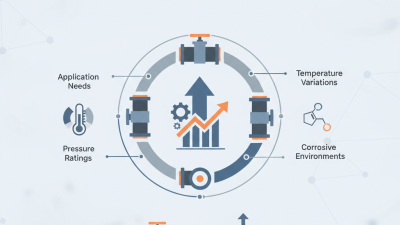
When selecting a directional valve, understanding system requirements is crucial. The operating conditions, such as pressure, flow rate, and temperature, directly influence your choice. According to industry reports, approximately 70% of system failures are linked to incorrect component selection. This statistic underscores the importance of matching your valve to the specific conditions.
Chemical compatibility is another consideration. Valves must withstand the materials they will interact with. A study from a leading engineering association highlighted that improper material selection contributes to over 30% of valve malfunctions. This data emphasizes the need for an informed selection process.
Additionally, consider the valve's control type. Pneumatic and hydraulic systems each have unique requirements. Research indicates that over 60% of companies have reported performance issues due to mismatched valve types. It’s vital to assess your system's control logic and ensure alignment with the chosen valve. Through careful analysis, you can avoid costly downtime and enhance overall system performance.
Directional Valve Selection Based on Flow Rate and Pressure Drop
This chart illustrates the relationship between flow rate and pressure drop for a directional valve. Understanding these parameters helps in selecting the most suitable valve for your application needs.
Comparing Different Types of Directional Valves
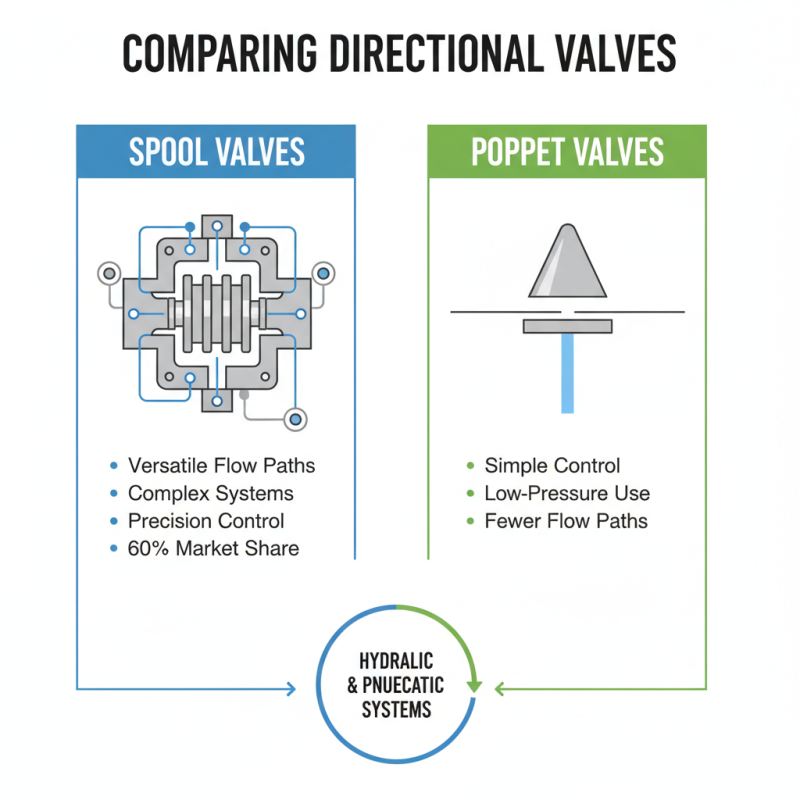
Directional valves play a crucial role in controlling fluid flow in hydraulic and pneumatic systems. Understanding the different types available can enhance efficiency and performance. There are two main types: spool valves and poppet valves. Spool valves are versatile and offer multiple flow paths, making them ideal for complex systems. Poppet valves provide simpler controls and are often used in low-pressure applications. Recent industry reports indicate that spool valves are favored in applications requiring precision control, accounting for over 60% of the market share.
When selecting the right valve, consider the flow rate and pressure requirements. Properly matched valves can prevent system failures and inefficiencies. Underestimating these factors can lead to operational setbacks and increased costs. Remember, not all valves are created equal. Some may not meet specific application needs, leading to inadequate performance.
Tip: Always verify the compatibility of your chosen valve with existing equipment. Materials must withstand the working environment. Misalignment can cause wear and eventual failure.
Another important factor is the response time of the valve. Fast-acting valves enhance overall system responsiveness. However, overspeed can lead to system instability. Balance is crucial in choosing the right valve type for your specific requirements.
Evaluating Material and Design Considerations for Valves
When selecting a directional valve, material and design are crucial factors. A valve must withstand the operational environment. Common materials include stainless steel and brass, known for their durability. According to a recent industry report by MarketsandMarkets, the global valve market is expected to reach $104 billion by 2025, emphasizing the importance of quality materials.
The design of the valve also plays a pivotal role. Valves should not only fit within existing systems but also enhance performance. A poorly designed valve can lead to leaks or failures. The International Society for Automation highlights that inefficiencies can result in 20% extra costs in industrial operations. Consider integration with existing systems during the design phase.
Tips: Always evaluate the application's specific requirements. Seek valves with proven reliability in similar environments. Engage with engineering professionals to ensure optimal decisions. Validate specifications through trusted sources to minimize risks before purchase.
Making the Final Selection: Cost vs. Performance Analysis
When choosing a directional valve, cost and performance are often at odds. Balancing the two requires careful thought. A low-cost valve may save money initially but could lead to higher maintenance costs over time. Understanding the specific application is essential. A valve that operates reliably in harsh conditions might be more expensive but can prevent costly downtime.
Tips: Evaluate your system's requirements meticulously. Consider factors like pressure, flow rates, and environmental conditions. Each application demands specific features that impact performance, including response time and durability. Investing in a more robust valve can often yield lower overall costs.
Performance analysis plays a vital role. It's crucial to run simulations or conduct tests to see how different models behave in real-life scenarios. This hands-on approach can reveal potential weaknesses in cheaper alternatives. Ensure you monitor the valve's efficiency and reliability during testing phases.
Tips: Don’t rush the decision. Take time to gather data and consult with experts in the field. Sometimes, a higher initial investment offers long-term savings. A thorough understanding of both cost and performance can lead to more informed choices and ultimately better outcomes.
How to Choose the Right Directional Valve for Your Needs? - Making the Final Selection: Cost vs. Performance Analysis
| Valve Type |
Cost ($) |
Flow Rate (L/min) |
Operating Pressure (bar) |
Performance Rating |
| 2/2 Way Normally Closed |
120 |
25 |
10 |
High |
| 3/2 Way Pneumatic |
150 |
30 |
8 |
Medium |
| 4/2 Way Solenoid Valve |
200 |
20 |
12 |
Very High |
| 5/2 Way Manual |
90 |
15 |
7 |
Low |
| 2/2 Way Normally Open |
110 |
22 |
9 |
Medium |