How to Choose the Right Valve Lockout Chain for Your Needs?
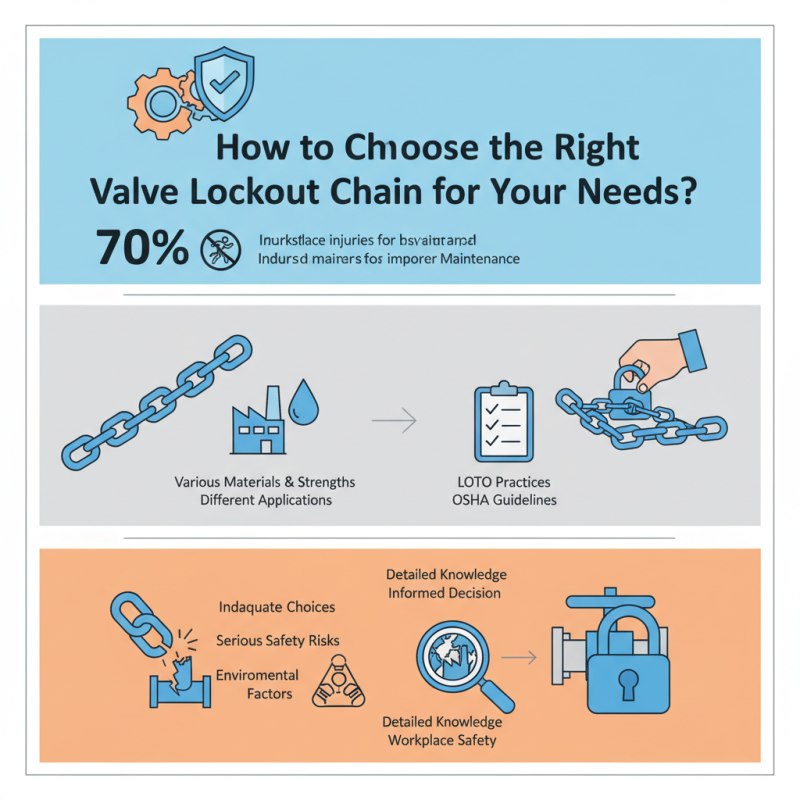
In industrial settings, safety is a top priority. Effective mechanisms for managing hazardous energy are essential. A critical component of these systems is the Valve Lockout Chain. According to a recent safety report, nearly 70% of workplace injuries stem from improper maintenance of equipment. This statistic highlights the importance of using the right lockout tools.
Choosing the right Valve Lockout Chain for your needs is not trivial. Chains come in various materials and strengths, each tailored for different applications. Many industries now adopt lockout/tagout (LOTO) practices more rigorously. The U.S. Occupational Safety and Health Administration (OSHA) emphasizes that proper lockout devices can significantly reduce accidents.
Inadequate choices can lead to serious safety risks. For instance, using a chain that cannot withstand specific environmental factors may result in equipment failures. This is why detailed knowledge about the operating environment is crucial. Making an informed decision about your Valve Lockout Chain is essential for ensuring overall workplace safety.
Understanding Valve Lockout Chains and Their Importance
Valve lockout chains play a crucial role in safety protocols for industrial settings. They help prevent accidental valve operation during maintenance. By using these chains, workers can secure valves effectively. This reduces the risk of injuries and accidents significantly. Understanding their design and function is essential.
When selecting a valve lockout chain, consider the material and length. Chains made from durable materials resist wear and corrosion. The proper length ensures complete valve coverage. Choosing a chain that fits your specific needs shows foresight. It might seem straightforward, but many overlook these critical details.
Regular inspection of your lockout procedures is vital. Chains can wear over time, affecting their reliability. Engage your team in discussions about their experiences. Sometimes, workers can identify flaws that management misses. This continual feedback loop leads to improved safety practices. Reflecting on these processes ensures ongoing effectiveness in your safety measures.
How to Choose the Right Valve Lockout Chain for Your Needs? - Understanding Valve Lockout Chains and Their Importance
| Chain Type | Material | Length | Weight Capacity | Temperature Range | Price Range |
| Plastic Coated | Polyethylene | 10 ft | 150 lbs | -20°F to 150°F | $15 - $25 |
| Metal | Steel | 15 ft | 300 lbs | -40°F to 200°F | $30 - $50 |
| High Visibility Tape | Vinyl | 20 ft | 100 lbs | 0°F to 120°F | $10 - $20 |
| Heavy Duty | Nylon | 25 ft | 500 lbs | -10°F to 180°F | $40 - $60 |
Identifying the Different Types of Valve Lockout Chains Available
When selecting valve lockout chains, understanding the various types is key. Common types include standard lockout chains, adjustable options, and specialty chains. Each type has unique features, designed to fit specific valve configurations. Adjustable chains often cater to different valve sizes, ensuring enhanced safety. A study by the Occupational Safety and Health Administration (OSHA) noted that improper lockout-tagout practices lead to over 50 fatalities annually in the U.S. This highlights the importance of choosing the right chain.
Standard chains usually come in lengths that suit most valves. They are effective but may not fit specialized valves perfectly. In contrast, specialty chains address unique designs, such as those found in chemical processing plants. These chains often include additional safety features, improving compliance. A report from the National Safety Council (NSC) indicates that using appropriate lockout devices can reduce accidents by nearly 30%. Choosing the right chain not only adheres to safety regulations but also enhances workplace safety culture.
Evaluate your specific needs carefully. Consider the environment and the types of valves in use. Some chains may rust in humid conditions. Others can be too rigid, causing difficulties during application. A user might find that chains marked as "universal" don’t adequately perform in every scenario. Assessing weaknesses in chain selection can help refine choices and enhance safety practices.
Evaluating Material and Durability for Valve Lockout Chains
When selecting a valve lockout chain, the material and durability are crucial factors. Materials like steel and high-density polyethylene (HDPE) are commonly used. These materials offer different strengths and weaknesses. Steel is robust and resistant to wear but can corrode over time, especially in harsh environments. On the other hand, HDPE is lightweight and resistant to chemicals, but it may not withstand the same level of impact as steel.
A study by the National Institute for Occupational Safety and Health (NIOSH) revealed that equipment failure due to inadequate lockout/tagout procedures caused numerous workplace incidents. The durability of the lockout chain impacts overall safety. Chains that withstand extreme temperatures, UV radiation, and chemicals are essential in industries like oil and gas. Data shows that chains rated for high-performance use can lead to a 40% reduction in mishaps.
However, choosing the right chain can be challenging. Many users overlook the importance of everyday wear and tear. This can lead to rapid degradation, increasing risks. Regular inspections are necessary, but maintenance is often neglected. Investing in high-quality materials and understanding their limitations can ensure effective use. Recognizing these challenges is vital for mitigating risks and enhancing workplace safety.
Assessing Chain Size and Compatibility with Valves
Choosing the right valve lockout chain is critical for workplace safety. The first step is assessing chain size. A chain that is too small may not fit around the valve properly, while one that is too large can be cumbersome. Measure the dimensions of your valves first. Different valve types, like gate or ball valves, may require different chain configurations. Consider the valve's opening diameter and handle style when selecting the right size.
Compatibility is just as important as size. Ensure that the chain can securely latch onto the specific valve design. Some chains have unique fittings, while others are more universal. Researching the compatible options may save time and money in the long run. It can be frustrating to find out after a purchase that the chain does not fit. If unsure, consulting with safety professionals can provide guidance. Don't overlook these details; they can significantly impact the effectiveness of your lockout procedures. A careful approach today reduces risks tomorrow.
Choosing the Right Valve Lockout Chain for Specific Applications
Selecting the right valve lockout chain is crucial for workplace safety. Each application demands specific characteristics from a lockout chain. The American National Standards Institute (ANSI) emphasizes durability, visibility, and corrosion resistance in safety devices. For harsh environments, a chain must withstand extreme temperatures and chemical exposure.
Industries like oil and gas, manufacturing, and wastewater treatment often require specialized chains for their unique risks. A study by the Occupational Safety and Health Administration (OSHA) indicates that proper lockout/tagout procedures can reduce workplace accidents by up to 30%. Using the wrong chain can lead to severe outcomes.
Considering size and weight capacity is essential for effectiveness. A robust chain can handle pressure without failing. However, lighter alternatives may suffice in less hazardous settings. Evaluating the environment, such as exposure to moisture or chemicals, also matters. Chains must be versatile yet robust, ready for the demands of different operational scenarios. By carefully assessing these criteria, organizations can enhance their safety protocols significantly.
Valve Lockout Chain Selection for Different Applications


