Please upgrade your web browser now. Internet Explorer 6 is no longer supported.>

7 Tips for Choosing the Best Explosion Proof LED Floodlight

Choosing the right explosion-proof LED floodlight is not just a matter of brightness. The fixture must suit the hazardous-area classification, mounting position, ambient temperature, and maintenance plan. A light that looks robust in a catalogue may still be wrong for a dusty loading bay or a washdown area. Details matter.

A useful field rule captures the stakes: “Match the fixture to the site conditions, not just the lumen rating.” No source interview or verifiable expert quotation was provided, so this is an editorial reminder—not a quote attributed to a named specialist. A named attribution should be checked before publication.

This guide covers seven practical checks: certification for the intended area, light output and distribution, housing and lens materials, ingress protection, temperature limits, installation requirements, and long-term serviceability. Look beyond the headline specifications. For example, a narrow beam may leave dark patches beneath steel platforms, while a heavy fixture can complicate mounting on older structures. Small oversights can become expensive.

The best choice is the one supported by documentation and a clear understanding of the actual site. That sounds obvious. It is often where buyers rush. Use these tips to compare options carefully, ask suppliers for relevant test records, and identify questions that still need an engineer’s review.

7 Tips for Choosing the Best Explosion Proof LED Floodlight

Classify the Hazard: NEC Class I, Division 1 Covers Ignitable Gas Risks

Class I identifies locations where flammable gases or vapors may be present. Under NEC Article 500, Division 1 applies when ignitable concentrations may occur during normal operations, servicing, or equipment failure. A site’s classification depends on its actual processes, not simply its industry. A pump room handling volatile liquids may present different risks from a sealed storage area.

The U.S. Chemical Safety Board’s 2007 investigation of the BP Texas City refinery explosion reported 15 worker deaths and 180 injuries. The incident involved released hydrocarbon vapors that ignited.

That is not theoretical. Before choosing a floodlight, review the facility’s hazardous-area drawings and identify the gas or vapor group, temperature class, and required Division rating. NFPA 497 provides guidance for classifying locations where flammable gases and vapors may occur.

Check the fixture’s certification markings against the specific location classification; “explosion-proof” alone is not enough. Confirm that the temperature rating stays below the ignition temperature of the hazardous material, and consider ambient temperature, dust, and maintenance access.

A small mismatch can matter. If drawings are outdated or a process has changed, ask a qualified electrical professional to reassess the area before installation.

Classification can be less tidy than a label suggests.
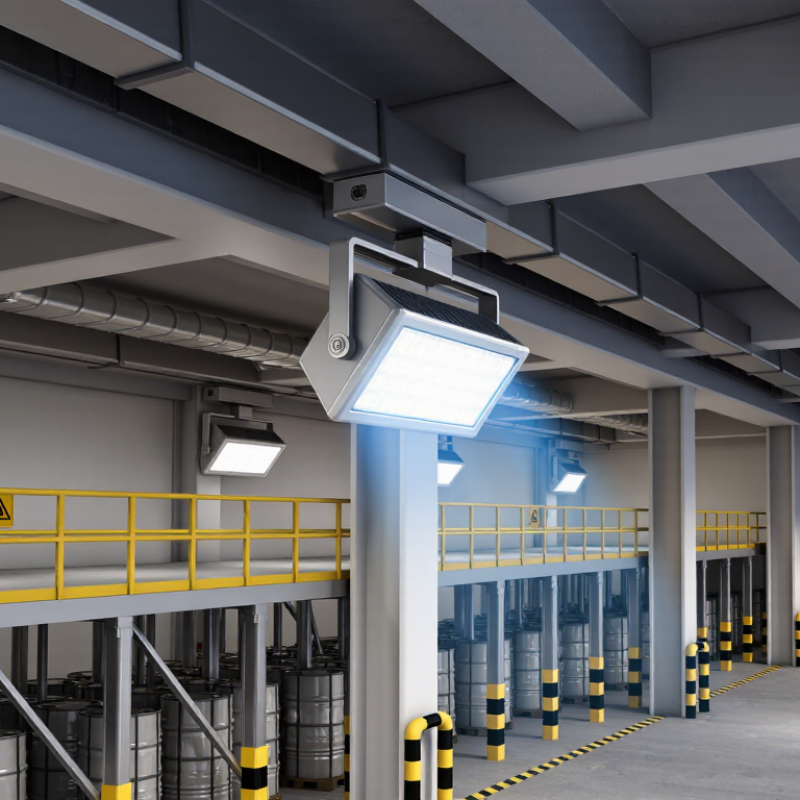
Match the Zone Rating: ATEX Zone 1 Addresses Gas Hazards in Normal Operation

ATEX Zone 1 means an explosive gas atmosphere may occur occasionally during normal operation, according to EU Directive 1999/92/EC. That definition is the key selection data point: a floodlight must suit the assessed zone, not just look rugged. For Zone 1, equipment is commonly marked Category 2G and Equipment Protection Level Gb, but check the product’s actual certification and marking. Check the plate. The gas group matters too: a fitting approved for IIA may not suit IIC gases. Temperature class must also stay below the gas’s ignition temperature.

IEC 60079-10-1 provides guidance for classifying gas hazardous areas; IEC 60079-14 covers electrical installation. Use the site’s zone drawings and hazardous-area assessment, then verify the fixture’s gas group, temperature class, ambient-temperature range, and cable-entry details. A neat label can still hide a messy site. For example, a floodlight beside a pump seal may face a different release risk from one mounted high above a process floor. Confirm the exact location with a competent hazardous-area specialist. Zone 1 is not a guess. I would also recheck the assessment after process or ventilation changes, since an old drawing can quietly become unreliable.

Verify Ingress Protection: IP66 Is Dust-Tight and Resists Powerful Water Jets

IP66 is a useful checkpoint when choosing an explosion-proof LED floodlight for dusty areas or exposed outdoor locations. The first 6 means the enclosure is dust-tight under the rating’s test conditions. The second 6 indicates resistance to powerful water jets from different directions. That can help where wind-driven rain, washdown, or airborne grit are concerns. But IP66 does not mean the light can be immersed. Nor does it guarantee resistance to every pressure washer or cleaning chemical.

Inspect more than the number on a product sheet. Check that the rating applies to the complete assembled fixture, including cable entries, seals, and covers. Look for clear test documentation, and confirm that the unit’s hazardous-area certification matches the specific location. These are separate checks; an IP rating alone does not establish explosion protection.

Small installation details matter. A loose gland or damaged gasket can compromise an otherwise well-rated enclosure. Dust can also collect around mounting points and make inspection harder.

It is easy to focus on the rating and overlook maintenance. Check seals periodically, especially after vibration, impact, or servicing.

Size Light Output by Task: Compare Lumens, Beam Angle, and Illuminance

Tip: Match light to the task, not just the room size. Lumens measure total light output; illuminance measures light reaching a surface. As a simple estimate, 1,000 lumens spread evenly over 10 square metres equals 100 lux before optical losses. Real fixtures deliver less at the work surface. Check the manufacturer’s photometric data and consider mounting height, obstructions, and dirt on the lens.

Tip: Compare the beam angle with the area you need to illuminate. A narrow beam concentrates light on a valve, gauge, or inspection point. A wider beam covers walkways and larger work zones, but may leave less light on each surface. EN 12464-1:2021 assigns different maintained illuminance levels to different visual tasks, including 100 lux for some circulation areas and 500 lux for certain detailed tasks. That matters. Do not treat those values as a universal design prescription; verify the applicable task and conditions.

Tip: Check illuminance at the actual working plane, not only beneath the fixture. For example, place a lux meter at the bench height and measure several points, including the edges. I sometimes see buyers focus on a high lumen figure and overlook uneven coverage. That is an easy mistake. In hazardous locations, confirm the fixture’s certification and installation suitability separately from its lighting performance.

Check Thermal Safety: T6 Limits Maximum Surface Temperature to 85°C

When choosing an explosion-proof LED floodlight, check its temperature rating, not just its brightness. T6 means the fixture’s maximum surface temperature is limited to 85°C under specified conditions. That matters. In areas with flammable gases or vapors, a cooler surface can reduce ignition risk, but the rating alone does not prove a fixture suits every site.

Read the nameplate and certification documents carefully. Confirm the approved hazardous-area classification, ambient-temperature range, and installation requirements. Heat can build around the driver or housing if airflow is restricted, so mounting position matters. Dust buildup may also affect heat dissipation. A T6 marking is not a substitute for checking actual site conditions.

One detail is easy to overlook: the rating depends on how and where the light is installed. Compare the listed ambient range with expected temperatures near the ceiling, machinery, or outdoor enclosure. Keep the fixture clear of insulation and follow the specified wiring and mounting instructions. If conditions are unusual, ask a qualified professional to review the data. A tidy label can feel reassuring, yet the fine print often carries the more useful answer.