How to Choose the Best Float Glass Machine
Choosing the right Float Glass Machine is a long-term production decision, not a simple equipment purchase. The machine must match your planned output, product mix, available space, and operating skills. A line designed for wide architectural sheets may be a poor fit for a plant focused on thinner glass. Small mismatches matter. They can show up as uneven thickness, edge defects, excess energy use, or costly downtime.
Sir Alastair Pilkington’s float-process legacy offers a useful selection principle: “Choose a line for consistent product quality, not headline capacity.” This is a practical summary, not a verified verbatim quotation. When comparing proposals, examine the complete line: melting capacity, tin-bath width, annealing lehr control, cutting accuracy, and inspection systems. Ask suppliers for data on glass thickness ranges, yield, energy consumption, and performance under your intended operating conditions. Request references from plants making comparable products. Then check local access to commissioning support, replacement parts, and operator training. Details count.
A polished brochure is not enough. Visit a running line if possible, and observe sheet movement, edge quality, control-room alarms, and maintenance access. Get the assumptions behind every performance guarantee in writing. Be cautious when figures lack test conditions. Even careful planning cannot remove every uncertainty; real production often exposes gaps in the original specification. Choose a Float Glass Machine that can meet today’s needs while allowing sensible upgrades. The best choice is usually the one your team can operate reliably, maintain safely, and verify with clear production data.
Define Production Requirements and Glass Specifications
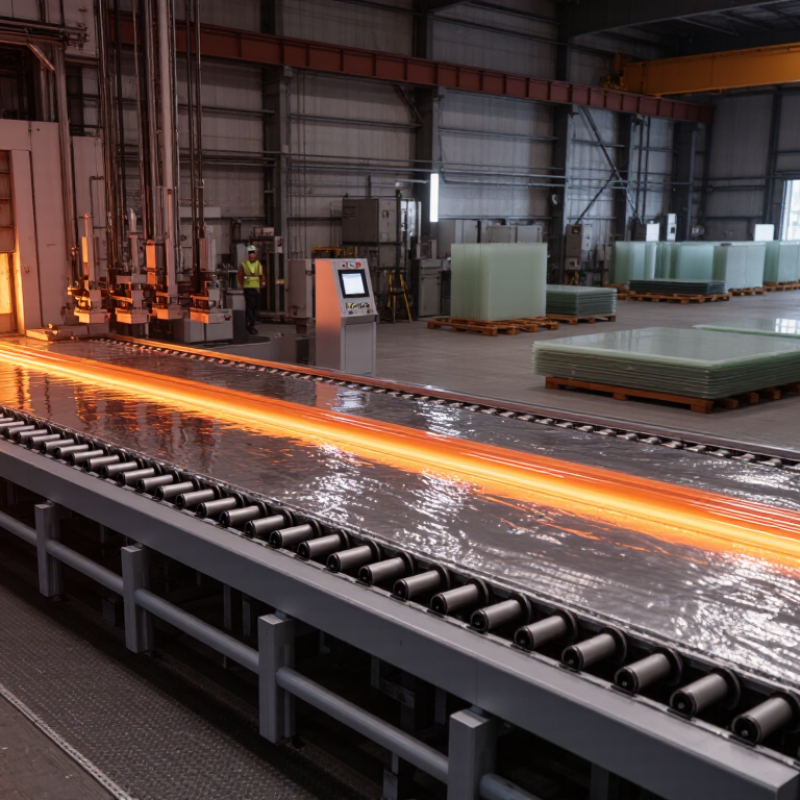
Define the products before comparing float glass machines. Record target thicknesses, sheet widths, daily tonnage, and the mix of clear, tinted, or low-iron glass. Specify acceptable thickness variation, optical distortion, edge quality, and cutting yield. These details shape the melting capacity, tin-bath width, annealing lehr, and downstream cutting system. Small details matter. A line designed around one standard thickness may struggle when frequent product changes become routine.
Use credible supply and capacity data, but treat forecasts cautiously. The USGS Mineral Commodity Summaries 2024 reports that glassmaking used roughly 13% of U.S. industrial sand and gravel in 2023. That figure is not a glass-demand forecast, but it highlights the importance of confirming batch-material availability and quality. The European Commission’s 2013 Glass Manufacturing BREF documents float production as a continuous, high-capacity process, with furnace capacities reaching hundreds of tonnes per day. Match that scale to realistic orders, not an optimistic sales target. Your first throughput estimate may be wrong. Check whether it accounts for thickness changes, start-up losses, rejected sheets, and planned maintenance. A machine quote should state these assumptions clearly. Otherwise, two quoted capacities may not be comparable.
How to Choose the Best Float Glass Machine: Define Production Requirements and Glass Specifications
Glass thickness affects product weight and material throughput. Use this reference when defining the thickness range your production line must handle.
Approximate mass is calculated using a soda-lime glass density of 2,500 kg/m³ (about 2.5 kg/m² per millimetre of thickness). Confirm target thicknesses, sheet dimensions, output rate, and process limits with your equipment supplier.
Compare Forming Technology and Machine Configurations
How to Choose the Best Float Glass Machine
Compare Forming Technology and Machine Configurations
Compare forming technology against the glass you plan to make. A continuous float process carries molten glass across a tin bath, creating a flat ribbon with consistent surfaces. The target thickness, ribbon width, and production speed all affect equipment selection. Thin glass can demand tighter temperature control and steadier handling. Small variations matter.
Machine configuration is just as important. Check that furnace capacity, tin bath width, annealing lehr, and cutting system are balanced. A fast forming section cannot compensate for a lehr that becomes a bottleneck. Review access for maintenance, too; hard-to-reach rollers can turn routine work into downtime. I may be giving flexibility extra weight, but room for future changes can be valuable.
Tips: Ask for operating data at your intended thickness, not only peak output. Compare energy use, yield, and changeover requirements. Visit a working line if possible, and watch how operators manage temperature adjustments and glass breaks. Look closely. A polished specification sheet may not reveal every practical limitation.
Assess Capacity, Energy Use, and Process Controls
Choosing a float glass machine starts with the production target, not the headline capacity. Compare rated tonnes per day with expected thicknesses, sheet widths, and product changes. A line running thin glass may not reach its stated output when switching to thicker products. Check the forming section, cutting line, and handling equipment for bottlenecks. Small details matter. A capacity estimate can look convincing on paper and still prove optimistic.
Energy use should be assessed per tonne of saleable glass, not only by furnace consumption. Ask for operating data under conditions close to your planned recipe and production schedule. Review fuel use, electrical demand, heat recovery, and start-up losses. Cullet levels and furnace condition also affect consumption. Results vary, so treat a single quoted figure cautiously. The comparison may take more work than expected.
Process controls influence both consistency and downtime. Look for stable monitoring of furnace temperature, tin-bath atmosphere, ribbon speed, and glass thickness. Useful alarms should identify a developing problem without overwhelming operators with alerts. Ask how sensors are calibrated and how readings are checked against physical measurements. Automated controls help, but they do not replace trained judgment. A small drift in temperature can become visible as uneven thickness or surface defects hours later. Test the control system against realistic operating scenarios, not just a demonstration.
How to Choose the Best Float Glass Machine - Assess Capacity, Energy Use, and Process Controls | Indicative Line Capacity | Typical Ribbon Width | Common Product Thickness | Indicative Furnace Thermal Energy | Process Controls to Assess | Best Fit and Selection Considerations |
| 300–450 tonnes/day | Approximately 2.5–3.5 m | Typically 2–19 mm, subject to product mix and line design | Approximately 6.5–8.5 GJ per tonne of glass | Batch and cullet dosing; furnace temperature monitoring; tin-bath atmosphere and temperature regulation; basic thickness and ribbon-speed feedback. | Suitable for smaller production targets or regional markets. Compare operating flexibility and changeover needs with the risk of higher unit costs at low utilization. |
| 500–650 tonnes/day | Approximately 3.3–4.2 m | Typically 2–19 mm, with achievable range dependent on equipment configuration | Approximately 5.8–7.8 GJ per tonne of glass | Automated batch control; zoned furnace temperature regulation; closed-loop ribbon thickness and width measurement; monitored nitrogen–hydrogen atmosphere in the tin bath. | A mid-scale option for a varied product portfolio. Check that the line can sustain planned output across the expected thickness mix and scheduled maintenance periods. |
| 700–900 tonnes/day | Approximately 4.0–4.8 m | Typically 2–19 mm; verify minimum thickness, width, and changeover limits with the supplier | Approximately 5.5–7.5 GJ per tonne of glass | Integrated process control across batch, furnace, tin bath, annealing lehr, and cutting; continuous defect inspection; alarms, trend logging, and production data reporting. | Designed for high-volume production. Confirm dependable raw-material supply, demand for the additional output, and the availability of skilled operators and maintenance support. |
| Any capacity under consideration | Match usable ribbon width to product demand and downstream equipment | Check the planned share of thin, standard, and thick products—not only the nominal range | Request a guaranteed figure with a clearly defined measurement boundary and operating conditions | Assess sensor coverage, control-system integration, data access, alarm handling, backup procedures, and operator training. | Compare guaranteed saleable output, yield, uptime, fuel type, electricity use, maintenance requirements, and total cost over the expected operating life. |
| Note: Capacity, width, thickness, and energy figures are indicative screening ranges for preliminary comparison, not guaranteed specifications. Actual performance varies with furnace design, cullet percentage, raw materials, product mix, operating practice, and the boundary used to calculate energy consumption. Thermal energy figures refer to furnace process energy and exclude downstream processing; request project-specific guarantees before selection. |
Evaluate Suppliers, Costs, and Long-Term Support
When choosing a float glass machine, compare suppliers on more than the quoted price. Ask for a line-by-line scope covering the furnace, tin bath, annealing lehr, controls, installation, and commissioning. The European Commission’s 2013 Best Available Techniques Reference Document for the Manufacture of Glass reports float-glass furnace energy use in a broad range of roughly 5.5–8.5 GJ per tonne, depending on operating conditions. That spread makes energy performance worth checking against the supplier’s stated assumptions, not just its headline estimate. Request comparable figures for capacity, product thickness, yield, and fuel use.
Check the cost of ownership over the equipment’s expected service life. Include spare parts, maintenance labor, software updates, training, and expected production losses during repairs. Downtime hurts. Ask suppliers to identify critical components and typical delivery times, then verify those details with existing users where possible. A low purchase price may be less attractive if a replacement drive or control component takes weeks to arrive. Still, no spreadsheet captures every interruption.
Long-term support should be specific and measurable. Put response times, remote diagnostics, technician availability, and operator training into the service proposal. The European Commission’s glass-sector reference document also emphasizes energy efficiency and emissions performance, so ask how upgrades can improve both without disrupting production. Be cautious with guaranteed savings that lack a stated baseline. I may be over-weighting service terms, but a technically strong line can become a costly one when support is vague.


