How to Choose the Right Control Valve for Your Needs?
Selecting the right control valve is crucial for optimizing system performance. According to a recent report by the Fluid Control Institute, the global control valve market is projected to grow from $11 billion in 2022 to $15 billion by 2027. This growth emphasizes the increasing importance of properly choosing control valves in industrial applications.
Industry expert Dr. Emily Turner, a leading voice in fluid dynamics, states, "The success of any system largely relies on the efficiency of its control valve." This underscores the need for careful consideration when selecting these components. Control valves impact flow rates, pressure drops, and overall energy consumption. Small mistakes can lead to significant inefficiencies or system failures.
Additionally, different applications require different types of control valves. High-pressure systems might favor globe valves for their tight sealing capabilities, while low-pressure settings may benefit from ball valves. Understanding these distinctions can be complex. However, making informed decisions can enhance system reliability. Balancing technical details with practical needs is essential for effective valve selection.
Understanding Control Valve Basics and Functions
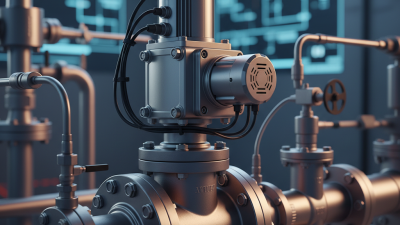
Control valves are essential for managing fluid flow in various systems. Understanding their basic functions is crucial for any engineer or technician. Control valves regulate flow, pressure, and temperature within a system. They respond to signals from controllers, ensuring optimal performance of processes.
The selection of a control valve depends on several factors. For instance, fluid type, pressure requirements, and temperature ranges significantly influence the choice. According to a report by the International Society of Automation, improper valve selection can lead to inefficiencies, costing industries about 30% in lost productivity. A well-chosen valve enhances system reliability and reduces maintenance needs.
Control valves can be classified into linear and rotary types, each serving distinct purposes. Linear valves manage flow in a straight line, while rotary valves offer a more versatile approach for tight shutoff. An analysis by the Control Valve Manufacturers Association highlights that 80% of valve failures stem from poor installation or incorrect sizing. Thus, understanding the basics of control valves is vital for optimal system functionality.
Identifying Your Process Requirements and Specifications
When selecting a control valve, defining your process requirements is crucial. Each application has unique specifications. Consider factors like pressure, temperature, and fluid type. Are you dealing with corrosive materials or high-viscosity fluids? These elements directly affect valve performance. It's essential to gather data on flow rates and pressure drops. Overlooking these details can lead to inefficient operations.
Next, think about your system's compatibility. The valve must fit within existing piping. Ensure that the materials used can withstand the specific conditions. Even minor discrepancies can result in leaks or failures. Many users have faced challenges here. They assumed compatibility without thorough checks. This often leads to costly repairs and downtime.
Lastly, focus on control type. Do you need on/off functionality or precise flow control? Different applications call for various control methods. A mismatch can hinder process efficiency. It's always wise to consult with experts for insights tailored to your requirements. Engaging in this dialogue can illuminate aspects you might have missed.
Evaluating Different Types of Control Valves Available
When evaluating different types of control valves, it's essential to consider their
design and
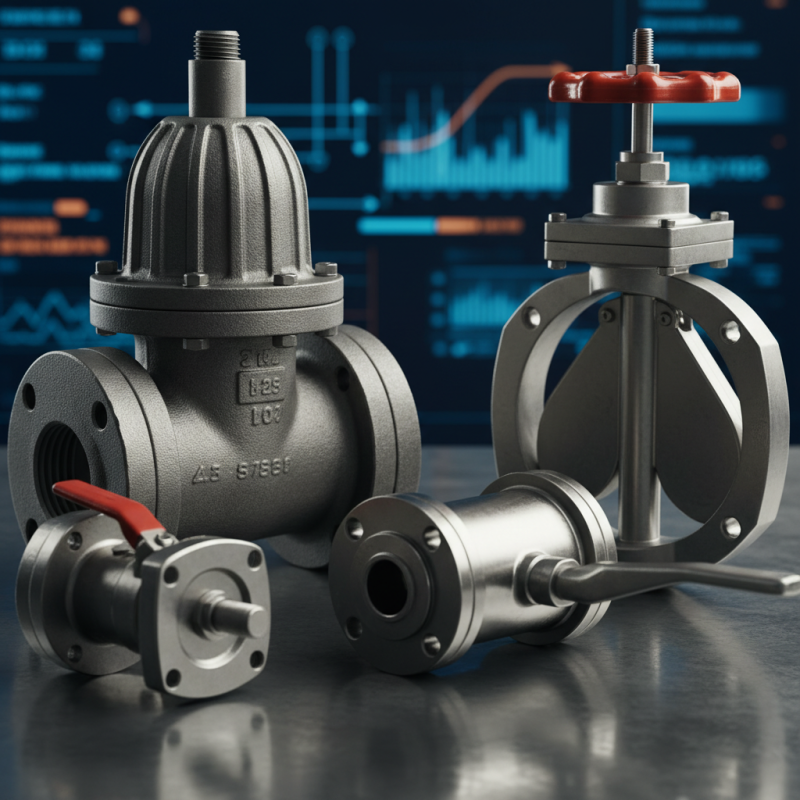
functionality. The three most common types include
globe valves,
ball valves, and
butterfly valves.
Globe valves
are ideal for throttling applications due to their unique flow path. They offer good control but can
introduce pressure drops. Meanwhile, ball valves
provide quick shut-off capabilities with minimal resistance, making them suitable for on/off applications.
However, their throttling capabilities can be limited.
Data from industry reports shows that 70% of
process industries utilize globe valves for flow regulation.
Butterfly valves, with their lightweight structure
and compact design, are approximately 50%
more cost-effective than other types. They are frequently employed in large diameter piping systems.
Each valve type presents its own set of advantages and operational challenges.
Selecting the right valve requires an understanding of your system's specific needs. Factors such as
fluid type,
pressure, and
temperature play a crucial role. A
miscalculation here can result in inefficiencies or system failure.
Always consult with industry professionals to ensure the chosen valve aligns with your
operational requirements.
Analyzing Material Compatibility and Environmental Conditions
When selecting a control valve, analyzing material compatibility and environmental conditions is crucial. The wrong choice can lead to leaks, corrosion, and operational failures. According to a recent report by the International Society of Automation, nearly 30% of valve failures are attributed to incompatible materials. This statistic highlights the importance of deep material analysis.
Consider the media that the valve will handle. Whether it is water, oil, or gas, different materials perform differently under stress. For instance, stainless steel is popular for its corrosion resistance but may not suit certain chemical environments. Furthermore, temperatures and pressures also play significant roles in performance. A valve rated for a high-pressure system may fail if subjected to extreme temperatures without suitable materials.
**Tips:** Check if the material matches both the media and the environmental conditions. Always refer to technical datasheets for compatibility specifications. It’s often beneficial to seek expert advice. Overlooking environmental factors can lead to unexpected downtime and increased costs. Reflecting on your requirements and consulting experts can prevent costly mistakes. The process can be complex and requires careful thought.
Considering Size, Pressure Drop, and Flow Characteristics
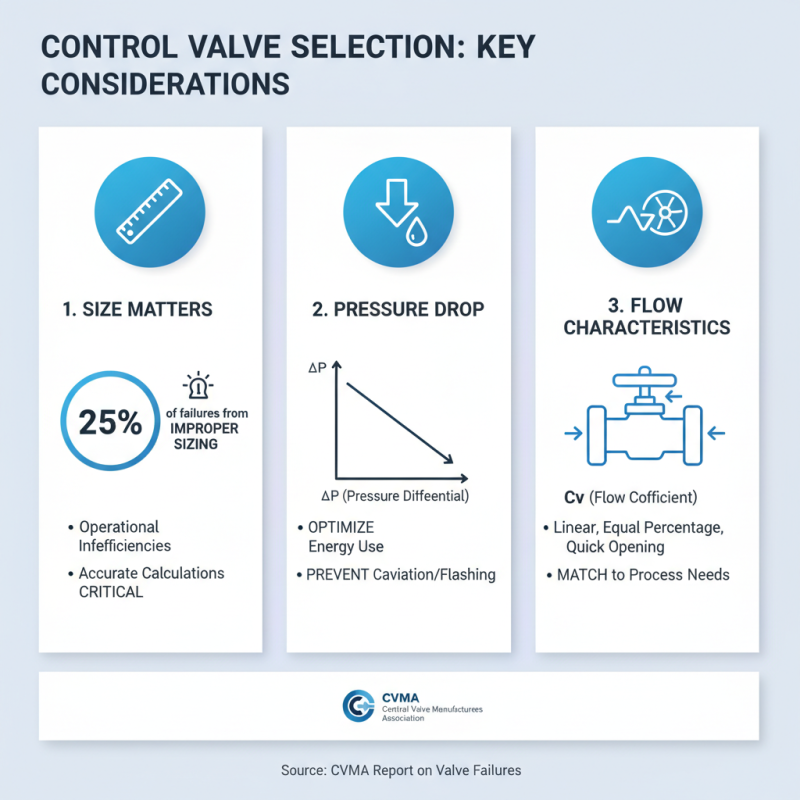
Choosing the right control valve involves careful consideration of size, pressure drop, and flow characteristics. Size is critical; an incorrectly sized valve can lead to operational inefficiencies. According to a report by the Control Valve Manufacturers Association (CVMA), nearly 25% of control valve failures are due to improper sizing. This statistic highlights the need for accurate calculations during the selection process.
Pressure drop is another vital factor. The pressure drop across the valve must align with the system’s requirements. An excessive pressure drop can result in increased energy consumption and reduced performance. A study published in the Journal of Fluids Engineering noted that a 10% decrease in pressure drop could improve system efficiency by up to 15%. Select a valve that balances flow rate and pressure drop for optimal performance.
Flow characteristics further influence valve performance. Each valve type has unique flow patterns—linear, equal percentage, or quick opening. Understanding how these patterns affect system behavior is essential. Engineers often overlook this, leading to suboptimal configurations. Some projects may require a reassessment of flow needs. Balancing these considerations ensures that your control valve meets the specific demands of your application effectively.