Choosing valve packing in 2026 means balancing leak control, operating reliability, and maintenance needs. The right choice depends on the actual valve and service conditions, not just a material name on a product sheet. A packing set that works well in a cool water line may perform poorly with hot steam, abrasive slurry, or frequent cycling. Small differences matter.
Start with the details technicians can verify: process fluid, operating temperature and pressure, stem dimensions, stuffing-box depth, and valve movement. Then compare packing materials and construction. Flexible graphite is often considered for high-temperature service, while PTFE-based packing may suit applications needing low friction and chemical compatibility. These are starting points, not guarantees. Confirm compatibility with current manufacturer data and the valve’s service requirements.
Installation matters too. Correct ring sizing, clean stem surfaces, even compression, and careful gland adjustment can affect performance as much as the packing itself. Ask suppliers for application data, temperature limits, and guidance on adjustment and inspection. Record leakage, adjustment frequency, and wear after installation; those field observations can improve future selections. A catalog match is only a starting point. Even a well-supported choice carries uncertainty when service conditions vary or records are incomplete. That is worth admitting. This guide explains how to compare options, check key specifications, and make a practical selection without assuming one material fits every valve.
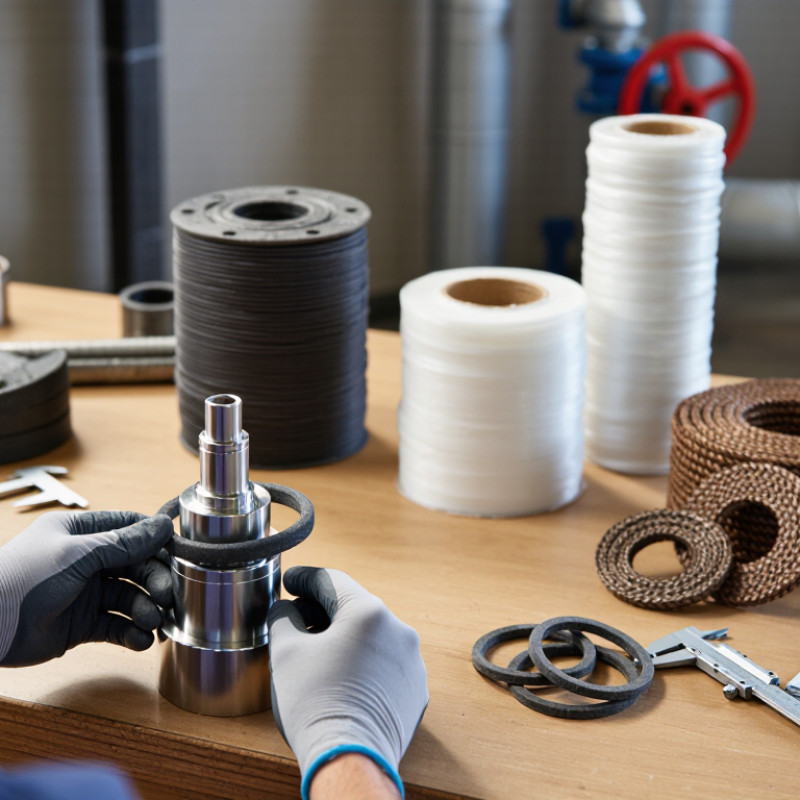
Valve packing is the compressible sealing material placed around a valve stem or shaft. It helps limit process fluid from escaping where the moving stem passes through the valve body. Unlike a static gasket, packing must seal while allowing the stem to move. That balance matters.
A gland follower presses the packing into its chamber, creating contact around the stem. Too little compression can allow leakage; too much can increase friction, wear the stem, or make an actuator work harder. Small details count. In 2026, choosing packing still starts with the actual service: fluid, pressure, temperature, stem movement, and how often the valve cycles. A hot application and a frequently adjusted control valve may need different properties.
Material compatibility is essential, but no datasheet replaces careful installation and inspection. Look for uneven compression, a scored stem, or leakage near the gland. A common mistake is treating tighter adjustment as a lasting fix; it may only hide a mismatch or worn parts. There is no neat universal answer, and operating conditions can change over time. Record what the valve handles and how it performs, then reassess the choice when service conditions shift.
| Packing type | How it seals | Typical service and temperature | Key advantages | Selection considerations |
|---|---|---|---|---|
| Flexible graphite | Compressible graphite rings conform around the stem and packing box to restrict leakage. | Commonly selected for steam and many high-temperature services; some grades are used to approximately 450°C in suitable, non-oxidizing conditions. | Good temperature resistance and low friction; suitable for many demanding valve applications. | Check oxidation limits, pressure rating, stem condition, and whether corrosion inhibitors or anti-extrusion components are needed. |
| PTFE-based packing | PTFE rings or braided fibers deform under gland load to form a low-friction sealing interface. | Often used for chemical service and lower-temperature applications; many grades have an upper service limit near 260°C. | Broad chemical compatibility and low stem friction, which can help reduce operating torque. | Confirm compatibility with the process fluid and check for creep, cold flow, pressure limits, and temperature-related restrictions. |
| Expanded PTFE | Expanded PTFE yarn or tape compresses around the stem to create a conformable seal. | Used in many chemical and general-purpose services within the grade’s pressure and temperature limits. | Flexible and conformable; useful where chemical resistance and a soft sealing material are priorities. | Verify the specific grade’s limits and consider extrusion, relaxation, and adjustment requirements in the packing design. |
| PTFE / aramid combination | Different fibers are combined to provide a sealing surface and added resistance to wear or extrusion. | Used in selected services where a PTFE-based seal needs additional mechanical support; limits depend on the construction and fluid. | Can balance low-friction sealing with improved strength compared with some soft packing constructions. | Check chemical compatibility of every fiber, stem finish, shaft speed, and manufacturer-rated service limits. |
| Carbon or graphite fiber packing | Braided fibers compress to form a seal while providing a mechanically robust packing structure. | Considered for certain high-temperature or demanding services; allowable conditions vary substantially by fiber, treatment, and construction. | Can offer strength and temperature capability for applications beyond some polymer-based packings. | Confirm oxidation resistance, fluid compatibility, electrical or galvanic considerations, and exact operating limits. |
| Low-emissions packing set | A tested packing arrangement controls fugitive emissions when installed and maintained according to its design. | Selected for services subject to applicable emissions requirements; performance depends on the complete valve and packing system. | Can support emissions-control objectives when correctly specified, installed, and monitored. | Review applicable regulations, test qualification, valve type, cycling conditions, installation procedure, and maintenance plan. |
| Selection note: Valve packing seals the clearance around a moving or stationary valve stem. Choose it based on process fluid, operating temperature and pressure, stem movement and surface condition, emissions requirements, and valve design. Temperature ranges shown are typical guidance only—not guaranteed ratings. Always verify the exact packing grade and limits against current technical documentation and applicable standards. | ||||








©Copyright 2020 Gosco Valves. All rights reserved.