Please upgrade your web browser now. Internet Explorer 6 is no longer supported.>

Why Choose Industrial TFT LCD Displays for Global Sourcing?

Why Choose Industrial Tft Lcd Displays for Global Sourcing?

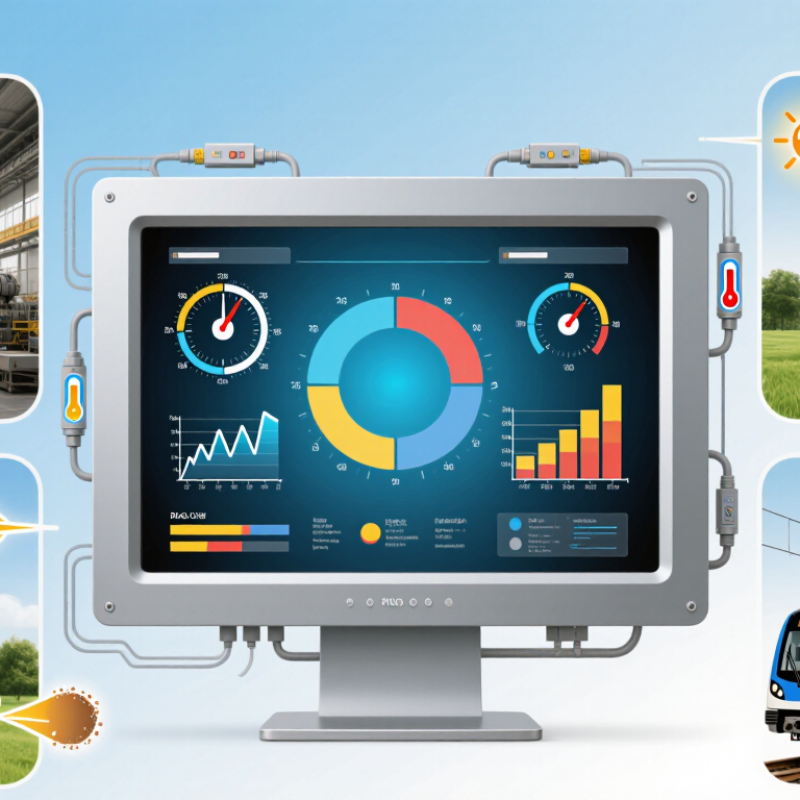
Global sourcing begins with a practical question: will the display survive the machine’s working environment? Industrial TFT LCD panels support demanding equipment in factories, transport systems, medical devices, and outdoor control cabinets. Their value extends beyond image quality. Buyers must examine brightness, viewing angle, operating temperature, touch performance, sealing, and long-term availability.

Display analyst Bob Raikes, founder of Display Daily, has repeatedly emphasized a central sourcing reality: “The display is the user interface to the machine.” That perspective matters. A clear screen can help operators read warnings beside vibrating motors, dusty production lines, or bright warehouse doors. A weak panel can create confusion, downtime, and unnecessary replacement costs.

Reliable suppliers also provide more than a sample unit. They should explain panel specifications, optical bonding options, connector details, firmware compatibility, and quality-control procedures. Traceable testing strengthens confidence. Consistent production matters even more.

Small details matter.

Global buyers should compare lifecycle support, not only the lowest quotation. Industrial TFT LCD products may appear similar, yet their backlights, controllers, and thermal limits can differ sharply. This is where experience becomes useful. Requesting test reports, environmental data, and sample validation can reveal problems early. Still, no sourcing plan is perfect. A panel approved in a laboratory may behave differently inside a sealed enclosure during summer operation. That assumption can fail. Thoughtful buyers leave room for field testing, supplier audits, and honest technical review. This balanced approach makes Industrial TFT LCD sourcing more dependable across markets and applications.

Why Choose Industrial TFT LCD Displays for Global Sourcing?

What Are Industrial TFT LCD Displays?

Industrial TFT LCD displays are flat-panel screens designed for equipment that operates longer and faces harsher conditions than consumer devices. TFT, or thin-film transistor, controls each pixel for clear images and responsive performance. A typical display may show machine status, medical readings, vehicle controls, or outdoor instrument data.

The panel usually includes a backlight, driver electronics, touch layer, and protective cover. Industrial models often provide wide temperature ranges, stable brightness, broad viewing angles, and long-term availability. Some use high-brightness LEDs for sunlight readability. Others use optical bonding to reduce internal reflections. Gloved operators may need projected-capacitive or resistive touch technology. The right choice depends on the enclosure, environment, and user behavior.

Details matter.

During global sourcing, buyers should verify active area, resolution, luminance, interface type, mounting dimensions, and power requirements. Ask for test data, not only a specification sheet. Test samples at the actual viewing angle and operating temperature. A screen that looks excellent indoors may wash out beside a factory window. Even sealed assemblies can fail when condensation, vibration, or poor cable routing is ignored. Connector placement also deserves attention. It may seem minor, but it can force an expensive enclosure redesign. No display fits every application. Engineers should question lifetime claims and examine the assumptions behind long-term supply commitments.

Why Choose Industrial TFT LCD Displays for Global Sourcing?

Industrial TFT LCD displays are flat-panel screens that use thin-film transistor technology to control each pixel. They are commonly selected for equipment interfaces, measurement systems, transportation displays, medical devices, and factory automation because they can combine clear image quality with long-term availability, wide temperature options, durable construction, and flexible integration.

Common Industrial TFT LCD Resolution Options

The chart compares widely used resolution formats. Pixel counts are calculated from each horizontal and vertical resolution and are shown in millions of pixels. These are representative technical options rather than company or market-share data.

How Industrial TFT LCD Displays Meet Demanding Operating Conditions

Industrial TFT LCD displays are built for places where ordinary screens struggle. They operate in factory panels, transport equipment, medical instruments, and outdoor control cabinets. These environments often include dust, vibration, temperature changes, and constant operation.

A suitable industrial display uses a wide operating-temperature range and stable backlighting. Optical bonding can reduce internal reflections and improve readability under strong lighting.

High-brightness panels help operators read alarms near windows or under direct sunlight. Anti-glare surfaces also reduce eye strain, although they may slightly soften image contrast.

That trade-off deserves testing.

Touch performance matters too. Operators may wear gloves, use styluses, or work with wet hands. Projected capacitive touch can support these needs when correctly configured.

Some applications still benefit from resistive touch because it responds to pressure and works with many glove types. Vibration testing, connector retention, and electromagnetic compatibility should be checked before volume purchasing.

From practical integration work, mechanical fit is often underestimated. A display may meet its brightness target but fail because its cable exits at the wrong angle.

Engineers should verify mounting dimensions, viewing angles, sealing requirements, and long-term backlight stability.

Protection ratings can help, but an enclosure rating does not solve every installation problem. Dust, heat, and condensation still require careful system design.

Global sourcing also demands clear inspection criteria, sample testing, and documented acceptance limits.

No panel is perfect. The right choice depends on the actual operating conditions.

Key Benefits for Global Equipment Manufacturers

Global equipment manufacturers choose industrial TFT LCDs for more than clear images. Grand View Research estimated the industrial display market at about US$6 billion in 2023, with roughly 7% growth expected through 2030. Omdia’s 2024 Display Long-Term Demand Forecast also identifies LCD as the leading flat-panel technology by display area. This supports long-term sourcing. LCD supply remains broad, scalable, and familiar to engineering teams. Yet, volume does not guarantee reliability.

From factory trials, engineers often value stable brightness, wide viewing angles, and touch performance under gloves. Industrial TFT modules can also support custom bezels, sunlight-readable designs, and extended production schedules. Buyers should request temperature, vibration, humidity, and aging test results. IEC 60068 provides useful environmental testing references. A datasheet alone is not enough. Procurement teams sometimes focus too heavily on unit price. That approach can fail when connectors, firmware changes, or replacement panels appear later. Grand View Research’s market data shows growth, but growth can also increase component pressure. A lower quote may hide a shorter lifecycle. Lifecycle planning matters more. One practical weakness remains: some manufacturers specify display size before defining viewing conditions. A 10.1-inch panel may work indoors, but struggle beside a bright machine window. Careful global sourcing connects optical performance, mechanical fit, compliance documentation, and service continuity.

Essential Specifications for Comparing Global Suppliers

Global sourcing requires more than a low unit price. The Industrial Displays market report by MarketsandMarkets projects continued growth through 2028, increasing pressure on suppliers and component availability. Buyers should compare panel size, active area, resolution, luminance, contrast, viewing angle, and response time. A 1,000-nit panel may suit outdoor equipment, while 500 nits can reduce power consumption indoors. Brightness alone can mislead.

Temperature performance deserves careful testing. Ask for operating and storage ranges, backlight lifetime, uniformity data, and burn-in results. Industrial TFT LCD displays often face vibration, dust, humidity, and long operating hours. Check interfaces such as LVDS, eDP, RGB, and HDMI. Confirm touch compatibility, cover-glass thickness, glove operation, and optical bonding options. Request sample measurements, not only datasheet claims.

Global delivery adds another risk. UNCTAD’s Review of Maritime Transport 2023 states that over 80% of international merchandise trade moves by sea. The World Bank’s 2023 Logistics Performance Index assessed 139 economies, highlighting differences in customs, tracking, and delivery reliability. Compare supplier lead times, minimum order quantities, safety-stock support, packaging tests, and change-notification procedures. Include IEC 60068 environmental testing and relevant regional safety requirements in the specification. I would still challenge every “lifetime” figure, because actual heat, voltage, and duty cycles can shorten it.

Why Choose Industrial TFT LCD Displays for Global Sourcing? - Essential Specifications for Comparing Global Suppliers

The following supplier-comparison framework uses commonly specified industrial TFT LCD parameters and indicative market ranges. Actual values should be confirmed through datasheets, samples, reliability reports, and production documentation.

Specification Standard Industrial Panel Enhanced Industrial Panel Rugged / Outdoor-Oriented Panel Verification Points for Global Sourcing
Typical screen sizes 3.5–10.1 in 10.4–15.6 in 15.6–32 in Confirm active area, outline dimensions, mounting holes, bezel clearance, and availability of long-term replacement supply.
Common aspect ratios 4:3, 5:4, and 16:9 4:3, 16:9, and 16:10 16:9, 16:10, and wide-format designs Check whether the aspect ratio matches the mechanical enclosure and the intended user interface.
Typical resolutions 480 × 272 to 1280 × 800 pixels 800 × 480 to 1920 × 1080 pixels 1280 × 800 to 3840 × 2160 pixels Compare pixel count, pixel arrangement, controller compatibility, and image-scaling requirements.
Brightness 250–500 cd/m² 500–1,000 cd/m² 800–1,500+ cd/m² Request measured brightness at shipment and confirm whether the value is typical or minimum. For sunlight readability, evaluate optical bonding and contrast in the complete assembly.
Contrast ratio 600:1–1,000:1 800:1–1,500:1 1,000:1–2,000:1 Ensure measurement conditions are comparable because contrast results vary with test method, temperature, and viewing angle.
Viewing angle Approximately 70°–80° per direction Approximately 80°–89° per direction Approximately 85°–89° per direction Prefer IPS or other wide-viewing-angle technologies when multiple users or off-axis operation is expected. Verify color and contrast shift, not only the stated angle.
Operating temperature −20°C to +70°C −30°C to +80°C −30°C to +85°C or wider with design qualification Confirm whether the range applies to the panel, backlight, touch sensor, or complete display module. Ask for start-up performance at the low-temperature limit.
Storage temperature −30°C to +80°C −40°C to +85°C −40°C to +95°C, depending on construction Review packaging, humidity exposure, condensation risk, and recovery requirements after temperature cycling.
Backlight lifetime 30,000–50,000 hours to approximately 70% of initial brightness 50,000–70,000 hours to approximately 70% of initial brightness 50,000–100,000 hours to approximately 70% of initial brightness Check the stated L70 condition, LED current, ambient temperature, brightness setting, and whether the figure is calculated or test-based.
Color performance 16.7 million colors; standard sRGB-oriented output 16.7 million colors; improved uniformity options 16.7 million colors or higher; optional color calibration Request color-uniformity data, viewing-angle results, and calibration tolerances when the display is used for inspection or medical-adjacent visualization.
Touchscreen options Projected capacitive or resistive touch Projected capacitive with glove-capable or wet-touch options Projected capacitive, resistive, or customized cover-lens assemblies Verify cover-glass thickness, glove and water performance, touch controller interface, surface hardness, and electromagnetic compatibility.
Optical bonding Air gap is common Partial or full bonding available Full optical bonding is commonly considered for sunlight, shock, and condensation control Compare reflection, haze, bond uniformity, repairability, and the effect of bonding on thermal performance and total cost.
Common electrical interfaces Parallel RGB, SPI, or MIPI DSI LVDS, eDP, MIPI DSI, or HDMI through a controller eDP, LVDS, HDMI, DisplayPort, or customized video interfaces Confirm pin assignment, voltage levels, connector type, signal timing, cable length, EMI behavior, and controller firmware ownership.
Supply voltage Typically 3.3 V logic; LED input varies by module Typically 3.3 V logic with separate LED power requirements Typically 5 V or 12 V system input through an integrated or external driver Request complete power tables covering start-up, steady-state, maximum brightness, sleep mode, and inrush current.
Mechanical integration Open-frame, board-level, or basic bezel Metal frame, reinforced mounting, or panel-mount construction Sealed front surface, gasket options, reinforced frame, and custom enclosure integration Check dimensional drawings, flatness, screw torque limits, connector access, cable bend radius, and tolerance stack-up.
Ingress protection considerations Usually depends on the final enclosure Front-side sealing may be available Front-panel sealing can be designed for applications requiring dust or water resistance IP ratings apply to a defined assembly and test condition. Confirm whether the rating covers the display module, front surface, or complete product.
Vibration and shock qualification Application-dependent; basic handling qualification Application-specific vibration and mechanical shock testing Formal testing is more commonly requested for transportation, industrial control, and outdoor equipment Specify test standards, frequency range, acceleration, duration, axis direction, mounting method, and post-test acceptance criteria.
Regulatory documentation RoHSREACH RoHSREACHEMC support RoHSREACHEMCEnvironmental data Ask for current declarations, material records, safety data where applicable, and evidence that documentation matches the quoted part number.
Quality-control records Visual inspection and basic electrical testing Inspection standards, aging tests, and lot traceability Lot traceability, reliability testing, environmental testing, and customized acceptance criteria Review defect classification, AQL definition, inspection sampling, burn-in duration, dead-pixel policy, and corrective-action procedures.
Customization scope Standard panel, cable, connector, or firmware configuration Custom FPC, cover glass, touch layout, brightness, and mounting features Custom optical stack, sealing, thermal design, enclosure, and system-level integration Separate non-recurring engineering charges, tooling ownership, sample approval, engineering-change control, and end-of-life notification terms.
Indicative sample lead time About 2–6 weeks for standard configurations About 4–8 weeks for configured or customized samples About 6–12+ weeks for bonded, sealed, or heavily customized assemblies Lead times depend on existing tooling, component availability, approval cycles, and test requirements. Obtain a written schedule with milestones.
Indicative production lead time About 4–8 weeks after order confirmation About 6–12 weeks after engineering approval About 8–16+ weeks for customized or low-volume projects Clarify whether the quoted lead time includes component procurement, production, inspection, export packing, and transit preparation.
Warranty expectation Commonly 12 months from shipment Commonly 12–24 months from shipment or delivery Commonly 12–24 months, subject to operating conditions and installation requirements Define covered failures, return authorization, replacement timing, freight responsibility, exclusions, and evidence required for a claim.
Best-fit applications Embedded instruments, meters, compact controllers, and indoor equipment Factory automation, kiosks, medical equipment interfaces, and transportation systems Outdoor terminals, fleet equipment, marine systems, heavy machinery, and high-vibration installations Choose based on the complete operating environment rather than brightness or resolution alone.
Comparison note: Values shown are indicative engineering ranges rather than guarantees for every industrial TFT LCD module. A reliable global-sourcing decision should be based on approved samples, controlled drawings, test reports, traceability, change-notification procedures, total landed cost, and documented after-sales support.

Applications, Certifications, and Sourcing Considerations

Why Choose Industrial TFT LCD Displays for Global Sourcing?

Industrial TFT LCD displays support clear, stable interfaces in demanding equipment. Factory HMIs need readable screens beside moving machinery. Medical monitoring devices require consistent brightness and dependable operation. Outdoor kiosks face sunlight, dust, and changing temperatures. The right panel needs suitable viewing angles, touch performance, and a long product lifecycle. That choice is practical.

Certifications deserve careful checking.

CE may support access to European markets, while UKCA can apply to products sold in Great Britain. FCC requirements may matter for equipment used in the United States. RoHS and REACH documentation helps verify restricted-substance control. IEC 62368-1 can be relevant to certain information and communication technology equipment. However, a certificate is not automatically proof of complete product compliance. Ask whether it covers the display, the finished device, or only a test sample.

Sourcing teams should request samples, drawings, electrical specifications, and test reports before placing volume orders.

Check operating temperature, backlight lifetime, connector consistency, and touch-glove performance. Confirm minimum order quantities, packaging methods, spare-part support, and change-notification procedures. Traceable quality records add confidence. In practice, a specification can still miss daily handling conditions. A screen may pass laboratory tests yet feel weak under direct sunlight or repeated cleaning. Small pilot batches expose these gaps early. Supplier audits and clear acceptance criteria reduce costly surprises.