An M12 Power Connector brings electrical power to equipment where space is tight and connections face vibration, dust, or moisture. You may find one on a factory sensor, a compact actuator, or a small motor near a production line. Its threaded coupling helps keep the connection secure. That matters when machinery runs for long shifts.
Not every M12 connector carries power. Different codings, pin arrangements, current ratings, and sealing levels serve different jobs. A connector that fits may still be electrically unsuitable. Check the device and cable specifications before choosing one. Small detail. Important consequence.
In practical use, an M12 Power Connector can simplify wiring between control cabinets and field equipment. Pre-assembled cables may also reduce installation time, though they do not remove the need for careful routing and inspection. Heat, cable length, and load can affect performance. So can repeated handling. Product data from the manufacturer is the best guide for ratings and compatibility.
This guide explains common applications, connector variations, and selection points in plain terms. It also looks at limitations that are easy to overlook. One point deserves a second look: “power connector” does not mean universal connector. Check the actual coding and pinout. That small step can prevent a mismatched connection and unnecessary downtime.
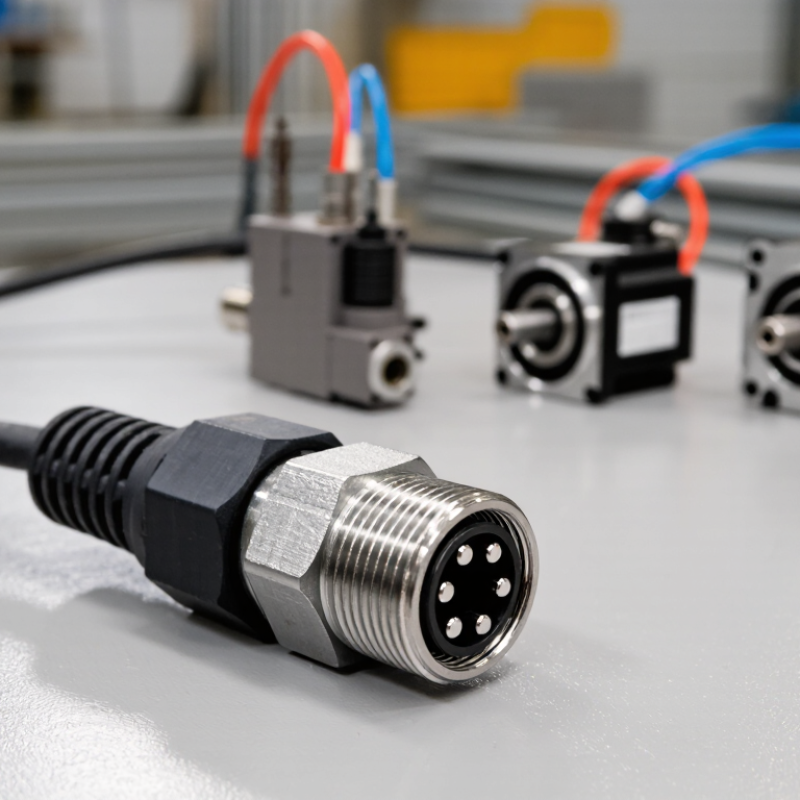
An M12 power connector carries electrical power to compact equipment in factories, mobile machinery, and outdoor installations. Its threaded circular coupling helps keep the connection secure when cables face vibration or repeated movement. The small form also suits crowded control panels. But compact does not mean interchangeable.
Design details determine whether a connector fits a specific job. M12 power versions may use different pin arrangements, keying, and contact sizes. These features help prevent mismatched connections, but only when the plug and socket are designed to work together. Check the wiring diagram before installation. A familiar-looking connector can have a different pin assignment.
Electrical ratings vary by connector and cable assembly. Confirm the permitted voltage, current per contact, and operating temperature in the technical documentation. Higher current can create heat, especially with long cables, poor crimps, or loose contacts. Sealing performance also depends on correct mating and cable entry; a threaded coupling alone does not guarantee protection from moisture. In practice, installers should inspect the gasket, align the key, and tighten the coupling as specified. A connector that feels secure may still be incorrectly wired. That small check matters.
An M12 power connector carries electrical energy from a supply or distribution block to equipment on a machine. Its compact, threaded design helps keep connections secure where vibration, dust, or limited panel space can be concerns. Depending on its coding and pin arrangement, it may serve sensors, valve terminals, small actuators, or compact motors.
Not every M12 connector carries power.
In a typical setup, a cable links a protected power source to the device. The connector’s contacts transfer voltage and current through the mating interface, while the threaded coupling helps prevent accidental loosening. Check the device documentation for the required pinout, voltage, current, and cable size. A connector that fits mechanically may still be electrically unsuitable. That matters.
Power is often distributed near the equipment, reducing long cable runs and making maintenance more manageable. For example, a technician might disconnect a valve assembly at the machine instead of tracing a cable back to a control cabinet. Sealed connector versions can suit demanding environments, but the stated ingress rating and temperature range should match actual conditions. In practice, tidy wiring diagrams can hide awkward access or tight bends. Leave enough room to turn the coupling by hand, and verify the connection before energizing the circuit.
M12 power connections are common where compact, secure wiring must survive vibration, dust, or frequent servicing. In factory automation, they can supply power to actuators, small motors, valve manifolds, and distributed I/O devices. Technicians may route them along conveyor frames, then disconnect a device without opening a large control cabinet. That matters. Their threaded coupling helps resist loosening, but connector choice still depends on current, voltage, pin configuration, and the equipment’s environmental rating.
Use is growing alongside industrial automation, though M12 connectors are only one part of that picture. The International Federation of Robotics reported 541,302 industrial robots installed worldwide in 2023, a 10% rise from 2022, in World Robotics 2024. Robot cells often combine sensors, drives, and actuators, creating many compact power and signal connections. M12 power variants can suit certain devices, but they are not interchangeable with every M12 data connector. Check the device specifications and cable assembly before installation. A high ingress-protection rating on one component does not guarantee the whole connection stays sealed. It is easy to over-specify a connector; sometimes the real weak point is a poorly supported cable.
Choosing an M12 power connector starts with the electrical load, not the thread size. Check the rated voltage and current for the exact contact arrangement and cable assembly. A connector may physically fit while its contacts are unsuitable for the load. That detail matters. Compare the rating with the equipment’s normal operating conditions, and allow for startup current where motors or actuators are involved. If several devices share a connection, calculate the combined demand rather than guessing.
The installation environment matters just as much. A machine near washdown spray needs suitable sealing, while a cabinet connection may face dust, oil mist, or temperature changes instead. Check the specified ingress protection rating under the conditions in which it was tested. Also consider cable-jacket material, vibration, and the connector’s temperature range. A tight seal can still fail if the cable is repeatedly bent at the entry point. Small detail, real consequence.
Match the connector coding and pin layout to the equipment documentation; similar-looking versions are not necessarily interchangeable. I would verify the full assembly rating, since the cable, contacts, and mating connection can each limit performance. Do not rely on a single number printed on a product page. It is easy to overlook the actual duty cycle, especially in a compact installation. When the load or exposure is uncertain, ask the equipment supplier for the applicable ratings before installation.
Representative voltage and current ratings by M12 coding
M12 connectors carry power and signals in industrial equipment. L-coded versions are commonly used for higher-current power distribution, while A-, D-, and X-coded versions are often selected for sensors, actuators, and data connections. Ratings vary by connector design and manufacturer; check the product datasheet and wiring requirements before selecting a connector.
What Is an M12 Power Connector Used For?
Installation and Safety Considerations for M12 Power Connectors
M12 power connectors carry electrical power to equipment in compact, often demanding installations. Correct installation starts with checking the connector’s pinout, voltage, current rating, and AC or DC requirements against the equipment documentation. Do not rely on appearance alone; similar connectors can have different configurations. A mismatch may damage equipment or create a hazard.
Isolate the power source before wiring or mating the connector. Check that conductors match the specified gauge and that insulation is not nicked near the terminals. Follow the manufacturer’s assembly instructions and use the stated tightening method. Too loose can compromise contact; too tight can damage the connector. Small details matter.
Seat the coupling fully, and confirm any seal is clean and undamaged. An ingress-protection rating depends on correct assembly and the conditions specified for that product. Keep cable strain low with suitable support, especially where vibration or movement is expected. Avoid connecting or disconnecting under load unless the connector is explicitly rated for it. Before energizing, inspect the finished connection and test it using an appropriate procedure. Cable routing is easy to overlook, even on a tidy panel. That deserves a second look.
| Topic | Typical Information | Installation and Safety Considerations |
|---|---|---|
| Primary purpose | Carries electrical power to industrial devices such as sensors, actuators, valves, compact motors, and control equipment. | Confirm that the connector is designed for power; an M12 form factor alone does not establish its electrical rating or intended use. |
| Connector size | “M12” refers to the nominal 12 mm metric thread used by the coupling mechanism. | Match the connector’s thread, coding, pin arrangement, and gender. Do not force mismatched connectors together. |
| Coding and pin arrangement | M12 connectors use different mechanical codings and contact arrangements for different functions. L-coded versions are commonly used for DC power distribution; other power designs are also available. | Use only the coding and pinout specified for the equipment. Never assume that connectors with the same thread have compatible wiring. |
| Voltage and current | Voltage and current limits depend on the specific connector, number of contacts, conductor size, temperature, and installation conditions. | Check the device and connector datasheets for rated voltage, current per contact, derating guidance, and permitted wire size before energizing. |
| Common applications | Factory automation, machine tools, packaging equipment, material-handling systems, and distributed I/O installations. | Verify that the connector, cable, and connected equipment are suitable for the environment and the load, including any motor-starting or inrush current. |
| Cable and termination | Power assemblies may be factory-molded or field-wireable, with cable types and conductor sizes selected for the application. | Follow the specified stripping length, conductor preparation, and termination method. Ensure the cable is supported and not pulled, twisted, or bent below its minimum bend radius. |
| Mating and tightening | A threaded coupling secures the mating connector and helps maintain contact and sealing when correctly assembled. | Align the connector carefully and tighten to the manufacturer’s specified torque. Avoid cross-threading, overtightening, and using the coupling nut to pull misaligned parts together. |
| Ingress protection | Some assembled M12 connections are rated for protection against dust and water, but the rating depends on the complete connector system and how it is installed. | Check the specified IP rating for the mated assembly. Keep sealing surfaces clean and undamaged, fully mate the connector, and fit protective caps to unused ports. |
| Environmental conditions | Temperature, vibration, chemicals, oils, UV exposure, and repeated flexing can affect connector and cable performance. | Select materials and cable construction suited to the site conditions, and inspect periodically for looseness, corrosion, cracked seals, or damaged insulation. |
| Electrical safety | An M12 power connector can expose hazardous energy if used in an energized circuit or wired incorrectly. | De-energize and isolate the circuit before installation or maintenance. Follow applicable electrical procedures, verify polarity and continuity, and do not mate or unmate under load unless the equipment is specifically rated for it. |
| Pre-start inspection | A visual and electrical check can identify assembly errors before equipment is powered. | Confirm the pinout, polarity, cable condition, coupling security, and required seal. Test the completed circuit according to the equipment instructions before normal operation. |
Ratings and procedures vary by connector and equipment. Always follow the applicable datasheets, installation instructions, and local electrical safety requirements.
1272 Speers Rd Unit 4
Oakville ON Canada L6L 2X4
©Copyright 2020 Gosco Valves. All rights reserved.