Choosing a Rapid Ev Charger is not simply a matter of selecting the highest advertised kilowatt rating. Drivers need reliable energy, predictable charging times, safe installation, and clear ownership costs. This guide introduces seven practical tips for evaluating equipment at homes, workplaces, and public sites. It considers charging speed, connector compatibility, electrical capacity, software, durability, warranty support, and total operating value.
Small details matter. A 150 kW unit may perform below expectations when the vehicle accepts less power or the battery is cold. Likewise, a compact site can experience delays when several vehicles share limited electrical capacity. Real-world judgment comes from checking manufacturer specifications, independent certification, installation requirements, and service records. Those sources deserve more trust than bright screens or dramatic marketing claims. Weather also matters. Heat, rain, dust, and winter temperatures can influence charging performance and cable handling. A dependable Rapid Ev Charger should offer appropriate protection, accessible controls, emergency procedures, and responsive technical support.
However, no product is perfect. Some reviews overlook queueing, payment failures, or the awkward weight of a liquid-cooled cable. This guide leaves room for those uncomfortable questions, because a charger that looks excellent on paper may disappoint during a busy evening. Readers can use the seven tips as a careful comparison framework, then confirm local electrical and safety requirements with qualified professionals. The goal is not the fastest claim. It is dependable charging that fits real driving habits, site limits, and long-term expectations.
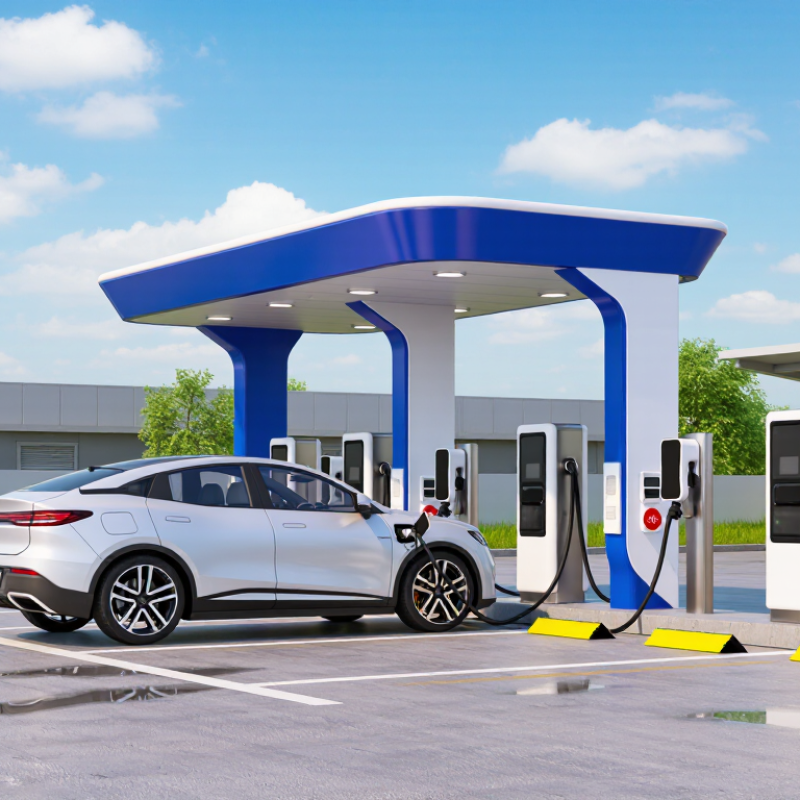
7 Tips for Choosing a Rapid EV Charger
Define the Charging Speed Your EV and Drivers Actually Need
Charging speed is not simply the largest number on a product sheet. Each EV accepts power at a different maximum rate. Battery temperature, charge level, and cable capacity can reduce that rate. Check the vehicle’s technical data before selecting equipment. A charger rated at 150 kW may deliver much less to a car that accepts only 80 kW. Drivers may not need a full battery. They may need 120 kilometres during a short lunch break.
Measure real usage. How long do vehicles usually stay parked? A taxi may need a rapid top-up between trips, while an office vehicle can charge for six hours. Record arrival times, departure times, battery levels, and daily distance for several weeks. Small details matter. One busy hour can change the whole calculation.
Power sharing also affects the result. If four vehicles connect together, available power may be divided between them. Check the site’s electrical capacity and planned expansion with a qualified professional. Ask the charger supplier for performance data under different battery levels, not only peak output. Pilot testing is valuable. Use session logs to compare promised and delivered energy. Our first forecast may be wrong, especially when winter temperatures arrive. Leave practical headroom, but avoid paying for unused capacity. Drivers need predictable charging more than impressive specifications.
Use charging power and expected dwell time to define the speed your EV and drivers actually need.
Estimates assume the charger delivers its rated power continuously and the vehicle averages 3.5 miles per kWh. Real-world results can be lower because of battery state of charge, temperature, vehicle charging limits, and charging taper. For most short stops, 100–150 kW can add approximately 88–131 miles in 15 minutes under these conditions.
A rapid charger is useful only when its connector matches your vehicle. Check the charge-port shape, current rating, and communication protocol before comparing power output. AC and DC charging use different systems, even when the plug appears similar. IEC 62196 defines several connector configurations, while ISO 15118 supports advanced vehicle-to-charger communication. A physical fit is not enough.
Review your vehicle manual or official technical sheet. Confirm the maximum DC input, supported voltage range, and charging curve. A 150 kW charger may deliver far less if your vehicle accepts only 80 kW. The International Energy Agency reported more than four million public charging points worldwide at the end of 2023. It also recorded about 1.3 million new public points that year, showing how quickly charging networks are expanding (IEA, Global EV Outlook 2024).
Regional standards matter too. Some vehicles require CCS-based connections, while others use different DC formats or adapters. An adapter can solve a connector mismatch, but it may reduce power or disable communication features. Check carefully. Charging tests should include cold weather, battery state of charge, and payment authorization. These details are often missed. I have learned that a neat cable and a high power rating can create false confidence. The best choice is the charger that your vehicle can repeatedly use safely, not the one with the largest number on its screen.
Tip 1: Check the charger’s maximum power output, not just its advertised speed. A 150 kW unit may deliver less when several vehicles share the station. Confirm whether its output matches your vehicle’s charging limit.
Tip 2: Compare charging time from 10% to 80%, rather than relying on a full-charge estimate. Most batteries slow down near higher levels. In practical testing, the final 20% can take surprisingly long. Tip 3: Examine the charging curve. A stable 100 kW supply may be more useful than a brief 250 kW peak. Ask for measured performance, not only promotional figures. Real conditions matter.
Tip 4: Review energy efficiency, including conversion losses between the grid and battery. A charger using slightly more electricity may waste more energy over repeated sessions. Tip 5: Look for efficiency data at different loads and temperatures. Cold weather can reduce both power and usable charging speed. Tip 6: Consider cable temperature, cooling systems, and ventilation. These details affect sustained output during busy periods. Tip 7: Check whether the site supports load balancing. Smart power distribution can prevent sudden slowdowns when multiple cars arrive. I once focused too heavily on peak kilowatts and ignored queue conditions. That was a costly assumption. Compare kilowatt-hours delivered, minutes spent, and electricity consumed. These three measurements reveal a charger’s real value.
7 Tips for Choosing a Rapid EV Charger
Check the electrical service before comparing charger models. A rapid charger can draw more power than an entire small commercial building. Request a load calculation, not a rough estimate. Tip one: confirm available amperage and transformer capacity. Tip two: allow for future charging demand. The International Energy Agency reported over four million public charging points worldwide in 2023. Its 2024 outlook says public charging capacity must expand sharply by 2035. Tip three: select equipment that can scale without replacing the whole installation.
Inspect the site carefully. Tip four: measure cable routes, parking angles, drainage, lighting, and accessibility. A few extra meters of trenching can change the project budget. Tip five: check whether the pavement, switchgear, and distribution board need upgrades. Do not ignore local permits or utility approval. Safety matters. Tip six: require residual-current protection, overcurrent protection, thermal monitoring, emergency isolation, and weather-rated enclosures. Relevant electrical codes and IEC 61851 provide useful technical reference points, but local rules always control.
Review the installation plan with a qualified electrical professional. Tip seven: verify commissioning tests, software updates, maintenance access, and clear fault procedures. The National Renewable Energy Laboratory highlights uptime as a key factor in public charging usability. A charger that is powerful but frequently unavailable serves nobody well. Even a careful survey can miss peak demand from nearby buildings. Leave capacity for that possibility. Cheap installation estimates often become expensive revisions.
7 Tips for Choosing a Rapid EV Charger?
A rapid charger is more than its maximum kilowatt rating. Evaluate the software behind it. Check remote diagnostics, load management, payment integration, and open communication protocols. The system should show charger status, session errors, energy use, and restart history. A clear dashboard saves time during a rainy roadside repair.
The International Energy Agency’s Global EV Outlook 2024 reported nearly four million public charging points worldwide at the end of 2023. That stock increased by more than 40% in one year. Growth makes uptime more important. Ask for maintenance response times, spare-part availability, technician coverage, and preventive inspection intervals. Request evidence from comparable installations. Marketing promises are not operating data. They can disappoint.
Read the warranty line by line. Confirm coverage for power modules, screens, cables, payment hardware, labor, and travel. Check whether software updates remain included after the warranty ends. Calculate total ownership cost over seven to ten years. Include installation, grid upgrades, demand charges, electricity losses, software subscriptions, payment fees, maintenance, and downtime. The U.S. Department of Energy’s Alternative Fuels Data Center highlights electricity demand charges as a significant factor in public charging economics. A cheaper unit may create higher lifetime costs. Forecasts are fragile. Test several traffic and energy-price scenarios before signing.
| Tip | Key Assessment Area | Practical Data to Compare | Recommended Reference Point | Potential TCO Impact |
|---|---|---|---|---|
| 1 | Match Power to the Use Case | Rated output, number of connectors, simultaneous power sharing, charging curve, and compatibility with the site’s vehicle mix. | Common commercial DC fast-charging installations range from approximately 50 kW to 180 kW per charging cabinet. Higher power is useful only when vehicles and grid capacity can support it. | Oversizing can increase equipment, transformer, and demand-charge costs without improving utilization. |
| 2 | Check Energy Efficiency | Conversion efficiency, standby consumption, thermal-management strategy, operating-temperature range, and power-factor performance. | Well-designed DC chargers commonly achieve approximately 92%–97% conversion efficiency under suitable operating conditions. Confirm how the figure was measured. | A 3% efficiency difference on 100,000 kWh of annual delivered energy represents about 3,000 kWh of additional electricity use. |
| 3 | Evaluate Software and Connectivity | Remote monitoring, session records, user authentication, tariff configuration, load management, diagnostics, firmware updates, APIs, and cybersecurity controls. | Prefer open communication support such as OCPP 1.6J or OCPP 2.0.1, with documented API access and secure remote updates. Verify mobile-network and Ethernet options. | Open software interfaces can reduce switching costs and make it easier to change network or billing-service providers later. |
| 4 | Verify Reliability and Maintenance | Published uptime definition, mean time to repair, spare-parts availability, preventive-maintenance schedule, remote fault resolution, and local service coverage. | Set a contractual target of at least 97% operational uptime, while clearly defining exclusions, measurement periods, and response times. | Downtime reduces charging revenue and customer satisfaction. Annual preventive and corrective maintenance is often budgeted at roughly 2%–6% of equipment cost. |
| 5 | Read the Warranty Carefully | Warranty length, covered components, labor and travel coverage, connector and cable coverage, software support, exclusions, transferability, and optional extensions. | Commercial hardware warranties commonly cover approximately 2–5 years. Confirm whether coverage applies to the full system or only selected parts. | A longer or service-backed warranty may reduce early repair risk, but compare its price with expected replacement-part and labor costs. |
| 6 | Account for Site and Installation Costs | Utility upgrade, transformer, switchgear, trenching, foundations, permits, networking, signage, accessibility requirements, and construction labor. | Hardware may represent only part of the project budget; civil and electrical work can vary substantially by site and may exceed the charger purchase price. | A low equipment quote can become expensive if the site requires a long cable run, utility reinforcement, major civil work, or a new transformer. |
| 7 | Calculate Total Cost of Ownership | Purchase price, installation, electricity, demand charges, software fees, payment processing, maintenance, insurance, connectivity, replacement parts, and residual value. | Use a 7–10 year model and test low, expected, and high utilization. Include delivered energy, peak demand, downtime, inflation, and financing assumptions. | TCO per delivered kWh or per charging session is more useful than purchase price alone. A simple model is: CapEx + operating costs − residual value ÷ delivered energy. |
1272 Speers Rd Unit 4
Oakville ON Canada L6L 2X4
©Copyright 2020 Gosco Valves. All rights reserved.