China Top 10 Cleanroom Window Manufacturers
A cleanroom window is more than a view into a controlled space. It forms part of the room’s physical boundary, where joints, frames, and glazing can affect cleaning, visibility, and contamination control. For buyers comparing China’s cleanroom window manufacturers, a polished brochure is not enough. Details matter: flush interior surfaces, sealed frame edges, glass clarity, and how the assembly fits the wall system.
Contamination-control specialist Tim Sandle has written extensively about the discipline required to maintain controlled environments. A paraphrase of a principle reflected in his work is: “Every surface and boundary deserves attention because small weaknesses can complicate contamination control.” This is a paraphrase, not a verbatim quotation. It is a useful lens for assessing window suppliers, alongside documented specifications, project experience, quality procedures, and clear communication about customization.
This guide examines ten manufacturers through practical questions: Do they provide technical drawings? Can they explain materials and sealing options? Do their product details match the intended cleanroom conditions? Look closely at the edges. Ask for evidence, not just assurances. A ranking can help readers begin, but it cannot replace project-specific checks. That is the imperfect part: a strong supplier on paper may still be a poor fit for a particular site. The best comparison weighs verifiable capabilities against the room’s actual requirements, including cleaning routines, visibility needs, and installation constraints.
What Cleanroom Windows Are and How They Support Controlled Environments
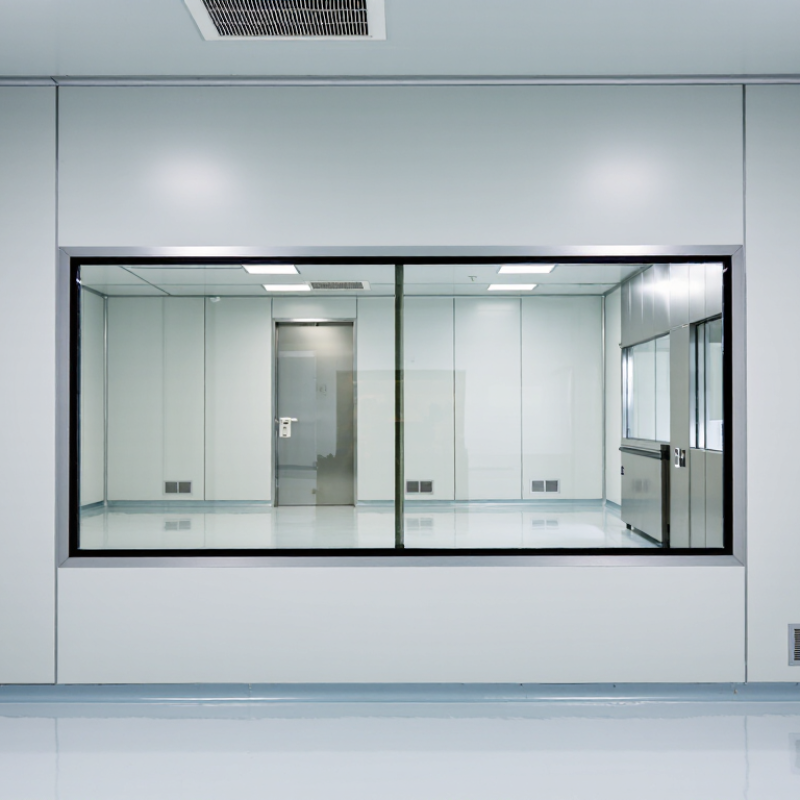
Cleanroom windows are designed to preserve visibility without compromising a controlled environment. They often use sealed, flush-mounted glazing that sits level with the wall, leaving fewer ledges for dust to collect. Small details matter. A well-fitted frame can help limit air leakage and simplify routine cleaning.
Glass may be single- or double-glazed, depending on insulation, noise control, and the room’s operating needs. In temperature-sensitive spaces, suitable glazing can reduce condensation, though it cannot solve every humidity or ventilation problem. Not always obvious. Seal condition, frame material, and installation quality all influence performance over time. During inspection, look for gaps, damaged seals, cloudy areas, or moisture between panes. These signs deserve attention before they disrupt daily work.
When comparing cleanroom window manufacturers, check that product specifications match the intended wall system and cleaning procedures. Ask how the unit is installed, inspected, and maintained—not only what the glass is made of. A specification can look convincing on paper, yet site conditions may differ. That deserves a second look. Clear documentation and practical installation guidance help teams assess whether a window supports their controlled environment.
Key Materials, Designs, and Performance Standards
Cleanroom windows must function as part of the room envelope, not as ordinary glazing. Common choices include tempered safety glass, laminated glass, and insulated double glazing. Tempered glass resists impact; laminated glass helps retain fragments if damaged. Aluminum frames are lightweight, while stainless steel can suit areas requiring frequent wipe-downs. Material choice depends on chemicals, humidity, cleaning routines, and the required visibility.
Details matter. Flush-mounted designs reduce ledges where dust can collect. A continuous, compatible seal around the frame helps limit air leakage and supports stable room pressure. Installers should check for gaps, trapped moisture, and uneven glass surfaces. Even a small defect can complicate cleaning. For performance, specify measurable requirements: cleanability, air leakage, pressure compatibility, optical clarity, and safety glazing. Where room classification is based on ISO 14644, the window assembly should support the facility’s contamination-control plan; the standard does not prescribe one universal window design. Fire performance and other building requirements should be confirmed for the project. There is no perfect assembly. Thicker glazing may improve insulation but add weight, and a highly sealed frame still needs careful installation and inspection.
China Top 10 Cleanroom Window Manufacturers — Key Materials, Designs, and Performance Standards
Cleanroom Classification Reference: Maximum Airborne Particle Concentration
ISO 14644-1 classifies cleanrooms by airborne particle concentration; it does not assign a cleanliness class to a window itself. Window selection should also consider cleanable surfaces, flush installation, sealed joints, and compatibility with the room’s pressure and cleaning requirements. The chart uses a logarithmic scale.
Reference: ISO 14644-1:2015. Maximum concentration shown for particles ≥0.5 μm, in particles/m³.
How to Evaluate Cleanroom Window Manufacturers in China
China Top 10 Cleanroom Window Manufacturers
How to Evaluate Cleanroom Window Manufacturers in China
When evaluating Chinese cleanroom window manufacturers, look beyond product photos. Ask how the window integrates with the wall panel, and inspect the frame corners, glazing edges, and sealant joints. Details matter. Flush surfaces reduce ledges where dust can collect, while well-sealed joints support cleaning and room-pressure control.
Use recognized technical criteria. ISO 14644-1:2015 sets a limit of 3,520 airborne particles per cubic metre at 0.5 micrometres for Class 5, compared with 352,000 for Class 7. These figures classify room air, not window performance. A supplier should explain how its design supports the intended room classification, without claiming that a window alone guarantees compliance. Ask for material specifications, drawings, inspection records, and traceable test results.
Request a project-specific sample or mock-up before approving production. Check whether the glazing fogs under expected temperature differences, whether seals remain accessible for inspection, and whether the frame meets your cleaning requirements. Ask the factory to document its quality checks and explain how it handles dimensional deviations. A polished brochure is not proof. An on-site audit helps, but it cannot replace verifying the installed window and its wall interface under actual project conditions.
Comparing Manufacturers by Products, Quality, and Applications
China Top 10 Cleanroom Window Manufacturers
Comparing Manufacturers by Products, Quality, and Applications
When comparing China’s cleanroom window manufacturers, look beyond glass thickness. Check whether each supplier offers double-glazed, flush-mounted designs, insulated frames, and replaceable seals. These details affect condensation, cleaning, and visibility in daily use. Ask for test records covering air leakage, pressure resistance, and particle-control compatibility. A polished sample is useful, but installation drawings and documented inspection results tell more.
Applications should guide the shortlist. Pharmaceutical production often needs smooth, easy-to-clean surfaces; electronics facilities may prioritize stable temperature and low condensation. ISO 14644-1 classifies cleanrooms by airborne particle concentration, so window selection should support the room design rather than claim a cleanliness class by itself. The MarketsandMarkets Cleanroom Technology Market report projected growth from about US$6.5 billion in 2023 to US$10.1 billion by 2028, reflecting wider demand for controlled environments. That figure covers the broader market, not windows alone. Compare suppliers on verified quality documents, customization, delivery, and after-sales support. Small details matter. Even good specifications can disappoint when the frame meets the wall poorly.


