Top 10 On Grid Controllers for Solar Systems?
Choosing an On Grid Controller starts with understanding what the product actually controls. Some systems manage inverter output; others coordinate export limits, battery charging, or site-level energy use. The terminology varies between manufacturers, so compare functions rather than labels. Small details matter.
On a clear afternoon, solar production may rise quickly while household demand stays low. A capable controller should respond smoothly, communicate reliably with compatible equipment, and provide useful monitoring. Check supported inverter models, operating limits, grid-response features, commissioning requirements, and service access. Protection and compliance must also match the system design and applicable local standards. Compatibility is not a guess.
NREL grid-integration researcher Paul Denholm’s work offers a useful perspective; paraphrased, his research highlights how controls must account for changing generation, demand, and grid conditions. That principle guides this list, but it does not make one product right for every site. Roof orientation, shading, utility requirements, battery plans, and installer experience can all change the outcome. Real-world conditions vary.
The following top ten compares controllers by practical capabilities, integration, monitoring, and value—not by headline claims alone. Some specifications are difficult to compare directly, and that limitation deserves attention. A product may look impressive on paper yet prove awkward to configure or maintain. Use the rankings as a starting point, then verify current technical documents and system compatibility with a qualified solar professional.
What On-Grid Solar Controllers Do in a Grid-Connected System
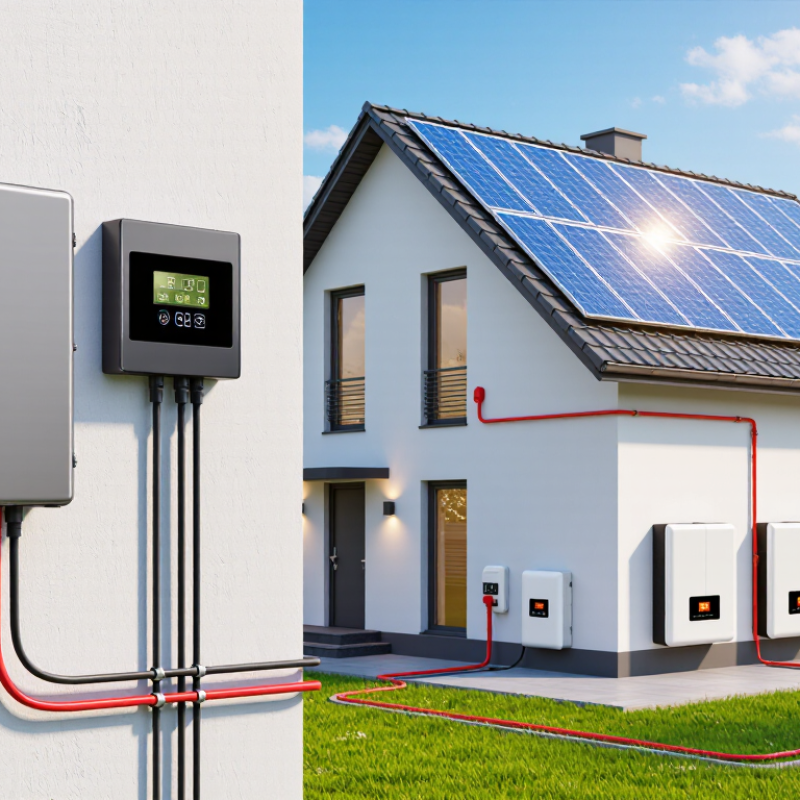
In an on-grid solar system, “controller” can describe several functions rather than one separate box. The inverter usually tracks the panels’ maximum power point and converts their direct current into grid-compatible alternating current. It also monitors voltage and frequency. When grid conditions fall outside permitted limits, it must stop exporting power. That distinction matters.
A separate energy-management controller may use readings from a meter to limit exports or prioritize household loads. For example, it can reduce inverter output when rooftop production exceeds demand and the utility connection has an export limit. Some systems also coordinate a battery, but the exact controls depend on the inverter, meter, and system design. Check their compatibility before installation.
These controls help keep power flowing safely and make energy use easier to monitor. They do not guarantee uninterrupted backup during an outage: many grid-tied systems shut down when the grid fails, unless designed with suitable backup equipment. Not always obvious. A dashboard may show daily production while missing brief shutdowns or incorrect meter readings, so review system alerts and compare readings with real household use. The wiring diagram and commissioning tests offer useful evidence of how the controls actually behave.
Top 10 On-Grid Solar Controller Functions
Grid-connected solar inverters use control functions such as MPPT, grid synchronization, output regulation, and anti-islanding protection. The chart illustrates a nominal 230 V RMS, 50 Hz grid-voltage waveform; voltage and frequency vary by region.
How to read it: The inverter synchronizes its AC output with the grid reference. This idealized waveform reaches approximately ±325 V peak, calculated from 230 V RMS.
How On-Grid Controllers Manage Power Flow and Grid Interaction
An on-grid controller is the traffic manager between solar panels, a grid-connected inverter, household loads, and the utility meter. It reads real-time production and demand, then adjusts power flows: serving appliances, charging a battery if available, or exporting surplus electricity. When clouds pass, a small controller may switch from export to grid import within seconds. The inverter performs the electrical conversion; the controller coordinates its operating targets and monitors grid conditions.
The scale makes this coordination increasingly important. IEA PVPS reported in its Snapshot of Global PV Markets 2024 that roughly 456 GW of new solar capacity was installed worldwide in 2023. More distributed generation can create local voltage and export-management challenges, especially on sunny, low-demand afternoons. Advanced inverter functions can help manage reactive power and voltage, but settings must match the system and local grid requirements. A dashboard alone cannot fix a weak feeder.
Good control depends on accurate metering, clear export limits, and sensible response settings. If a meter is installed backward or communication drops, the system may curtail power unnecessarily or import more than expected. Yet a controller is not a cure-all. Operators should verify commissioning data and review performance after major wiring or firmware changes. The practical test is simple: compare the controller’s logged production, household consumption, and grid exchange with the utility meter over several clear days.
Ten On-Grid Solar Controllers and Their Key Features
Top 10 On-Grid Controllers for Solar Systems?
Ten On-Grid Solar Controllers and Their Key Features
On-grid solar controllers coordinate power conversion, grid connection, and system protection. The IEA PVPS Snapshot of Global PV Markets 2024 estimated that at least 407.3 GW of solar capacity was added worldwide in 2023. That scale makes dependable control more than a technical detail. A useful ten-part comparison covers string-inverter control, microinverter control, central-inverter control, hybrid grid-connected control, maximum power point tracking, export limiting, voltage support, frequency response, anti-islanding protection, and plant-level monitoring. Each serves a different purpose. For example, export limiting can prevent excess generation from flowing beyond a site’s set limit, while monitoring helps locate faults across an array.
Key features matter more than labels. MPPT adjusts operation as sunlight changes; voltage and frequency controls help manage grid conditions. Anti-islanding protection disconnects generation when grid supply fails. Plant-level controllers coordinate multiple inverters and report performance. In practice, check operating range, response settings, communications, and compatibility with the local grid. One caveat: a controller cannot compensate for poorly matched equipment or incorrect installation.
Tips: Compare the controller’s rated capacity with the array and confirm its grid-support functions. Test monitoring alerts before relying on them. A clear interface helps, but readings still need occasional human review.
How the Leading Controllers Compare in Compatibility and Performance
Comparing ten on-grid solar controllers starts with compatibility, not headline features. Each unit must match the inverter’s communication method, system phase, and meter requirements. A controller that cannot read grid import accurately may misjudge surplus power. That can lead to unnecessary export or missed opportunities to run a water heater.
Check supported protocols, sensor placement, and export-limit settings before comparing performance. Response speed matters when clouds pass and household loads change. A useful controller updates readings promptly and adjusts output without repeated overshoot. Small details matter. Look for clear fault messages, stable monitoring, and settings that installers can verify at the meter. A polished dashboard is helpful, but it cannot fix unreliable measurements.
Performance claims need context. Test conditions, wiring, network quality, and inverter behavior can all affect results, so a single ranking may hide important differences. I would not treat a specification sheet as proof of real-world responsiveness. That is a limitation worth admitting. Check whether the controller keeps working during brief communication interruptions and how it behaves when a sensor fails. Those less glamorous checks often reveal more than peak response figures.
Factors to Consider When Choosing an On-Grid Solar Controller
In many grid-tied solar systems, the controller is built into the inverter rather than installed as a separate box. Check its operating voltage and frequency range against your utility’s requirements. Anti-islanding protection matters too: the system must stop feeding power into a grid outage. Small detail. Serious consequence.
Sizing is not just about matching panel watts. Compare the controller’s maximum DC voltage and current with the array’s cold-weather voltage and expected output. Check how many maximum power point tracking inputs it has, especially if roof sections face different directions. The IEA PVPS Snapshot of Global PV Markets 2024 estimates that global solar capacity passed 1.6 terawatts at the end of 2023. That scale makes dependable grid coordination increasingly important, but it does not mean every site needs the same features.
Review voltage and frequency support, reactive power control, monitoring options, and protection settings. Ask whether settings can be updated and whether the unit can communicate with your site’s monitoring equipment. Outdoor enclosures also need suitable temperature and moisture ratings. Local grid rules vary, so confirm approved settings with the installer or utility before buying. I would not choose by peak efficiency alone; installation conditions can change real-world performance, and datasheets rarely capture every roof’s quirks. A little inconvenient, but worth checking.


