Top 10 Control Valve Types for Efficient Fluid Regulation?
In the world of fluid regulation, control valves play an essential role in industrial processes. Renowned expert John Smith, a leading engineer in the control valve industry, once stated, "The right control valve can drastically improve system efficiency." This statement reflects the critical importance of choosing the appropriate type of control valve for specific applications.
Control valves come in various types, each with its unique advantages. From globe valves to ball valves, every design has a specific purpose. Understanding these differences is vital for efficient fluid management. Yet, many engineers face challenges when selecting the right valve. Misjudgments can lead to inefficiencies and increased costs. For instance, a poorly chosen valve may cause excessive wear or even system failures.
With a wide array of options available, the task can be overwhelming. Exploring the top ten control valve types sheds light on their distinct functions. Each valve type offers specific benefits that can enhance performance. However, it's crucial to recognize that not all valves are suitable for every application. Making informed choices can lead to significant improvements. After all, the effectiveness of a system often hinges on the smallest details.
Definition and Importance of Control Valves in Fluid Regulation
Control valves play a crucial role in fluid regulation. They manage flow rates, pressures, and temperatures in various systems. These components ensure that processes run smoothly, maintaining efficiency and safety. Without effective control valves, systems can face pressure fluctuations and flow inconsistencies. This can lead to equipment failure and increased operational costs.
Choosing the right type of control valve is essential for optimal performance. There are various designs, including globe, ball, and butterfly valves. Each has its strengths and weaknesses. The choice depends on the application requirements. Careful consideration of fluid properties and system demands is necessary.
Tips:
- Always assess the environment where the valve will operate.
- Different fluids can cause corrosion or wear.
- Regular maintenance is important to avoid unexpected failures.
- Training staff on valve operations can reduce errors.
- A knowledgeable team can make significant differences in system efficiency.
Common Applications of Control Valves in Various Industries
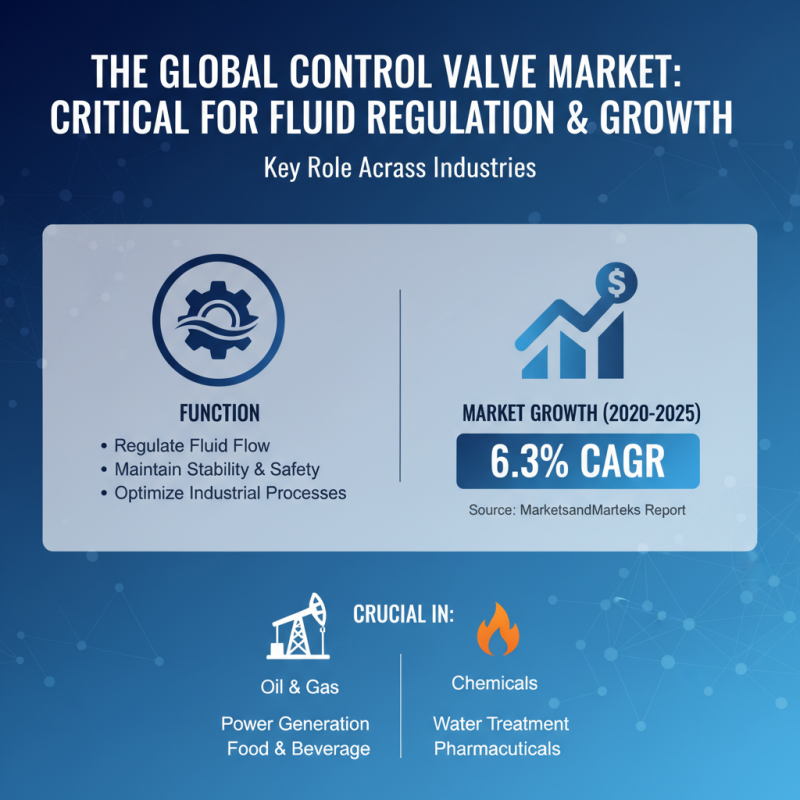
Control valves play a crucial role in maintaining fluid regulation across various industries. In the oil and gas sector, they manage the flow of crude oil and natural gas. A report by MarketsandMarkets estimates that the global control valve market will grow at a CAGR of 6.3% from 2020 to 2025, indicating their rising importance.
Water treatment facilities deploy control valves to regulate chemicals. This enhances water quality and contributes to environmental safety. The HVAC industry relies on these valves for temperature regulation. In manufacturing, control valves ensure consistent production processes, impacting efficiency and cost-effectiveness.
**Tip:** Regular maintenance of control valves can prevent leaks and failures. A small investment in upkeep yields significant savings.
The food and beverage industry also utilizes control valves for precise fluid handling. This guarantees product quality and compliance with strict hygiene standards. A study suggests that improper valve selection can lead to inefficiencies, urging industries to evaluate their needs carefully.
**Tip:** Consider adapting control valve types when process demands change. Flexibility can enhance operational efficiency.
Overview of the Top 10 Types of Control Valves
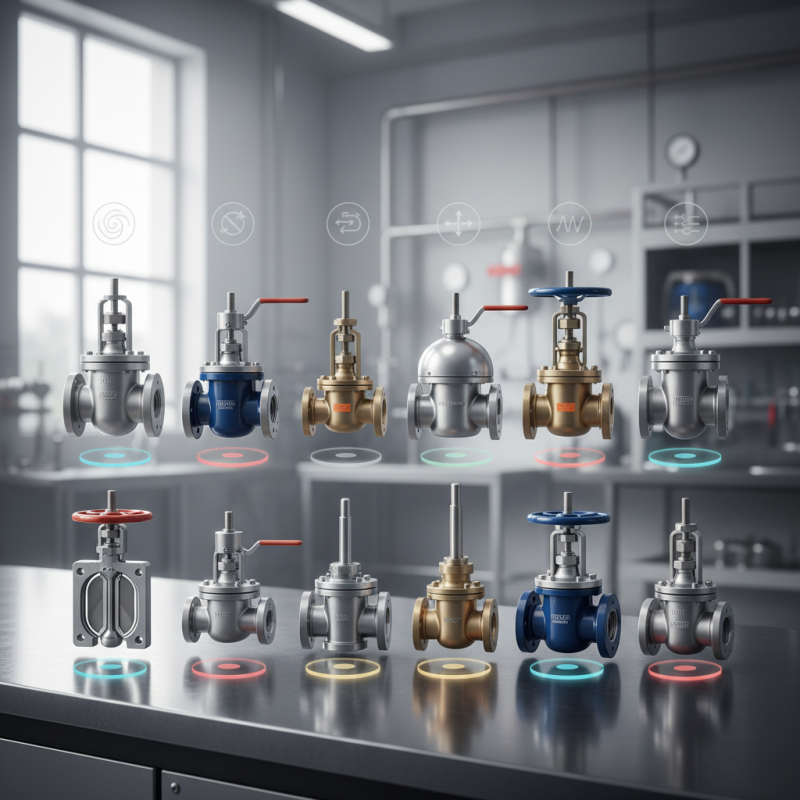
Control valves play a crucial role in fluid regulation. They ensure that systems function efficiently. Several types of control valves cater to different applications. Each type has unique characteristics that can impact performance. It's essential to choose wisely based on system requirements.
Among the popular types are globe valves and ball valves. Globe valves offer good throttling capabilities, making them ideal for flow control. Ball valves provide quick shut-off features and are excellent for on/off applications. Check valves prevent backflow, ensuring fluid flows in one direction. However, their design might limit flow capacity.
Butterfly valves are lightweight and suitable for large volumes. They are often used in water treatment and HVAC systems. Each valve type has its pros and cons. An inappropriate choice could lead to inefficiencies. A thorough understanding of fluid dynamics is vital. Engineers must reflect on their options carefully.
Top 10 Control Valve Types for Efficient Fluid Regulation
This chart illustrates the most common types of control valves used in fluid regulation, highlighting their relative usage in various applications.
Key Features and Benefits of Each Control Valve Type
Control valves play a vital role in fluid regulation. They help manage the flow of liquids and gases in various systems. Each type has unique features that cater to specific needs.
Globe valves, for instance, offer excellent throttling capabilities. They can maintain precise flow rates, making them ideal for applications requiring accurate control.
Ball valves are known for their durability and quick operation. They provide a tight seal, preventing leaks. Their design allows for a straight-through flow, reducing pressure drop. However, they may not perform as well in throttling applications.
Butterfly valves are lightweight and compact. They can be used in large pipelines, but they require sufficient space for installation.
Diaphragm valves are essential for handling corrosive fluids. They provide excellent isolation but may need regular maintenance to ensure proper operation. In contrast,
gate valves are less suited for throttling but excel in on/off function. Understanding these features helps in choosing the right valve for your system. Each type has its strengths, but awareness of their limitations is crucial for optimal performance.
Factors to Consider When Selecting a Control Valve for Efficiency
When selecting a control valve, it’s crucial to focus on efficiency. The type of fluid plays a significant role in your choice. For example, corrosive fluids need special materials. A common mistake is neglecting the details of fluid properties, which can lead to failure.
**Tips:** Consider the viscosity of the fluid. Thicker fluids require different valve designs. Temperature also matters; high temperatures can change material properties.
Flow requirements should not be overlooked. Understand the flow rate necessary for your system. An undersized valve may restrict flow, causing pressure drops. Oversized valves can lead to inefficiencies. It's a tricky balance that needs attention.
**Tips:** Use pressure drops as a key indicator. Analyze how pressure affects your operation. Don't rush this process; it needs careful consideration to avoid future issues.