Please upgrade your web browser now. Internet Explorer 6 is no longer supported.>

2026 Top TPB 90 Pneumatic Paving Breaker Suppliers?

Choosing reliable suppliers for a TPB 90 Pneumatic Paving Breaker requires more than comparing online prices. In 2026, contractors should examine equipment quality, service coverage, replacement parts, and verified operating performance. A dependable supplier should explain air consumption, impact frequency, tool compatibility, and recommended compressor capacity clearly. These details matter on a real jobsite, where dust, vibration, and long working hours quickly expose weak equipment.

This guide reviews leading TPB 90 Pneumatic Paving Breaker suppliers through practical and professional criteria. We consider manufacturing experience, quality control, warranty terms, delivery reliability, and technical support. Supplier reputation also deserves careful attention. Customer feedback, product documentation, and transparent business information can reveal more than polished advertising. Field users may notice handle comfort, trigger response, hose connection strength, and maintenance access after several hours of breaking concrete or asphalt.

Performance varies.

No supplier is perfect.

Some published specifications may not reflect every working condition. That limitation should be acknowledged. We therefore encourage readers to compare current data, request test evidence, and confirm service arrangements before purchasing. The strongest suppliers usually combine consistent product quality with responsive communication and practical after-sales support. This introduction sets the basis for identifying suitable options for contractors, equipment distributors, rental companies, and infrastructure teams seeking dependable pneumatic paving tools in 2026.
2026 Top TPB 90 Pneumatic Paving Breaker Suppliers?

TPB 90 Pneumatic Paving Breaker: Features and Operating Principles

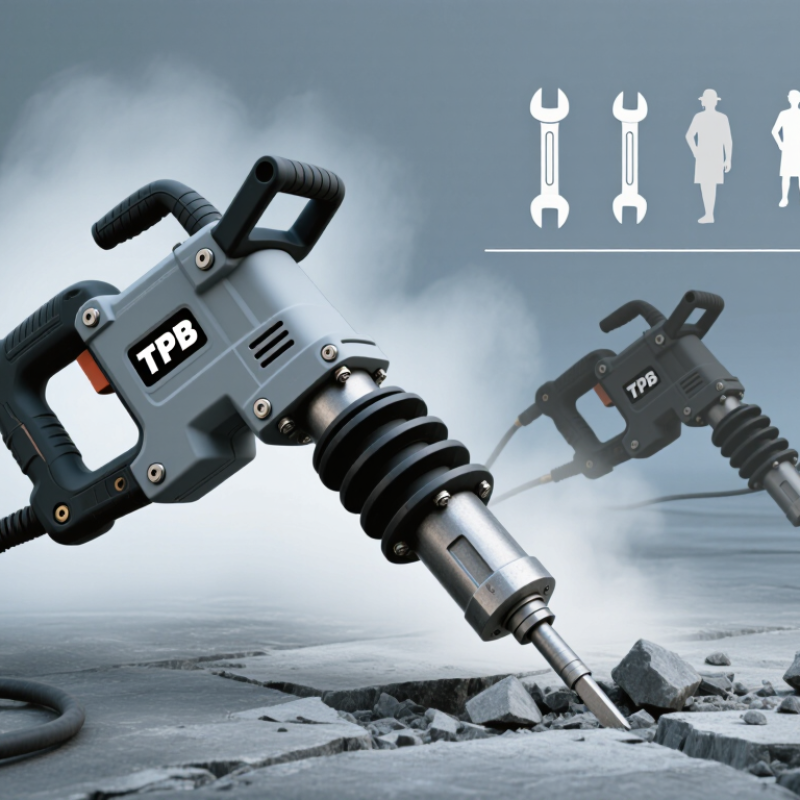
The TPB 90 pneumatic paving breaker uses compressed air to produce repeated impact energy. Inside the housing, a piston moves rapidly within a cylinder. An internal valve redirects airflow above and below the piston. This action drives the piston against the working tool, creating force for concrete, asphalt, and masonry removal.

Its practical design usually includes a robust steel body, a replaceable tool retainer, and a narrow profile for controlled handling. The operator connects the breaker to a suitable air hose and compressor, then checks pressure, fittings, and lubrication before work begins. A sharp tool transfers energy more effectively. A damaged tool wastes air and increases vibration.

Control matters.

During field use, firm positioning reduces sideways movement and helps protect the tool shank. Short working intervals can limit heat buildup and hand fatigue. Hearing protection, eye protection, gloves, and safety footwear remain essential around flying fragments and compressed air. Never point the tool toward people, even when disconnected.

The TPB 90 can feel powerful, but performance depends on airflow quality and maintenance. Moisture in the air line may reduce reliability. I have also found that excessive downward force can slow the breaker instead of improving its impact. That detail is easy to miss. Operators should inspect seals, hose connections, and retaining parts regularly, while following the equipment manual for operating limits.

How to Evaluate TPB 90 Supplier Quality and Product Compatibility

Evaluating a TPB 90 pneumatic paving breaker supplier starts with evidence, not polished product photos. Request material records, dimensional drawings, pressure ratings, and production test reports. A reliable supplier should explain how each breaker is inspected before shipment. Check the cylinder, piston, valve, retaining spring, and tool bushing for consistent machining. Small dimensional errors can cause vibration, air leaks, or uneven impact performance.

Product compatibility depends on your compressor and working conditions. Confirm the required air pressure, air consumption, hose diameter, coupling type, and tool shank dimensions. Compare these figures with your equipment under real operating pressure. A breaker may perform well in a factory test but struggle when the hose is long or undersized. Ask for recommended lubricants and maintenance intervals. Spare parts availability matters during a road repair project. Fast answers are useful, but traceable answers are better.

A practical supplier should support a sample test, inspection checklist, and clear warranty terms. Speak with technical staff, not only sales personnel. Their response to abnormal vibration often reveals their expertise. I once treated a low price as proof of efficiency. It was not. The cheaper unit required more downtime because replacement parts arrived slowly. No checklist is perfect. Recheck critical measurements after delivery, and record impact behavior during the first operating hours. Supplier reliability becomes clearer when problems appear, not when promises are made.

Top TPB 90 Pneumatic Paving Breaker Suppliers in 2026

Top TPB 90 Pneumatic Paving Breaker Suppliers in 2026

The top TPB 90 pneumatic paving breaker suppliers in 2026 should offer more than attractive prices. Experienced buyers examine impact performance, air consumption, vibration control, and service support. A dependable supplier provides clear specifications, maintenance instructions, spare-part availability, and realistic delivery schedules. Ask for working data under similar conditions, such as breaking reinforced concrete or removing road surfaces. Product photos are useful, but operating evidence matters more.

Reliable suppliers also understand compressor compatibility. A TPB 90 breaker may perform poorly when hose diameter, air pressure, or moisture control is ignored. Look for suppliers that explain recommended airflow, coupler standards, lubrication routines, and operator safety practices. Responsive technical support is valuable after installation. No supplier is perfect. Some catalogs lack detailed noise or vibration information, and that deserves closer questioning. A careful purchasing team should compare service records, warranty terms, inspection procedures, and total ownership costs instead of choosing from price alone.

Tips: Request a sample maintenance schedule before ordering. Check whether replacement pistons, seals, springs, and tool bits are consistently available. Confirm the warranty in writing. If possible, arrange a live demonstration with your own compressor. Small details matter. A practical trial may reveal uncomfortable weaknesses that polished sales material hides.

Supplier Comparison: Pricing, Certifications, and Customer Support

Choosing a TPB 90 pneumatic paving breaker supplier requires more than comparing the lowest quotation. In current market checks, prices often range from about $280 to $750, depending on steel quality, tooling, packaging, and order volume. Ask whether the price includes chisels, air fittings, freight, and replacement seals. A cheap offer may become expensive after delivery. Landed cost matters.

Certification documents should match the actual model, not a similar product. Request a current ISO 9001 certificate, CE documentation where required, a factory test report, and material details for the piston and cylinder. Reliable suppliers explain test methods clearly. They should also provide noise, vibration, air-consumption, and impact-rate data. Some sellers send attractive certificates but vague technical sheets. That deserves careful questioning.

Customer support is easier to judge through small details. Does the supplier answer technical emails within one business day? Can it supply seal kits, springs, retainers, and compatible moil points? A practical warranty should state coverage, exclusions, and response times. Ask for a sample parts list before ordering. I have found that clear manuals often reveal better engineering discipline. Still, no supplier is perfect; shipping delays and occasional fit issues happen. A written inspection plan can reduce that risk. Reliable communication counts.

2026 Top TPB 90 Pneumatic Paving Breaker Suppliers? - Supplier Comparison: Pricing, Certifications, and Customer Support
Supplier Reference Primary Supply Region Typical Unit Price
(USD, EXW)
Minimum Order Typical Lead Time Available Certification Documentation Warranty and Spare-Parts Support Technical Support Channel Overall Fit
Supplier A East Asia US$165–235 per unit 10–20 units 20–35 days after order confirmation CE declaration available; ISO 9001 production documentation commonly available upon request 12-month limited warranty; standard wear parts normally available Email, messaging platform, and installation guidance Best value
Supplier B East Asia US$190–275 per unit 5–10 units 15–30 days after order confirmation CE documentation; RoHS-related material declarations may be available for selected shipments 12-month warranty; replacement seals, springs, and chisels supported Email, telephone, and remote troubleshooting Strong OEM option
Supplier C South Asia US$145–215 per unit 20–50 units 25–45 days after order confirmation CE documentation subject to model and destination; factory quality records available 6–12-month warranty; spare-parts packages usually quoted separately Email and distributor-based technical support Low-cost bulk supply
Supplier D East Asia US$220–320 per unit 5–10 units 15–25 days for stock items; 30–45 days for custom orders CE declaration; ISO 9001 certificate copy commonly supplied during qualification 12-month warranty; documented spare-parts list and service instructions Email, video support, and technical documentation Best documentation
Supplier E Eastern Europe US$285–410 per unit 1–5 units 7–21 days from regional stock CE marking and EU Declaration of Conformity generally available; traceability depends on batch 12-month warranty; regional parts availability and service coordination Telephone, email, and local-language distributor support Best for short delivery
Supplier F North America US$360–540 per unit 1–5 units 5–15 business days from distributor inventory North American compliance package may include operating and safety documentation; certification varies by configuration 12-month warranty; distributor-managed parts and repair service Telephone, email, manuals, and service-ticket system Best local support
Supplier G Southeast Asia US$175–260 per unit 10–25 units 20–40 days after order confirmation CE documentation commonly available; factory inspection reports available for larger orders 12-month warranty; common consumables available with the initial order Email, messaging platform, and video demonstrations Balanced choice
Supplier H South Asia US$155–225 per unit 10–30 units 25–40 days after order confirmation CE declaration may be provided; third-party inspection can usually be arranged at buyer cost 6–12-month warranty; parts support depends on order volume Email and distributor support Competitive project pricing
Buyer note: Prices are indicative 2026 market ranges for TPB 90-class pneumatic paving breakers and may vary by order quantity, tooling, packaging, freight terms, destination, exchange rates, and customization. Certification availability must be verified against the exact model, production batch, and importing-country requirements before purchase. Confirm air consumption, operating pressure, shank dimensions, warranty exclusions, spare-parts pricing, and delivery terms in the final quotation.

Ordering, Inspection, and Maintenance Considerations for TPB 90 Breakers

Ordering a TPB 90 pneumatic paving breaker should begin with the supplier, not the price. Request a complete specification sheet, airflow requirement, operating pressure, tool size, noise level, and vibration data. Ask for batch traceability and a written spare-parts schedule. A reliable supplier should provide inspection records before shipment. Check the serial number against the packing list. Small errors can delay a project.

During inspection, test the breaker with clean, dry air. Listen for uneven exhaust sounds. Examine the retainer, piston housing, trigger, hose fitting, and chisel shoulder. Confirm that the tool starts smoothly and delivers consistent impact. NIOSH’s occupational noise guidance uses 85 dBA over an eight-hour workday as a key exposure limit. Vibration records should reference recognized methods, such as ISO 28927-10 and ISO 5349. A clean test sheet is not proof of field performance. I would still inspect one working sample.

Tips: Store the breaker upright and protect the air inlet. Use the specified pneumatic oil, not general workshop oil. Drain the compressor tank daily. Inspect the hose before every shift. Replace worn retainers early. The cost is minor. Keep a maintenance log with operating hours, lubrication times, chisel changes, and faults. Supplier support matters here; ask whether technicians can explain the service intervals. Industry safety reports repeatedly link poor maintenance with higher exposure and equipment failure. That finding is practical, but sometimes overlooked. A weekly inspection may still be too infrequent on abrasive demolition sites.