Smart homes are moving from novelty to practical infrastructure, and wall controls remain one of the most visible entry points. Grand View Research’s smart home market analysis identifies connected lighting and control systems as important growth areas. The International Energy Agency’s Energy Efficiency 2023 report also highlights digital controls as tools for improving energy management. These trends explain why a reliable Zigbee Wall Switch attracts global buyers.
However, choosing one is rarely simple. Zigbee devices can reduce wireless congestion, support mesh networking, and operate with lower power demands than many Wi-Fi alternatives. Yet performance depends on the coordinator, firmware, wall wiring, and regional electrical standards. Small details matter. A neutral wire may be required. Some homes lack one. Frequency compatibility also deserves attention, especially between 2.4 GHz Zigbee channels and crowded wireless networks.
This guide compares ten leading Zigbee Wall Switches for international purchasing decisions. The evaluation considers protocol stability, Zigbee 3.0 support, load capacity, dimming performance, app and hub compatibility, installation design, safety documentation, firmware updates, warranty terms, and long-term availability. The Connectivity Standards Alliance’s certification framework provides a useful reference, but certification alone does not guarantee a perfect user experience. That is worth remembering.
The market is not tidy. Manufacturer specifications can be incomplete, and regional versions may differ. A switch that works smoothly in one apartment may disappoint in another. Therefore, this ranking is a practical starting point, not an absolute verdict. Buyers should verify voltage, neutral requirements, local approvals, and hub compatibility before ordering. Real walls reveal what product pages sometimes hide.
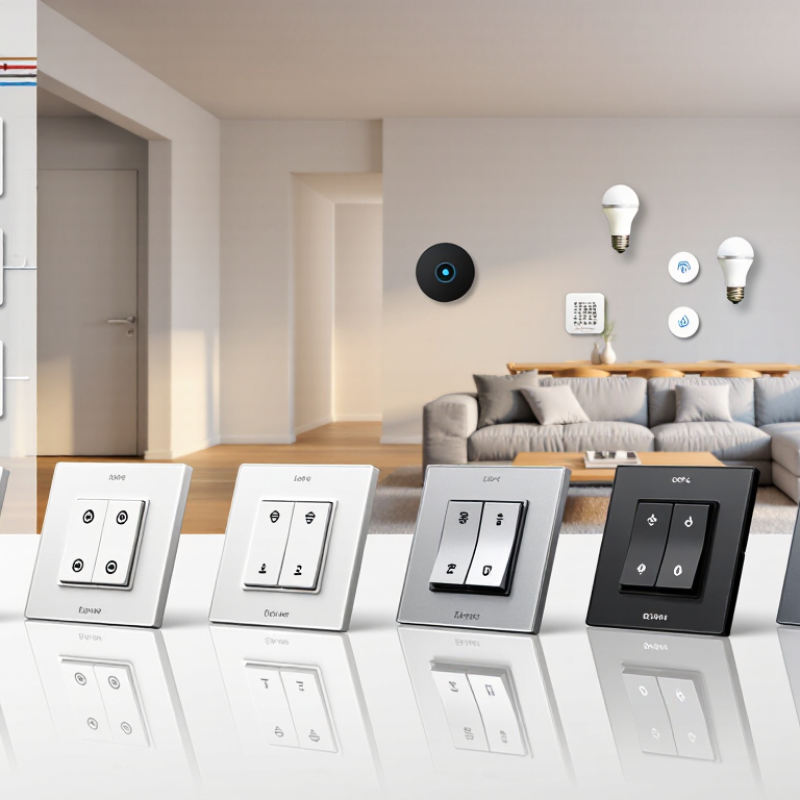
A suitable Zigbee wall switch must fit real homes, not only product specifications. Global buyers should check voltage, frequency, wall-box depth, and whether a neutral wire is available. Some older apartments lack neutral wiring. A no-neutral model may help, but it can require a bypass component and a minimum load. That detail is easy to miss.
In practical installations, Zigbee performance depends on the whole mesh. A switch should support stable routing, clear pairing instructions, and firmware updates through a compatible coordinator. Physical buttons should feel firm, with visible status lighting that is not distracting at night. Check the supported load type carefully, especially for LED lamps, fans, and dimmable lights. I once focused too much on wireless range and overlooked box depth. The installation became unnecessarily difficult. Real homes are less tidy than test benches.
Tips: Confirm local electrical requirements before installation. Measure the wall box first. Test the switch with your hub, lamps, and home network before fixing the faceplate. Prefer documented Zigbee profiles and transparent reset procedures. Also check whether the switch remains usable when the internet is unavailable. A reliable model should offer local control, safe insulation, and clear markings. Some specifications remain vague, so ask the seller for wiring diagrams and load limits. Small uncertainties matter.
| Rank | Recommended Switch Profile | Best-Fit Home Use | Typical Electrical Rating | Neutral Wire | Control Type | Zigbee and Radio Considerations | Global Compatibility Factors | Key Buying Check |
|---|---|---|---|---|---|---|---|---|
| 1 | Neutral-Wire Single-Gang Relay Switch | General lighting in newer residential wiring | Usually 100–240 V AC; commonly rated up to 10 A resistive load, subject to the product specification | Required | One physical push button plus app and automation control | Usually operates on the 2.4 GHz Zigbee band; confirm the coordinator supports the device profile | Wide-voltage design is suitable for many 120 V and 230 V markets; wall-box depth and gang size still vary | Check load type, minimum load, terminal layout, and local electrical approval |
| 2 | Neutral-Wire Two-Gang Multi-Channel Switch | Rooms with two separately controlled light circuits | Commonly 100–240 V AC; total current may be limited across all channels | Required | Two independent rocker or push controls | Zigbee networking enables independent scene control and schedules for each channel | Useful for homes using different lighting circuits, but faceplate dimensions are not universal | Verify per-channel and total-load limits rather than relying only on the headline rating |
| 3 | No-Neutral Single-Gang Switch | Older homes where the wall box has no neutral conductor | Often supports 100–240 V AC, but the allowable load range is usually narrower | Not required | Physical switch with wireless control and automation | Some models require a bypass or capacitor at the light fixture to reduce LED flicker | Suitable for retrofit projects, but compatibility depends strongly on lamp wattage and circuit design | Confirm minimum load, bypass requirements, LED compatibility, and whether a neutral is truly absent |
| 4 | Neutral-Wire Three-Gang Switch | Large rooms, kitchens, hallways, and open-plan spaces | Typically 100–240 V AC; current limits may apply to each channel and the combined device | Required | Three independently addressable lighting channels | Good for multi-scene automation, provided the hub supports all endpoints correctly | Gang spacing, plate format, and box depth are especially important across regional standards | Measure the wall box and confirm the required number of live, load, and neutral terminals |
| 5 | Zigbee Dimmer Wall Switch | Dimmable LED, incandescent, or compatible low-voltage lighting | Voltage and wattage vary widely; dimmer ratings are often lower than relay ratings | Usually required | On/off plus brightness adjustment | Requires compatible Zigbee dimming commands and a hub that exposes brightness control | Lighting compatibility matters more than nominal voltage; dimming behavior differs by lamp and driver | Check trailing-edge or leading-edge method, minimum wattage, maximum LED load, and flicker performance |
| 6 | Scene-Control Wall Switch | Smart-home scenes, central-off functions, and multi-room automation | Often battery-powered or electrically powered without directly switching the load | Not applicable or optional | Single, double, or long-press scene commands | May act as a Zigbee input device rather than a mains relay; pairing and binding support are important | Useful in mixed lighting systems and retrofit installations where the existing circuit must remain unchanged | Confirm whether it controls a relay directly or only sends commands to other Zigbee devices |
| 7 | Zigbee Relay with Dry-Contact Output | Boilers, gates, contactors, and control circuits requiring electrical isolation | Output rating depends on the relay; the controlled circuit may differ from the device supply | Depends on design | Wall-mounted control button with isolated relay contacts | Best suited to installations where an automation hub manages a non-lighting load | Electrical separation, enclosure requirements, and local regulations are more important than faceplate style | Verify contact voltage, current, isolation rating, and whether the load is inductive |
| 8 | Battery-Powered Wireless Wall Switch | Rental properties, extensions, and locations without accessible wiring | No direct mains load switching; battery and electronics determine operating life | Not required | Wireless button or rocker control | Battery life depends on press frequency, reporting behavior, temperature, and network conditions | Can be installed without mains wiring, but it normally requires a separate Zigbee relay or smart lamp | Check battery type, replacement access, mounting method, and compatibility with the chosen hub |
| 9 | Zigbee Fan and Light Wall Controller | Bedrooms, bathrooms, and rooms with separate fan and light circuits | Load ratings differ for motor, lighting, and combined operation; motor loads need special attention | Usually required | Separate fan-speed, fan-power, and light controls | May expose several endpoints, so hub support for fan-control functions should be confirmed | Regional fan wiring, motor type, and wall-box dimensions can differ significantly | Check motor compatibility, speed-control method, neutral availability, and independent channel limits |
| 10 | Premium Glass or Metal-Finish Multi-Scene Switch | Design-led homes, hospitality interiors, and visible feature walls | May be a relay, dimmer, or scene controller; electrical ratings depend on the internal design | Model-dependent | Touch, capacitive, or tactile controls with scene support | Decorative materials can affect installation space and user experience, while Zigbee performance still depends on mesh placement | Confirm plate size, mounting standard, tactile feedback, temperature range, and certification for the target market | Prioritize safety certification, serviceability, and hub interoperability over appearance alone |


©Copyright 2020 Gosco Valves. All rights reserved.