What Is an Ultra High Temperature Servo Motor?
What is an Ultra High Temperature Servo Motor, and why does it matter in demanding automation? This specialized motor operates near intense heat while maintaining controlled motion and positioning accuracy. Standard servo motors often lose insulation strength, lubricant stability, and feedback reliability in such environments. An Ultra High Temperature Servo Motor uses heat-resistant materials, reinforced insulation, and carefully selected bearings. Some models also protect their encoder systems from thermal drift. Small errors matter.
In practical installations, engineers may find these motors inside furnaces, semiconductor equipment, glass-processing lines, or aerospace test systems. Temperatures can rise far beyond ordinary factory conditions. Engineers typically review continuous temperature ratings, peak exposure limits, torque output, and duty cycles. High-temperature cabling also deserves attention. A ceramic connector may survive heat better than a conventional plastic connector. However, the motor alone does not solve every thermal problem. Mounting, ventilation, nearby heat sources, and maintenance access can change real performance. Cooling remains important.
Reliable selection depends on verified test data, not impressive marketing language. Look for temperature curves, encoder specifications, insulation classes, and documented endurance results. In field installations, technicians should inspect seals, cable jackets, and bearing noise regularly. Some specifications remain optimistic. The boundary is not always clean. This article explains how these motors work, where they fit, and which design details influence service life. It also considers practical limitations, because extreme-temperature performance often involves trade-offs between speed, torque, accuracy, and cost. No single motor suits every hot environment.
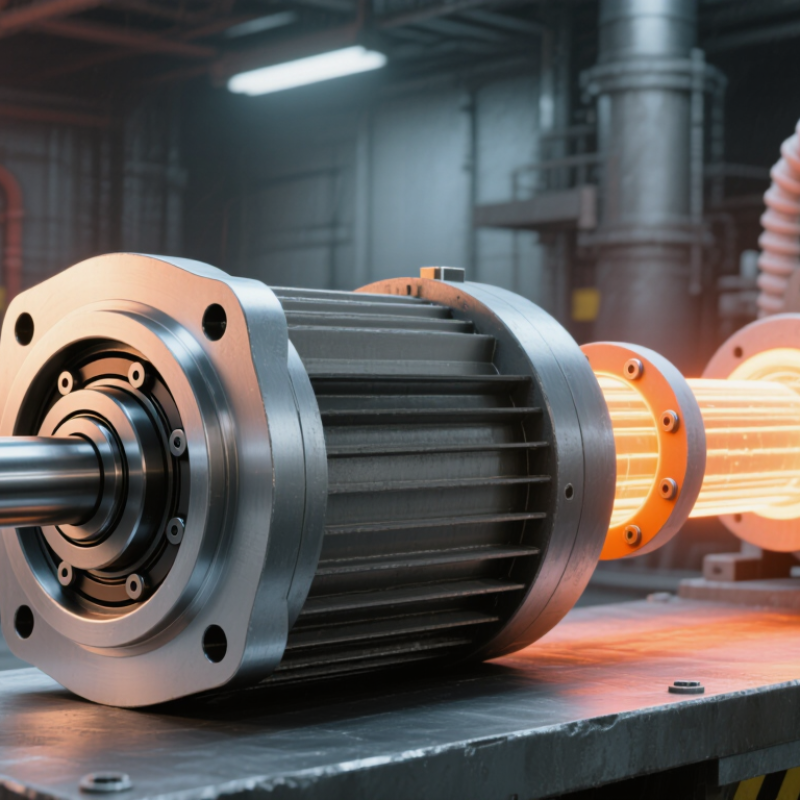
Definition and Core Characteristics of an Ultra High Temperature Servo Motor
An ultra high temperature servo motor is a feedback-controlled motor built for accurate motion in extreme heat. Unlike a standard servo motor, it must maintain torque, speed, and positioning accuracy when surrounding temperatures exceed common industrial limits. The term has no universal boundary. In practice, engineers often use it for continuous operation above 150°C, with specialized designs reaching 200°C or higher.
Its core characteristics begin with thermal stability. IEC 60034-1 identifies insulation temperature classes of 130°C, 155°C, and 180°C. These values describe winding thermal limits, not safe ambient temperatures. The distinction matters. An ultra high temperature motor may require ceramic insulation, high-temperature magnets, heat-resistant bearings, and seals that do not soften near hot chambers. Its encoder and cable system also need protection. Otherwise, precise feedback can fail before the motor itself overheats.
Efficiency remains important. The International Energy Agency has reported that motor-driven systems consume more than 40% of global electricity. Small efficiency losses become costly during continuous operation. Designers therefore examine winding resistance, cooling paths, thermal derating, and standby heating. A motor rated for 200°C may still lose torque at that temperature. Datasheets can hide this detail. Testing under real load, with actual mounting conditions, is more reliable than reading a peak temperature alone. The definition remains somewhat imperfect, but thermal endurance and retained positioning accuracy are the practical measures.
Key Materials and Structural Components for Extreme-Heat Operation
An ultra high temperature servo motor is built for precise motion where ordinary insulation, grease, and magnets degrade quickly. IEC 60085 classifies Class H insulation for continuous operation at 180°C. Extreme-heat designs may require Class N or higher systems, but the temperature rating alone proves little. Real winding temperatures can rise sharply inside compact stator slots.
Key materials determine survival. Copper windings need polyimide or mica-based insulation, because common enamel systems may soften under prolonged heat. High-temperature permanent magnets, often based on samarium-cobalt materials, resist demagnetization better than standard magnet grades. However, magnetic strength still falls as temperature increases. That detail is easy to overlook.
The housing usually combines heat-conductive aluminum alloys or steel with cooling jackets, depending on stiffness and corrosion exposure. Ceramic or hybrid bearings reduce electrical erosion and tolerate higher temperatures than many standard bearing arrangements. Lubricant selection matters just as much; grease oxidation can create drag, noise, and early failure. Seals made from fluorinated elastomers help protect the bearing cavity, but they are not universally suitable.
IEC 60034-1 requires manufacturers to verify temperature rise, insulation performance, and operating limits under defined test conditions. Engineers should also monitor rotor temperature, not only the stator. This is where many specifications become optimistic. A motor may pass a short laboratory test yet fail after repeated thermal cycles. NASA materials guidance also emphasizes compatibility, aging, and outgassing in harsh environments, which suggests a broader lesson: every adhesive, cable, coating, and fastener needs thermal validation.
How Ultra High Temperature Servo Motors Work
What Is an Ultra High Temperature Servo Motor?
How Ultra High Temperature Servo Motors Work
An ultra high temperature servo motor is designed to maintain controlled motion in environments where standard motors may degrade. The exact temperature range depends on its construction, insulation system, bearings, and feedback devices. Many designs operate above 150°C, but the rated limit must come from verified test data.
The motor converts electrical energy into precise rotary movement. Heat-resistant winding insulation protects the copper coils from breakdown. High-temperature magnets preserve magnetic strength, although their performance can still decline near the upper limit. Specialized bearings reduce friction, while sealed lubrication prevents oil from thinning or evaporating too quickly. A robust encoder measures shaft position and sends feedback to the controller. This feedback allows the system to correct speed, torque, and position continuously.
Thermal management remains critical. Engineers may use heat paths through the housing, forced air, liquid cooling, or a combination of methods. The controller also needs protection because nearby electronics can fail before the motor does. During testing, technicians monitor winding temperature, vibration, torque loss, and position accuracy over extended cycles. Small installation errors matter. Poor alignment can create extra heat and shorten bearing life. A simplified explanation often focuses only on insulation, but that is incomplete. Real performance depends on the motor, load, cooling method, wiring, and operating cycle working together. Some designs tolerate short temperature peaks, yet continuous operation at that level may require reduced torque.
Industrial Applications in High-Heat Environments
What Is an Ultra High Temperature Servo Motor?
Industrial Applications in High-Heat Environments
An ultra high temperature servo motor controls position, speed, and torque near intense heat sources. Its insulation, bearings, seals, and feedback system must tolerate elevated temperatures. Standard motors may lose accuracy when heat weakens magnets or damages internal lubrication. These motors often use heat-resistant materials, reinforced winding insulation, and carefully selected cooling methods.
Glass forming lines provide a clear example. A servo motor may move molds beside glowing glass, where radiant heat reaches nearby equipment. Metal processing machines face similar conditions around furnaces, rollers, and cutting stations. In these areas, engineers may install thermal shields, extend motor shafts, or place feedback devices away from the hottest zone. Water cooling can help, but poor flow control creates another failure point.
Ceramic kilns and heat-treatment systems also require controlled motion. The motor must maintain repeatable positioning while temperatures change during each production cycle. During commissioning, technicians should measure housing temperature, vibration, current, and encoder accuracy under real loads. A motor that survives a short test may still fail after weeks of thermal expansion. That detail is easy to underestimate.
Reliable selection depends on the actual temperature profile, not only the furnace rating. Ambient heat, reflected radiation, duty cycle, and maintenance access all matter. In practice, a slightly slower motor with better thermal protection may deliver more stable production. The specification can look complete, yet installation conditions may expose missing assumptions.
What Is an Ultra High Temperature Servo Motor?
Ultra high temperature servo motors are designed for motion-control systems operating near furnaces, ovens, casting lines, and other high-heat equipment. The chart compares IEC 60085 insulation thermal classes by their maximum continuous insulation-system temperature. These values describe the motor insulation system, not the permitted ambient temperature or motor housing temperature.
Performance Factors, Limitations, and Selection Criteria
What Is an Ultra High Temperature Servo Motor?
Performance Factors, Limitations, and Selection Criteria
An ultra high temperature servo motor is designed to operate where standard motors lose torque or insulation life. Depending on construction, the motor may tolerate ambient temperatures above 150°C. The exact limit varies widely. Do not trust temperature labels alone. Winding insulation, magnets, bearings, seals, and feedback devices must survive together. In field installations, heat near the motor often exceeds the cabinet reading by several degrees.
Performance depends on continuous torque, peak torque, duty cycle, cooling, and speed. High temperature increases electrical resistance, which can reduce efficiency and torque. Permanent magnets may weaken permanently. Lubricant can thin, evaporate, or harden. Encoders may drift, creating positioning errors. A neat datasheet number can mislead. Check the derating curve at your actual temperature, not only the room-temperature rating. Cable insulation and connectors also need matching thermal ratings.
Tips: Measure temperature at the motor housing and winding area during a full production cycle. Select continuous torque with thermal margin, then verify peak acceleration separately. Ask for bearing life data, insulation class, feedback accuracy, and permissible overload time. Consider water or forced-air cooling when natural cooling is insufficient. I would also test the complete assembly before approval; early calculations can miss heat from nearby furnaces, friction, or repeated rapid reversals.


