Why Do Buyers Choose Amino Liquid? The answer is rarely just a promise on a label. Buyers want a product that fits their crop, application equipment, and budget—and performs consistently in the field. Amino Liquid, commonly sold as an amino-acid-based plant biostimulant, attracts attention because it can be applied through familiar spray or fertigation programs. But product quality varies. The amino-acid profile, concentration, raw material, and manufacturing process all matter.
Market interest is growing, though broad market figures need careful interpretation. Grand View Research valued the global plant biostimulants market at USD 3.16 billion in 2022 and projected a 12.1% compound annual growth rate through 2030. That estimate covers many product types, not Amino Liquid alone. It signals category momentum, not proof that every formulation delivers the same results. Researcher Patrick du Jardin described biostimulants as products that “stimulate natural processes” to support nutrient uptake, efficiency, stress tolerance, and crop quality (Scientia Horticulturae, 2015). That distinction matters: buyers should look for crop-specific trial data, clear composition, and application guidance—not just broad claims. Small details count. A clogged filter, unclear dosage, or weak field evidence can turn an appealing product into a costly experiment. Sometimes, the sensible choice is to test first. A careful buyer compares cost per treated hectare, tank compatibility, and documented outcomes before committing to larger volumes. Even then, results can vary with weather and crop stage; that uncertainty deserves an honest place in the decision.
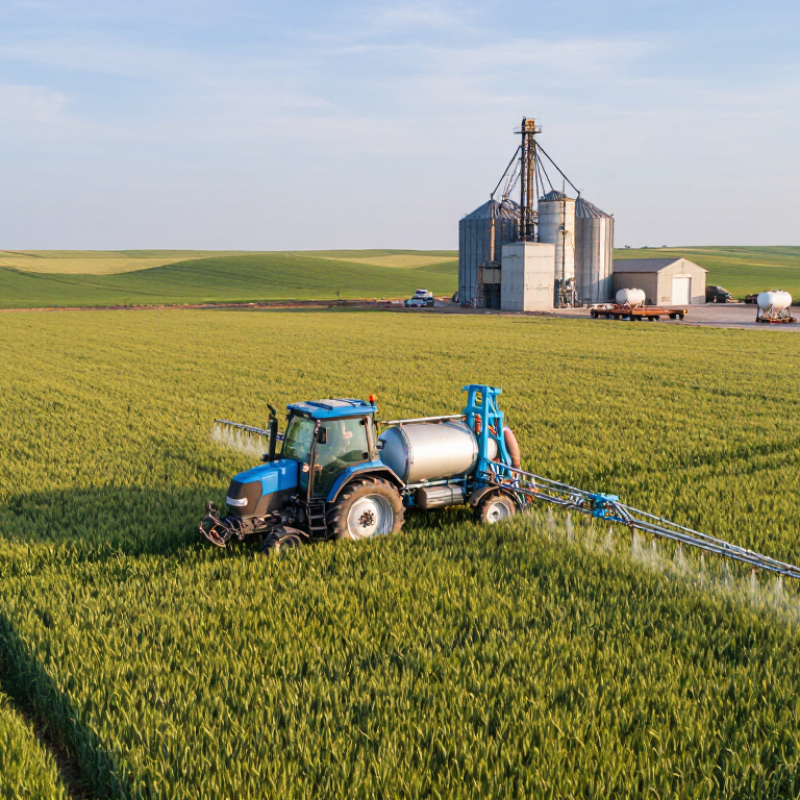
Amino liquid is a water-based blend of free amino acids and short peptides, commonly made by breaking down protein-rich raw materials. Manufacturers use enzymatic hydrolysis, acid hydrolysis, or a combination of both. Enzymes tend to work under milder conditions; acid processing can be faster, but may alter some amino acids. The resulting mixture is filtered, concentrated, and checked for properties such as amino-acid content, pH, and solubility. The details matter. “Amino liquid” is not one standard recipe, so products can differ in composition and consistency.
For agricultural buyers, the production method can affect handling and intended use, but it does not guarantee a field result. A clear label should state the source material, declared amino-acid content, recommended dilution, and storage guidance. The scale of nutrient management offers useful context: FAO’s World Fertilizer Trends and Outlook to 2022 reported global fertilizer use of roughly 200 million tonnes in 2020. Amino liquids are not a replacement for a balanced nutrient plan; they are typically considered an added input. Results depend on crop, timing, and growing conditions. A small field trial is sensible. One honest limitation: visible effects may be subtle, and a product’s processing story alone is not proof of performance.
| Topic | What It Means | Why Buyers Consider It |
|---|---|---|
| What amino liquid is | A liquid product containing amino acids and other soluble compounds obtained from protein-containing materials. Its composition depends on the raw material and manufacturing process. | Buyers can compare products by their declared amino-acid content, soluble solids, source material, and intended application. |
| Raw materials | Protein sources may include plant-derived materials or animal-derived materials. The specific source should be identified on the product documentation. | Source information helps buyers assess suitability for their application, handling requirements, and sourcing preferences. |
| Hydrolysis | Proteins are broken into smaller peptides and amino acids through hydrolysis. Common approaches include acid hydrolysis and enzymatic hydrolysis. | The method can affect the resulting composition. Buyers may request process details and analytical specifications rather than relying on a general product label. |
| Separation and finishing | After hydrolysis, processing may include filtration or other separation steps, followed by adjustment or concentration to produce a liquid formulation. | Clear specifications for appearance, concentration, and storage help buyers evaluate consistency and practical handling. |
| Water-based handling | Liquid formulations are supplied ready for dilution or application according to the product directions. Solubility and compatibility depend on the particular formulation. | Buyers may prefer a liquid format when it fits their existing mixing, dosing, and application equipment. |
| Application fit | Amino-acid products are used in different agricultural and industrial contexts. Approved uses and application rates vary by product and local requirements. | Choosing a product matched to the intended use helps avoid assumptions based only on the term “amino liquid.” |
| Quality checks | Relevant checks may include amino-acid or total nitrogen analysis, pH, density, and contaminant testing where appropriate. Methods and specifications should be stated clearly. | Certificates of analysis and consistent batch specifications make it easier to compare products and verify quality. |
| Evidence and performance | Performance depends on the formulation, application conditions, and intended use. Results from one product or setting do not automatically apply to another. | Buyers can assess claims by requesting product-specific test data and conducting trials under their own conditions. |


©Copyright 2020 Gosco Valves. All rights reserved.