Please upgrade your web browser now. Internet Explorer 6 is no longer supported.>

How to Choose Rotary Valves in 2026?

Choosing rotary valves in 2026 requires more than comparing prices, sizes, or catalog photographs. The right valve must match the material, process conditions, and maintenance reality. Powdered milk, cement dust, plastic pellets, and biomass behave differently inside the same housing. Particle shape, moisture, temperature, bulk density, and abrasiveness can change performance quickly. A valve that handles dry flour well may struggle with sticky additives or oversized granules.

This guide explains how to evaluate rotary valves through practical engineering criteria. These include air leakage, pressure differential, throughput, rotor clearance, drive torque, sealing design, and wear resistance. We will also examine stainless steel options, food-contact requirements, hazardous-area considerations, and documentation for applicable standards. Reliable selection depends on verified data, not impressive claims. Request performance curves, material certificates, testing records, and clear warranty terms from suppliers. Ask how the valve performs after months of cycling, not only during a factory demonstration.

Small details matter.

A poorly selected seal can increase energy use and product loss. Excessive clearance may reduce efficiency, while tight clearance can create damaging friction. My recommendations reflect common industrial practice, but no guide can replace a site-specific assessment. Real installations often reveal overlooked issues, including condensation, uneven feeding, or difficult access for cleaning. Treat each specification as a question to verify. With careful comparison and honest review of operating conditions, buyers can choose rotary valves that support safer, steadier, and more maintainable processes in 2026.
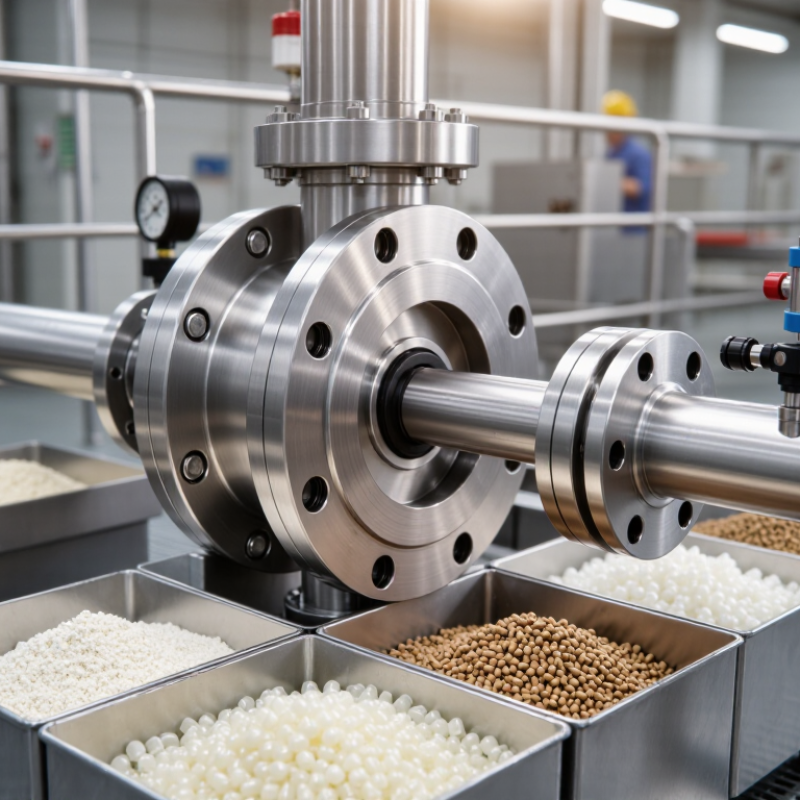
How to Choose Rotary Valves in 2026?

What Is a Rotary Valve and How Does It Work?

A rotary valve controls flow by turning a round rotor inside a fixed housing. Its pockets carry material from the inlet to the outlet. In powder systems, this action meters solids while limiting air movement between pressure zones. In pipeline systems, a quarter-turn rotary valve uses a rotating disc or ball to open, throttle, or stop fluid flow.

The working principle looks simple. The selection is not. Clearance, rotor speed, pressure difference, temperature, and particle size all affect performance. The U.S. Department of Energy reports that compressed-air leaks can waste 20–30% of compressor output. A poorly sealed rotary airlock can increase this loss, especially under continuous operation. A plant handling flour, cement, or plastic pellets may also face bridging, dust escape, and abrasive wear.

Start with the material, not the catalog size. Measure bulk density, moisture, temperature, particle shape, and required feed rate. Then check pressure differential and allowable leakage.

ISO 13849-1 can guide safety-related control design, while relevant ASME and API documents support pressure and valve engineering decisions. These standards do not replace testing.

A larger rotor is not always better. Oversizing can reduce control accuracy and increase impact damage. The calculation is rarely perfect. Real material often behaves differently after humidity changes. Requesting a sample test, inspecting shaft seals, and recording torque during commissioning can reveal problems before production suffers.
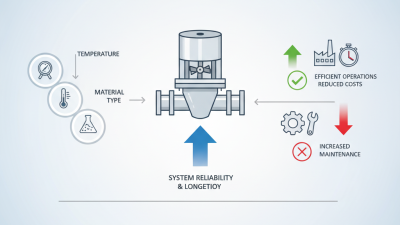
Which Rotary Valve Design Fits Your Material and Process?

How to Choose Rotary Valves in 2026?

The right rotary valve design depends on your material and process, not simply its capacity. Start by examining particle size, moisture, temperature, abrasiveness, and flow behavior. Fine powders may leak through excessive clearances. Sticky materials can build bridges across the rotor pockets. Abrasive granules may quickly wear ordinary contact surfaces. A tight-clearance valve suits many dry powders, while a larger-clearance design may handle warm or expanding materials more reliably. No choice is perfect.

Process conditions matter just as much. Check inlet pressure, outlet pressure, feeding rate, and required sealing performance. A slow rotor can reduce product damage, but it may limit throughput. A faster rotor improves capacity, yet it can create heat, dust, and uneven feeding.

For food or pharmaceutical applications, select smooth, cleanable surfaces and minimize hidden cavities. For high-temperature service, confirm bearing protection and thermal expansion allowances. The first estimate is rarely right. Small differences in bulk density can change the required valve size.

Tips: Test the actual material before final selection. Measure bulk density at operating moisture. Watch for bridging, leakage, and rotor drag during trials. Ask for documented pressure, temperature, wear, and cleaning limits. Keep a safety margin, but avoid oversizing. An oversized valve may operate inefficiently at low speed. This detail is often missed. Review maintenance access, replacement intervals, and inspection points with operators. Their practical feedback may expose weaknesses that calculations overlook.

How to Select the Right Valve Size, Capacity, and Speed?

How to Choose Rotary Valves in 2026?

Selecting a rotary valve starts with capacity, not simply pipe diameter. Calculate required mass flow, bulk density, and operating hours. Then check pocket volume, rotor speed, and filling efficiency. A practical estimate is: capacity = displacement per revolution × rpm × fill factor. For example, a 20-liter-per-revolution valve running at 12 rpm and 60% filling delivers about 8.6 m³/h. Real powder behavior may reduce this figure.

Valve speed controls output, leakage, wear, and product damage. Higher speed may increase capacity, but it can create dust, heat, and unstable feeding. The U.S. Department of Energy reports that compressed-air leaks can waste 20–30% of compressor output. Poor rotary valve sealing can produce similar operational losses. Pressure difference matters. So does the powder’s moisture, particle size, and abrasiveness. Test with the actual material when possible.

Motor selection also deserves attention. DOE motor-system guidance indicates that motor-driven systems can represent roughly 70% of industrial electricity use. An oversized motor may run inefficiently at partial load. An undersized motor may overheat during startup. A neat spreadsheet can still be wrong. I would challenge any sizing method based only on nominal flow. Leave practical margin, but avoid excessive oversizing. Review measured throughput after commissioning, because the assumed 60% filling factor may not survive real production conditions.

Which Materials and Sealing Options Suit Your Application?

Material and sealing choices determine whether a rotary valve runs smoothly or becomes a maintenance problem. The 2024 MarketsandMarkets Industrial Valves report projects the global market will grow from about USD 77.7 billion in 2024 to USD 101.5 billion by 2029. That growth reflects wider process automation, but selection still depends on the powder, temperature, and cleaning method.

In plant inspections, I have seen stainless steel rotors survive humid food lines better than painted carbon steel. Abrasive minerals may need hardened surfaces or replaceable tips. PTFE seals suit chemical resistance and temperatures approaching 260°C, while FKM often handles heat and oils near 200°C. EPDM is useful for hot water and steam, but performs poorly with many oils. These figures vary by compound and pressure. Check the supplier’s test data, not only a catalogue range. ASTM D2000 helps compare elastomer performance, while FDA 21 CFR 177.1550 may guide food-contact PTFE selection. A perfect match rarely exists.

Tips: Measure actual temperature at the seal, not just the process setting. Record peak moisture and washdown frequency. For abrasive powder, inspect leakage after a timed run. If dust bridges above the rotor, the problem may be poor inlet design rather than the seal. Review ISO 9001-calibrated test records where available. I would also question any “universal” seal claim; real plants are less predictable than laboratory samples.

How to Choose Rotary Valves in 2026? - Which Materials and Sealing Options Suit Your Application?

Valve Body or Rotor Material Typical Temperature Range Corrosion Resistance Abrasion and Wear Performance Recommended Sealing Options Suitable Applications Important Selection Considerations
Carbon Steel
Economical structural material for general industrial service.
-29 to 200°C
(-20 to 392°F)
Moderate in dry, non-corrosive service.
Requires coating or lining in humid or chemically active environments.
Good mechanical strength; moderate resistance to particle erosion. NBR for mineral oils and general powders
EPDM for water-based service
PTFE for chemical compatibility
Dry powders Cement handling Grain processing General utilities Avoid prolonged exposure to water, acids, chlorides, and high humidity unless the surface is suitably protected. Check coating compatibility with the process media.
Ductile Iron
Stronger and more impact-resistant than conventional gray iron.
-20 to 200°C
(-4 to 392°F)
Moderate; suitable for many dry-bulk applications but not inherently corrosion-proof. Good resistance to impact and moderate particle loading. NBR for dry bulk materials
EPDM for water and mild aqueous media
PTFE where chemical resistance is required
Aggregate Mineral processing Wastewater solids Bulk conveying A practical choice where impact strength is important. Use protective lining or a corrosion-resistant alloy when the medium is chemically aggressive.
304 Stainless Steel
Austenitic stainless steel for general hygienic and mildly corrosive service.
-40 to 250°C
(-40 to 482°F)
Good resistance to atmospheric corrosion, many food products, and mild chemicals. Good general durability; not the preferred option for highly abrasive solids without wear protection. EPDM for hot water and cleaning solutions
PTFE for many chemicals
FKM for oils and elevated-temperature service
Food processing Pharmaceutical ingredients Water treatment Mild chemicals Not ideal for high-chloride or strongly reducing environments. Hygienic designs should minimize dead zones and permit effective cleaning.
316 Stainless Steel
Molybdenum-bearing stainless steel with improved chloride resistance.
-40 to 250°C
(-40 to 482°F)
Very good resistance to many chlorides, saline atmospheres, and chemical process fluids. Good general wear performance; abrasive service may require hardened or replaceable wear components. PTFE for broad chemical compatibility
EPDM for hot water and selected aqueous chemicals
FKM for hydrocarbons and higher-temperature fluids
Marine environments Chemical processing Salt-containing products Pharmaceutical service More corrosion-resistant than 304 stainless steel, but it is not immune to pitting or crevice corrosion in concentrated chlorides. Verify exact chemical concentration and temperature.
Aluminum Alloy
Lightweight option for low-pressure, non-abrasive service.
-20 to 120°C
(-4 to 248°F)
Good atmospheric corrosion resistance; limited compatibility with strong acids, alkalis, and some salts. Lower hardness and wear resistance than steel or stainless steel. NBR for oils and dry service
EPDM for selected water-based media
PTFE for compatible chemicals
Lightweight equipment Dry powders Low-pressure air systems Select only when pressure, impact, and abrasion loads are limited. Check galvanic-corrosion risk when aluminum contacts dissimilar metals in a conductive environment.
Nickel-Based Alloy
High-alloy construction for severe chemical and high-temperature service.
-196 to 600°C
(-321 to 1,112°F), depending on grade and design
Excellent resistance in many high-temperature, oxidizing, reducing, and corrosive environments. Good high-temperature strength; wear performance depends on alloy, hardness treatment, and process conditions. Graphite for high-temperature service
PTFE where temperature permits
Metal seals for extreme temperature or fire-safe requirements
Hot chemical gases Furnace systems High-temperature processing Severe corrosion Higher material cost is justified only when standard stainless steels cannot meet corrosion or temperature requirements. Confirm thermal expansion and seal-loading behavior.
Ceramic or Ceramic-Lined Surfaces
Hard lining or wear inserts used in highly abrasive service.
Up to approximately 500°C
(932°F), depending on ceramic system
Generally excellent against many corrosive media; compatibility depends on ceramic composition and binder system. Excellent resistance to sliding abrasion and erosive particles; vulnerable to impact and thermal shock. PTFE for moderate temperatures
Graphite for higher temperatures
Specialized hard-faced seals for abrasive solids
Silica sand Fly ash Cement clinker Mining slurries Use where abrasion dominates over impact. Control installation alignment and avoid sudden thermal changes that may crack the lining.
Seal Selection Guide: NBR is commonly selected for mineral oils, fuels, and general dry service; EPDM is suitable for hot water, steam in properly rated designs, and many aqueous chemicals but is unsuitable for most petroleum oils; FKM performs well with oils, fuels, and elevated temperatures but has limitations with hot water, steam, and certain amines; PTFE provides broad chemical resistance and low friction but has limited elasticity and may require an energized or spring-loaded design; graphite and metal seals are used when temperatures exceed the practical range of elastomeric seals.

Temperature ranges are indicative material-selection guidelines, not guaranteed operating limits. Final selection should also consider pressure, valve type, shaft speed, particle size, vacuum conditions, cleaning chemicals, leakage requirements, fire-safe requirements, and applicable industry standards.

How to Compare Safety, Maintenance, Cost, and Supplier Support?

When comparing rotary valves, safety should begin with the process, not the catalog price. Check pinch points, isolation procedures, noise, and dust exposure before selecting equipment. Guards, inspection ports, and emergency access should support ISO 12100 risk assessment. For combustible dust, verify applicable NFPA requirements and local regulations. Small gaps can create serious consequences.

Maintenance deserves measurable attention. The U.S. Department of Energy’s Operations & Maintenance Best Practices Guide reports 12–18% lower maintenance costs with preventive programs than reactive work. McKinsey’s predictive maintenance analysis indicates 20–30% lower maintenance costs and 30–50% less downtime. These figures are useful, but not promises. A rotary valve handling abrasive powder may need more frequent seal checks, even with sensors installed. Inspect the rotor, bearings, clearances, and air leakage during real operating conditions.

Compare total ownership cost, including energy, spare parts, labor, downtime, and training. Ask suppliers for documented service intervals, drawing revisions, material certificates, and response times. Support should include troubleshooting guidance, replacement-part availability, and technician training. A low purchase price can become expensive after one unplanned shutdown. I would also request references from facilities with similar temperatures, pressures, and material behavior. That step is easy to skip. It should not be. Supplier promises may sound precise, yet written service commitments remain more reliable than informal assurances.

How to Choose Rotary Valves in 2026?

Recommended evaluation weighting for comparing safety, maintenance, cost, and supplier support

This planning benchmark gives the highest priority to safety because rotary valves may handle combustible dust, pressure differentials, and moving components. Maintenance and lifecycle cost are weighted equally to reflect access, wear-part replacement, energy use, and downtime. Supplier support covers documentation, spare-parts availability, technical response, commissioning, and after-sales service. Final weights should be adjusted to the material, temperature, pressure, hygiene, and hazardous-area requirements of each installation.