Please upgrade your web browser now. Internet Explorer 6 is no longer supported.>

China Top 10 Valves and Fittings Manufacturers?

China has become a major manufacturing hub for industrial valves and fittings. Its suppliers serve oil and gas, chemical processing, water treatment, power generation, and construction projects worldwide. However, choosing reliable manufacturers requires more than comparing factory size or online rankings.

This guide introduces ten notable Chinese manufacturers and explains why they deserve attention. The evaluation considers product range, material control, pressure performance, quality systems, certifications, production capacity, and export experience. Factory audits, inspection records, and customer feedback can reveal details that brochures often hide. For example, traceability should connect a stainless-steel valve to its heat number, inspection report, and final test result.

Small details matter.

A dependable supplier should understand international standards, including API, ASME, DIN, and ISO requirements. It should also provide clear drawings, practical technical support, consistent documentation, and responsive after-sales service. Experience with similar applications is valuable, especially when equipment faces corrosive media, high temperatures, or severe pressure cycles.

Still, no list is flawless. Manufacturer capabilities change, and a strong reputation does not guarantee that every product suits every project. Buyers should verify certifications, inspect samples, and confirm delivery performance before signing a contract. Pricing can be attractive in China, but low cost alone may conceal weaker materials or limited testing.

This overview offers a practical starting point, not a final purchasing decision. It aims to help engineers, contractors, distributors, and project owners compare China’s leading valves and fittings manufacturers with greater confidence and realistic expectations.
China Top 10 Valves and Fittings Manufacturers?

China’s Valve and Fittings Manufacturing Industry

China Top 10 Valves and Fittings Manufacturers?

China’s valve and fittings manufacturing industry has developed from low-cost production toward engineered, export-oriented supply. UN Comtrade data for 2023 recorded China among the world’s largest exporters under HS 8481, covering valves, taps, and similar flow-control equipment. The category exceeded 18 billion US dollars in export value, although customs classifications do not separate every industrial application.

18+ billion
US dollars in export value for the category in 2023

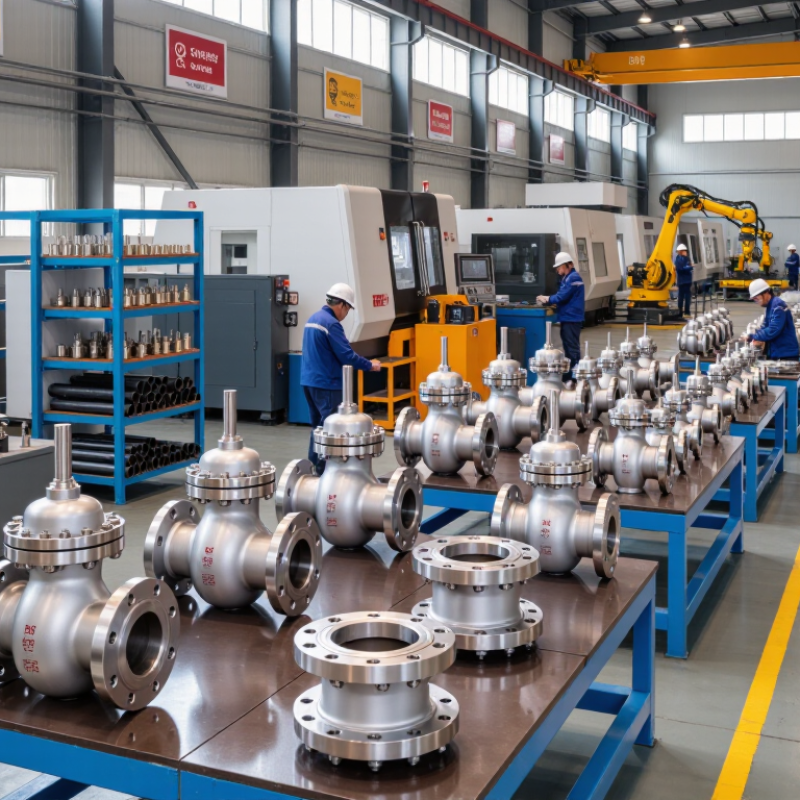
Production strength is visible on the factory floor. CNC machining centers shape stainless steel bodies, while pressure-testing benches check leakage under controlled conditions. Suppliers serving water treatment, energy, chemical processing, and building services increasingly follow ISO 9001 systems and product-specific standards. According to the International Organization for Standardization, ISO 5208 provides leakage-testing principles for industrial valves. That matters more than polished catalogs.

A credible top-ten evaluation should examine material traceability, pressure ratings, testing records, delivery consistency, and after-sales engineering support. It should also review certifications rather than accepting them at face value.

Global Market Insights estimated the industrial valves market at more than 70 billion US dollars in 2023, with continued growth expected through the decade. Chinese manufacturers are positioned to benefit, especially in infrastructure and process equipment.

Yet the industry is not perfectly uniform. Some factories still rely heavily on manual inspection, and documentation can be inconsistent. A ranking can mislead when price dominates the assessment. Buyers should compare test evidence, machining tolerance, coating quality, and field performance before selecting a supplier.

Data helps. Factory verification remains essential.
Criteria for Ranking China’s Top Valve and Fittings Manufacturers

China Top 10 Valves and Fittings Manufacturers?

A credible ranking needs more than factory size or export volume. Grand View Research estimated the global industrial valves market at about USD 77.5 billion in 2023. Its forecast also indicates steady growth through 2030. This trend makes technical reliability more important than attractive catalogs. A serious assessment should examine pressure classes, material control, machining accuracy, and application experience.

Quality evidence must be measurable. Check ISO 9001 systems, third-party inspection records, and product compliance with relevant ASME, API, or EN requirements. For valves, reviewers should inspect hydrostatic and seat-leakage test procedures. For fittings, dimensional checks and positive material identification matter. Traceability should reach each heat number and inspection report. Small details often expose weak control.

Operational strength also affects the ranking. Useful indicators include on-time delivery, spare-parts response, engineering support, and overseas service capability. The International Trade Centre reports that China remains a major global exporter of iron and steel pipe fittings, showing broad manufacturing capacity. However, export scale does not prove consistent quality. A ranking should compare verified data from factory audits, customer references, complaint rates, and independent tests. No ranking is flawless. A spreadsheet can hide delayed shipments, unclear subcontracting, or inconsistent batches. That weakness deserves attention. The best manufacturers combine documented performance with honest technical communication, even when a project reveals an uncomfortable limitation.

China’s Top 10 Valves and Fittings Manufacturers

China’s top 10 valves and fittings manufacturers are best viewed as a qualified shortlist, not a fixed league table. A ranking is never perfect. Production scale, pressure-class coverage, testing discipline, and export records matter more than polished catalogs. Grand View Research valued the global industrial valves market at about US$78 billion in 2023, with steady growth forecast through 2030. That demand rewards factories that can repeat quality across thousands of units.

For buyers, the strongest candidates usually show ISO 9001 systems, API 6D or equivalent certification, and ASME B16.5-compatible flange production. Their workshops should include CNC machining, shell and seat testing, positive material identification, and calibrated gauges. Request EN 10204 3.1 material certificates, heat numbers, inspection plans, and pressure-test records. On a real project, a DN300 ball valve may sit beside welded elbows, reducers, and stainless fasteners; dimensional mismatch can stop installation. This detail is easy to underestimate.

Industry data also supports careful sourcing. Fortune Business Insights reported the global pipe fittings market at more than US$14 billion in 2023. Yet market size does not prove supplier reliability. Compare the top ten by delivery performance, spare-part response, coating quality, and documented references in oil, water, chemical, or power applications. Ask for a witnessed factory acceptance test. Check what happens after shipment. Some suppliers look excellent until a replacement seal is needed. That is where the shortlist needs a second review.

China Top 10 Valves and Fittings Manufacturers? - China’s Top 10 Valves and Fittings Manufacturers

Indicative ranking of anonymized Chinese valve and pipe-fitting manufacturing profiles, assessed by publicly documented product coverage, international standards, industrial application range, quality systems, and export capability. No company or brand names are displayed.

Rank Anonymized Manufacturer Profile Main Product Categories Common Materials Typical Pressure Range Relevant International Standards Primary Industries Served Quality and Compliance Coverage Typical Export Markets
1 Profile A — integrated industrial valve and fitting producer Ball valves Gate valves Globe valves Flanges Butt-weld fittings Carbon steel, stainless steel, alloy steel, ductile iron Class 150–2,500; PN10–PN420 API 6D, API 600, API 608, ASME B16.34, ASME B16.5, ASME B16.9, EN 12516 Oil and gas, petrochemical, power generation, water infrastructure ISO 9001; material traceability; pressure and shell testing; project documentation Europe, Middle East, Southeast Asia, North America, South America
2 Profile B — high-pressure pipeline valve specialist Trunnion ball valves Floating ball valves Check valves Pipeline fittings Forged carbon steel, stainless steel, duplex stainless steel, low-temperature steel Class 150–2,500; nominal sizes commonly DN25–DN1,200 API 6D, API 598, ASME B16.34, ASME B16.10, ISO 5208, ASME B16.9 Transmission pipelines, LNG, natural gas, refining, chemical processing ISO 9001; low-emission testing; fire-safe design testing; NACE material options Middle East, Central Asia, Europe, Africa, Latin America
3 Profile C — stainless steel and corrosion-resistant equipment producer Sanitary valves Butterfly valves Threaded fittings Clamp fittings 304/304L stainless steel, 316/316L stainless steel, duplex stainless steel PN6–PN40; Class 150–600 ASME B16.34, ISO 5211, EN 1092-1, ASME B16.5, ISO 2852, DIN 11850 Food processing, beverage production, pharmaceuticals, water treatment, marine systems ISO 9001; surface-finish control; hygienic design documentation; positive material identification Europe, Australia, Southeast Asia, North America, Middle East
4 Profile D — municipal water and ductile-iron valve manufacturer Resilient-seated gate valves Butterfly valves Air-release valves Dismantling joints Ductile iron, cast iron, carbon steel, stainless steel, EPDM-lined components PN10–PN25; selected products up to PN40 EN 1074, EN 593, EN 1092-2, AWWA C509, AWWA C515, ISO 5208 Drinking water, wastewater, irrigation, desalination, municipal utilities ISO 9001; coating inspection; potable-water material options; hydrostatic testing Asia-Pacific, Africa, Middle East, Europe, Latin America
5 Profile E — forged valve and socket-weld fitting specialist Forged gate valves Forged globe valves Needle valves Socket-weld fittings Forged carbon steel, stainless steel, chrome-molybdenum steel, nickel alloys Class 800–4,500; PN100–PN420 API 602, ASME B16.34, ASME B16.11, MSS SP-25, ISO 15848 Power plants, steam systems, chemical plants, instrumentation, high-pressure utilities ISO 9001; heat-treatment records; PMI; non-destructive examination; fugitive-emission options North America, Europe, Middle East, India, Southeast Asia
6 Profile F — large-diameter industrial valve producer Eccentric butterfly valves Wafer check valves Knife gate valves Large-diameter flanges Ductile iron, carbon steel, stainless steel, cast steel, elastomer-lined components PN6–PN40; Class 150–600; sizes commonly DN50–DN3,000 EN 593, API 609, AWWA C504, ASME B16.5, ASME B16.47, ISO 5752 Waterworks, mining, slurry handling, power, HVAC, industrial processing ISO 9001; torque testing; coating thickness control; flow-direction and leakage testing Asia-Pacific, Africa, South America, Middle East, Eastern Europe
7 Profile G — stainless steel pipe-fitting and flanges manufacturer Elbows Tees Reducers Lap-joint flanges Blind flanges 304/304L, 316/316L, 321, 347, duplex and super-duplex stainless steel Class 150–2,500; PN10–PN100 ASME B16.9, ASME B16.11, ASME B16.5, ASME B16.47, EN 10253, EN 1092-1 Petrochemical, marine, food processing, pharmaceutical, water treatment ISO 9001; EN 10204 3.1 documentation; PMI; radiographic and ultrasonic testing options Europe, North America, Southeast Asia, Middle East, Oceania
8 Profile H — lined and severe-service valve manufacturer PTFE-lined butterfly valves Diaphragm valves Lined ball valves Corrosion-resistant fittings Cast steel, ductile iron, stainless steel, PTFE, PFA, rubber-lined materials PN6–PN25; Class 150–300 API 598, API 609, EN 593, ISO 5752, ASME B16.34 Acid handling, chemical processing, mining, wastewater, semiconductor utilities ISO 9001; lining thickness inspection; vacuum testing; chemical-resistance documentation Europe, Southeast Asia, South Korea, Middle East, North America
9 Profile I — HVAC, building services, and utility valve producer Control valves Balancing valves Brass ball valves Strainers Press fittings Brass, bronze, ductile iron, stainless steel, carbon steel, engineering polymers PN6–PN25; Class 125–300 EN 1074, EN 12266, EN 1092, ASME B16.18, ASME B16.22, ISO 5211 Commercial buildings, HVAC, fire protection, district energy, plumbing systems ISO 9001; dimensional inspection; pressure testing; potable-water and fire-service options Europe, Asia-Pacific, Middle East, Africa, Latin America
10 Profile J — customized OEM valve and fitting supplier Custom valve assemblies Special flanges Expansion joints Actuated valves Carbon steel, stainless steel, ductile iron, aluminum bronze, nickel alloys PN10–PN100; Class 150–1,500 ASME B16.34, API 598, API 609, ASME B16.5, ASME B16.9, EN 1092-1 General industry, water treatment, shipbuilding, energy, machinery and equipment ISO 9001; OEM drawings; functional testing; dimensional reports; batch traceability Southeast Asia, Europe, Africa, Middle East, South America

Key Products, Technologies, and Industries Served

China’s leading valve and fitting manufacturers serve demanding flow-control markets with ball, gate, globe, butterfly, check, and control valves. Their fitting ranges commonly include forged elbows, tees, reducers, flanges, and butt-weld components. Grand View Research estimates the global industrial valves market will expand at about 4% annually through 2030. This growth reflects stronger infrastructure, water treatment, and energy investment.

Technology now matters as much as product range. Advanced facilities use CNC machining, automated welding, non-destructive testing, and digital inspection records. For critical pipelines, manufacturers often design against API 6D, ASME B16.34, ISO 15848, and related standards. Cryogenic valves support LNG applications, while severe-service control valves manage pressure, temperature, and abrasive fluids in chemical plants. Leak prevention is becoming more measurable.

Not every impressive catalog proves field reliability. That deserves scrutiny. The International Energy Agency expects global LNG demand to rise strongly toward 2030, increasing pressure on cryogenic supply chains and testing capacity. In water projects, corrosion-resistant alloys and easy maintenance often matter more than complex automation. Power plants require high-temperature performance, while pharmaceutical and semiconductor facilities demand clean surfaces and precise control. A practical evaluation should compare test reports, material traceability, cycle-life evidence, and after-sales response. Some manufacturers still communicate technical claims too broadly. Independent inspection remains worthwhile.

How to Choose a Reliable Chinese Valve and Fittings Supplier

Choosing a reliable Chinese valve and fittings supplier requires more than reviewing a “top ten” list. Rankings can be incomplete. A capable supplier should match your application, pressure class, materials, and delivery schedule.

Ask for current factory certificates, product standards, material records, and inspection procedures. Confirm whether production occurs in-house or through unverified subcontractors. A video audit can reveal machining areas, testing equipment, storage conditions, and quality controls. Look for clear heat-number traceability from raw material to finished valve. That detail matters.

Request samples before placing a large order. Check dimensions, thread accuracy, surface finish, and packaging protection. For valves, review pressure-test reports and acceptance criteria. Independent inspection can verify critical orders, especially when specifications are complex. Suppliers should answer technical questions directly, not only send polished catalogues.

Communication is practical evidence. Can the supplier explain lead times, tolerance limits, spare parts, and nonconformance handling? Written answers should remain consistent across sales and engineering teams. Small misunderstandings often become expensive delays. Do not select the lowest quotation automatically. A cheaper fitting may involve thinner walls, uncertain materials, or weak documentation.

A reliable supplier welcomes a controlled trial order and accepts reasonable corrective actions. Still, no checklist is perfect. Recheck performance after delivery, record field feedback, and adjust your supplier evaluation over time. That is where confidence is earned.