Please upgrade your web browser now. Internet Explorer 6 is no longer supported.>

China Top 10 Motorized Valve Actuator Manufacturers?

China’s motorized valve actuator industry serves water treatment, HVAC, energy, chemical processing, and industrial automation. This article examines China’s top 10 motorized valve actuator manufacturers through practical and technical criteria. These include product design, torque range, control accuracy, enclosure protection, materials, certifications, and after-sales support.

Real projects reveal important details. A reliable actuator should open and close smoothly, even after repeated cycles. Its wiring terminals should remain accessible inside a clean, well-sealed enclosure. Engineers also check manual override performance, operating temperature, noise, response time, and compatibility with control systems. Small details matter.

The selected manufacturers are assessed from an application-focused perspective, not through marketing claims alone. Factory experience, documented testing, customization capability, export service, and customer feedback can indicate operational reliability. However, rankings are not permanent. Product quality may differ between series, production batches, and application environments. That point deserves attention.

Buyers should compare technical datasheets carefully. A compact actuator for a building water system may not suit a high-pressure industrial valve. Likewise, a low-cost option can create higher maintenance expenses later. This guide offers a practical starting point for engineers, distributors, and project purchasers evaluating Chinese suppliers. It does not replace site testing or professional system design. Real conditions decide performance.

China Top 10 Motorized Valve Actuator Manufacturers?

Definition and Role of Motorized Valve Actuators

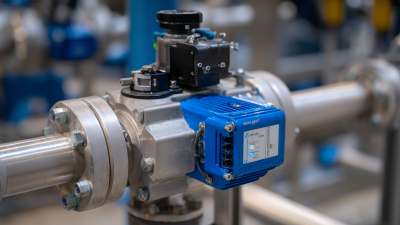
A motorized valve actuator converts electrical energy into controlled valve movement. It opens, closes, or positions a valve without continuous manual force. Electric motors, gears, limit switches, and control circuits form its core structure. In water plants, factories, and energy facilities, the actuator receives a signal from a controller. It then adjusts flow, pressure, or isolation points with measured movement. Small errors matter. Incorrect torque settings can damage valve seats or leave a pipeline partly open.

Its role extends beyond convenience. The International Energy Agency reports that electric motor systems consume about 53% of global electricity. Efficient actuator selection can therefore influence plant energy use, especially where valves operate frequently. The International Society of Automation also emphasizes feedback, fail-safe behavior, and functional testing in automated process control. A reliable unit should match valve torque, duty cycle, enclosure rating, and ambient temperature. These details separate a practical manufacturer from a merely visible supplier.

China’s top ten manufacturers should be assessed through test records, traceable materials, control accuracy, and after-sales engineering support. MarketsandMarkets’ 2024 electric actuator research identifies industrial automation, water treatment, and power applications as important demand areas. However, market rankings can change by method and region. A catalog is not proof. Factory acceptance tests, documented calibration, and field experience provide stronger evidence. The uncomfortable point is simple: the cheapest actuator may create higher costs through downtime, manual intervention, or premature replacement.
Motorized Valve Actuators: Representative Output Torque Classes

Motorized valve actuators convert electrical energy into controlled rotary motion to open, close, or position valves. The torque range below reflects commonly available nominal sizing classes for quarter-turn valve actuation.

Note: Actual actuator selection depends on valve type, breakaway torque, operating pressure, temperature, duty cycle, control method, and the required safety factor. The values shown are representative technical torque classes, not market-share data.

Criteria for Ranking Chinese Actuator Manufacturers

China Top 10 Motorized Valve Actuator Manufacturers?

Ranking Chinese actuator manufacturers requires more than comparing factory size or online visibility. Practical experience matters. Engineers should examine torque accuracy, control stability, enclosure protection, and operating temperature. A reliable manufacturer should provide test records for each production batch. Clear drawings, wiring diagrams, and maintenance instructions also show technical maturity. During factory assessments, inspect assembly areas, calibration equipment, and component traceability. A polished showroom proves little.

Tips: Request sample units and independent performance data. Check whether rated torque matches real valve resistance. Ask for failure rates, spare-part availability, and response times. Certification should fit the target market, not merely decorate a brochure. Verify the certificate number and issuing body. Small details matter.

Ranking should also consider customization and after-sales capability. Experienced manufacturers can adapt mounting dimensions, feedback signals, control protocols, and emergency functions without weakening reliability. Stable suppliers usually maintain documented quality procedures and trained technicians. However, no ranking is perfectly objective. Price, delivery speed, and technical support may change the final order. A low quotation can hide weaker seals or limited testing. I have seen impressive specifications fail during repeated cycling tests. That uncomfortable finding deserves attention. Factory capacity is useful, but consistent field performance matters more. Feedback from installers and long-term users can reveal problems that laboratory reports miss.

Profiles of China’s Top 10 Motorized Valve Actuator Manufacturers

China’s top 10 motorized valve actuator manufacturers serve water treatment, HVAC, power, chemical, and process automation projects. Their strengths differ, so “top” should reflect application fit, not advertising volume. The profiles below consider engineering depth, production control, testing, export experience, and after-sales reliability.

One manufacturer specializes in compact quarter-turn actuators for water networks. Another builds high-torque units for large butterfly valves. A third develops modulating actuators with accurate position feedback. A fourth focuses on explosion-protected designs for regulated industrial environments.

A fifth supplies electric actuators for heating and ventilation systems. Its quiet operation matters. A sixth combines actuators with intelligent controls, remote diagnostics, and fieldbus communication. A seventh emphasizes stainless-steel housings for coastal or humid installations. A reliable seal makes a difference.

An eighth supports customized torque, voltage, mounting, and control requirements. A ninth concentrates on cost-efficient models for OEM equipment builders. The tenth provides heavy-duty solutions for demanding process lines, where duty cycles and thermal protection require careful validation.

Experienced buyers should examine test records, not only product photographs. Useful checks include torque verification, enclosure protection testing, limit-switch accuracy, insulation performance, and repeated cycling.

ISO-based quality systems can support consistency, but certification alone proves little about every production batch. Request sample reports and traceability documents. I would also verify spare-part availability, response times, and commissioning support before signing a contract.

Some catalogs appear complete, yet technical drawings may omit installation limits. That deserves scrutiny. Selecting a manufacturer becomes safer when engineering evidence matches the valve, environment, control method, and maintenance plan.

Comparison of Actuator Technologies, Performance, and Applications

China Top 10 Motorized Valve Actuator Manufacturers?

Comparing actuator technologies requires more than price or catalogue torque. Electric actuators suit clean, stable power and precise positioning. Pneumatic actuators respond quickly, making them useful for emergency isolation. Hydraulic units deliver high torque in compact spaces, but they need leak control and trained maintenance. The Global Market Insights Industrial Valves Market report identifies automation and process expansion as major demand drivers through 2032. That trend increases pressure on actuator reliability.

Performance depends on duty cycle, control accuracy, enclosure protection, and fail-safe behavior. IEC 60529 ratings help engineers assess dust and water resistance. ISO 5211 supports valve-actuator mounting compatibility. A 2024 MarketsandMarkets report also links smart valve growth with predictive maintenance and industrial digitalization. Yet a networked actuator is not automatically better. Poor signal quality can create delayed movement, false alarms, or unsafe assumptions. My field-based view is simple: compare measured response time, not impressive screen features. Some published torque figures also ignore temperature, cycling frequency, and gearbox wear.

Tips: Request test records under the actual medium and temperature. Check manual override effort. Verify spare-part availability for at least five years. For the top ten Chinese manufacturers, compare traceable factory testing, calibration records, ingress protection, and application references. A cheaper actuator may become expensive after repeated shutdowns. That lesson is easy to miss.

China Top 10 Motorized Valve Actuator Manufacturers? – Comparison of Actuator Technologies, Performance, and Applications
Anonymized comparison of ten representative Chinese actuator manufacturer profiles. The entries are organized by commonly available product capabilities rather than disclosed company or brand names.
No. Anonymous Manufacturer Profile Primary Actuator Technology Typical Output Range Typical Operating Speed Protection and Enclosure Control and Feedback Valve Compatibility Typical Applications Key Performance Characteristics
1 Profile A
Industrial General-Purpose
Electric quarter-turn actuator with worm-gear transmission 50–4,000 N·m 10–120 seconds per 90° IP65–IP68; weather-resistant aluminum or cast enclosure On/off, floating-point, 4–20 mA modulating control; optional limit switches Butterfly valves, ball valves, plug valves Water treatment, HVAC, general process piping, irrigation Compact construction, high self-locking capability, simple installation, and broad valve compatibility
2 Profile B
Modulating Control
Digital modulating electric quarter-turn actuator 100–2,500 N·m 15–180 seconds per 90° IP67–IP68; corrosion-resistant coating available 4–20 mA, 0–10 V, fieldbus options; electronic position calibration Control butterfly valves, characterized ball valves, dampers Cooling systems, flow regulation, chemical dosing, energy management Accurate positioning, programmable end limits, reduced overshoot, and diagnostic functions
3 Profile C
High-Torque
Heavy-duty quarter-turn actuator with multi-stage gearbox 2,000–20,000 N·m 30–240 seconds per 90° IP67–IP68; reinforced housing for outdoor service Local control, remote control, torque switches, position transmitter Large butterfly valves, ball valves, eccentric plug valves Power plants, district heating, large-scale water infrastructure, mining High starting torque, robust gear reduction, and suitability for large valve sizes
4 Profile D
Multi-Turn
Multi-turn electric actuator with thrust unit or linear gearbox 20–3,000 N·m; thrust up to approximately 100 kN with suitable gearbox 12–60 revolutions per minute IP65–IP68; indoor and outdoor configurations Open/close, inching, modulating service; torque and travel limit control Gate valves, globe valves, sluice gates, rising-stem valves Water networks, steam systems, oil and gas pipelines, industrial utilities Controlled linear valve travel, adjustable thrust output, and reliable limit protection
5 Profile E
Explosion-Protected
Explosion-protected electric quarter-turn and multi-turn actuators 100–4,000 N·m quarter-turn; up to approximately 3,000 N·m multi-turn 15–180 seconds per 90°; 12–60 rpm multi-turn Commonly IP66–IP68; certified hazardous-area enclosure options On/off, modulating, 4–20 mA, remote status indication, emergency manual override Ball, butterfly, plug, gate, and globe valves Petrochemical plants, gas facilities, fuel terminals, chemical processing Designed for hazardous locations, enhanced sealing, flame-resistant construction, and fail-safe accessories
6 Profile F
Compact Low-Voltage
Compact electric actuator using low-voltage DC motor technology 10–500 N·m 8–90 seconds per 90° IP54–IP67 depending on housing and installation conditions 24 VDC or 12 VDC, relay control, analog feedback, battery backup options Small butterfly valves, ball valves, dampers, HVAC valves Building automation, solar thermal systems, mobile equipment, OEM skids Low power consumption, easy wiring, compact dimensions, and rapid response
7 Profile G
Linear Electric
Electric linear actuator with screw, ball-screw, or thrust mechanism 1–100 kN thrust 1–20 mm/s linear travel IP54–IP67; sealed versions for outdoor service On/off, proportional positioning, 4–20 mA, potentiometer or encoder feedback Linear control valves, dampers, louvers, slide gates Boiler systems, combustion control, ventilation, material-handling equipment Direct linear motion, controllable travel, high positioning repeatability, and flexible mounting
8 Profile H
Fail-Safe Systems
Electric actuator with spring-return or battery-backed emergency operation 20–1,500 N·m Typically 5–30 seconds for emergency travel IP65–IP68; optional fire-resistant or high-temperature accessories Normal electric control plus emergency close or emergency open function Fire-water valves, gas shutoff valves, ventilation dampers, process isolation valves Fire protection, gas systems, safety isolation, critical HVAC applications Maintains a defined safety position during power loss, with rapid emergency response
9 Profile I
Smart Networked
Microprocessor-based electric actuator with digital communication 50–3,000 N·m 10–180 seconds per 90° IP67–IP68; industrial EMC protection options Modbus RTU, CAN, Profibus-compatible options, 4–20 mA, remote diagnostics Process valves, water-control valves, packaged skid valves Smart water plants, factory automation, remote pipeline stations, process industries Condition monitoring, event logging, configuration via software, and improved maintenance visibility
10 Profile J
High-Temperature Service
Electric actuator with heat-resistant construction and extended-duty motor 100–5,000 N·m 20–240 seconds per 90° IP65–IP68; high-temperature cable glands and thermal protection available On/off or modulating control; torque limiter, thermal switch, and position feedback Steam, hot-water, flue-gas, damper, and high-temperature process valves Boilers, metallurgy, district heating, cement, and thermal-process equipment Improved thermal endurance, overload protection, durable seals, and suitability for demanding duty cycles
Note: Output torque, thrust, speed, ingress protection, and communication options are representative ranges commonly specified for industrial motorized valve actuators. Actual performance depends on actuator size, power supply, duty cycle, valve torque, ambient temperature, certification requirements, and the selected configuration.

Key Factors for Selecting a Chinese Actuator Supplier

China Top 10 Motorized Valve Actuator Manufacturers: Key Factors for Selecting a Chinese Actuator Supplier

Choosing among China’s leading motorized valve actuator manufacturers requires more than comparing prices. A supplier should explain torque calculations, duty cycles, control signals, and valve compatibility in clear technical language. Ask for test records covering insulation, ingress protection, limit switches, and endurance. A reliable factory can provide traceable serial numbers, inspection reports, and drawings before production begins. Request a sample actuator for fit testing. Small mismatches often appear only during installation.

Factory experience matters. Review the supplier’s production equipment, calibration procedures, engineering team, and export history. Confirm whether components are sourced consistently. Check how the factory manages changes in motors, gears, seals, and circuit boards. Ask for documented quality procedures rather than attractive promises. Independent inspections can reveal assembly problems that photographs hide. Communication matters too. Technical replies should be prompt, specific, and easy to verify. Vague answers deserve caution.

Do not select a supplier from a ranking alone. A high-output manufacturer may still lack experience with your valve type, environment, or control system. Consider temperature, corrosion, outdoor exposure, manual override needs, and maintenance access. I have seen projects focus heavily on unit cost, then pay more for wiring changes and delayed replacements. That mistake is easy to repeat. A written warranty, spare-parts plan, and realistic delivery schedule provide stronger protection than verbal confidence. Insist on a pilot order when the application is critical. Testing before bulk purchasing may feel slower, but it exposes weaknesses while correction remains affordable.