Please upgrade your web browser now. Internet Explorer 6 is no longer supported.>

Who Are the Top 10 Valve Vendors in China?

China’s valve market is shaped by a vast industrial base, demanding operating conditions, and buyers who compare more than purchase price. The World Bank’s World Development Indicators report China’s manufacturing value added at roughly 26% of GDP in 2023. That scale helps explain the breadth of demand, from compact stainless-steel valves on chemical lines to large-bore units serving water and energy infrastructure. Grand View Research’s Industrial Valves Market report tracks market size, product segments, and regional trends, offering useful context for comparing suppliers.

But market size alone does not identify the right partner. A reliable assessment of valve vendors also considers material traceability, pressure and temperature ratings, testing practices, delivery capacity, and after-sales support. One overlooked detail can matter: how clearly a vendor documents a valve’s service limits. Industry analyst Bob McIlvaine, founder of the McIlvaine Company, focuses on market and supplier dynamics across industrial sectors. A careful paraphrase of his market perspective is: “Match supplier capability to the application, not just the price.” This is a paraphrase, not a verified verbatim quotation.

The list that follows should be treated as a starting point, not a universal ranking. Company capabilities change, and public product claims do not replace technical review. Ask for current certificates. Check the test records. Then compare the shortlist against the actual process conditions. A little skepticism helps.
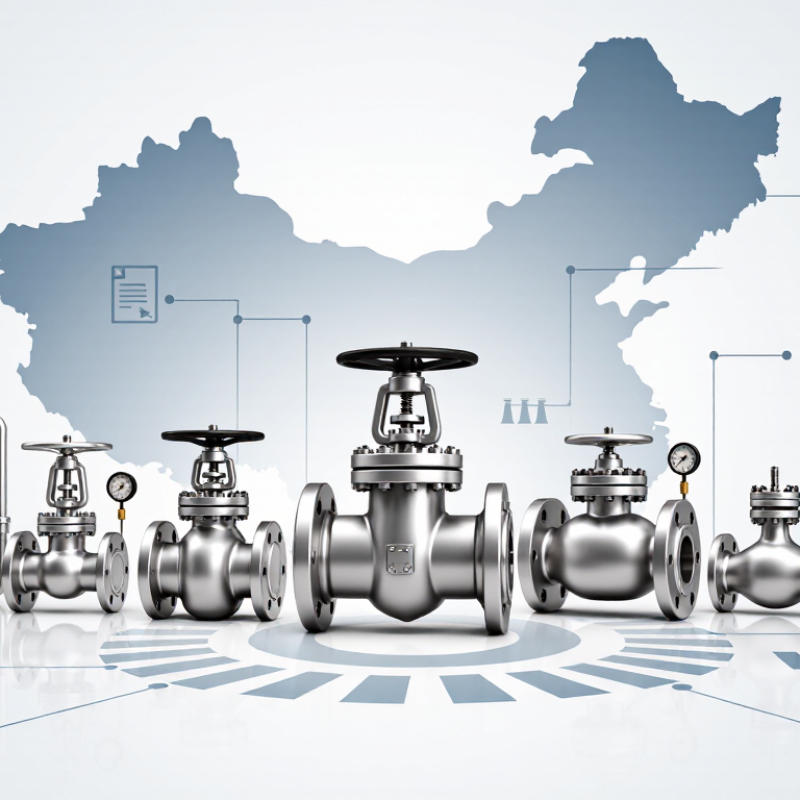
Who Are the Top 10 Valve Vendors in China?

Valve Types in China: ASME B16.34 Pressure Classes 150–2500

In China, valve selection should begin with service conditions, not a vendor ranking. ASME B16.34-2020 defines pressure-temperature ratings for applicable valves and materials. Its familiar classes are 150, 300, 400, 600, 900, 1500, and 2500. Class 150 does not mean a universal 150 psi limit; allowable pressure changes with material and temperature. That detail matters when comparing gate, globe, ball, and check valves across suppliers. The standard’s rating tables provide a more reliable basis than class numbers alone.

For procurement, record the medium, design temperature, pressure, end connection, and required material before comparing quotations. A Class 600 valve in one material may not match another at elevated temperature. Ask suppliers to identify the applicable B16.34 rating and provide traceable test and material documentation. Then check whether the proposed trim and body suit the actual duty. A neat datasheet can still leave gaps.

Tips: Compare pressure-temperature ratings at your operating temperature, not just nominal class. Verify documentation against the valve’s marking and purchase specification. ASME B16.34-2020 is the key technical reference.


ASME B16.34 Valve Pressure Classes 150–2500

Indicative maximum pressure ratings for ASTM A216 WCB carbon steel at 100°F (38°C), shown in psi.

Pressure ratings vary with material, temperature, and applicable standard requirements. These figures are not a ranking of valve vendors; confirm allowable ratings for the specific valve and service conditions.

Ranking the Top 10 Vendors by Revenue, Output, Exports, and API 6D Certification

A credible ranking of China’s leading valve vendors should compare four measurable signals: revenue, annual output, export value, and API 6D certification. Revenue figures should come from audited filings or clearly dated industry surveys; production claims need a stated period and unit. UN Comtrade’s HS 8481 trade series can help check export trends, but it groups many valve types together. It cannot identify a supplier’s pipeline-valve exports on its own. Small difference, big consequence.

API 6D status should be verified against the official license directory, including product scope and current validity. Certification is evidence of a defined quality system and product capability, not proof of higher output or stronger sales. For a fair comparison, report each vendor’s figures for the same year, separate domestic sales from exports, and label estimates clearly. Public data is uneven. Some rankings will remain provisional.

Tips: Check whether “output” means units, weight, or production capacity. Confirm export figures against customs data, then compare them with company disclosures. A spreadsheet helps; it does not fix weak source data. Also note that a high export total may reflect broader product categories, not API 6D pipeline valves.

Who Are the Top 10 Valve Vendors in China? - Ranking the Top 10 Vendors by Revenue, Output, Exports, and API 6D Certification

A reliable company-by-company ranking requires identifiable vendors and comparable, dated source records. Because vendor names and source records are not provided, figures and certification status are marked as unverified rather than estimated or invented.

Entry Revenue Annual Output Exports API 6D Certification Ranking Status
Anonymous entry 01 Not provided or independently verified Not provided or independently verified Not provided or independently verified Cannot verify without legal entity or certificate details Unranked
Anonymous entry 02 Not provided or independently verified Not provided or independently verified Not provided or independently verified Cannot verify without legal entity or certificate details Unranked
Anonymous entry 03 Not provided or independently verified Not provided or independently verified Not provided or independently verified Cannot verify without legal entity or certificate details Unranked
Anonymous entry 04 Not provided or independently verified Not provided or independently verified Not provided or independently verified Cannot verify without legal entity or certificate details Unranked
Anonymous entry 05 Not provided or independently verified Not provided or independently verified Not provided or independently verified Cannot verify without legal entity or certificate details Unranked
Anonymous entry 06 Not provided or independently verified Not provided or independently verified Not provided or independently verified Cannot verify without legal entity or certificate details Unranked
Anonymous entry 07 Not provided or independently verified Not provided or independently verified Not provided or independently verified Cannot verify without legal entity or certificate details Unranked
Anonymous entry 08 Not provided or independently verified Not provided or independently verified Not provided or independently verified Cannot verify without legal entity or certificate details Unranked
Anonymous entry 09 Not provided or independently verified Not provided or independently verified Not provided or independently verified Cannot verify without legal entity or certificate details Unranked
Anonymous entry 10 Not provided or independently verified Not provided or independently verified Not provided or independently verified Cannot verify without legal entity or certificate details Unranked

Note: Revenue, production capacity, export value, and API 6D status should be compared for the same reporting period and verified against company filings, customs or trade records, and the applicable certification directory.

Top 10 Chinese Valve Vendors: Company Profiles and Product Specialties

A useful profile of ten leading Chinese valve vendors should compare engineering strengths, not rely on a ranking alone. Some specialize in gate and globe valves for pipelines, where pressure ratings and seat tightness matter. Others focus on ball valves for quick isolation, or butterfly valves for large water lines. Control-valve makers typically emphasize actuator compatibility and stable flow adjustment. Check-valve suppliers are judged by closing response and resistance to water hammer. Fit matters.

Other vendors concentrate on high-pressure service, corrosion-resistant alloys, or compact valves for building systems. A company’s product catalogue may look broad, but its strongest range is often narrower. Details matter. Buyers should check material certificates, test procedures, stated operating limits, and the availability of replacement parts. Factory visits and sample inspections can reveal how consistently machining and assembly are handled. These checks are more useful than marketing claims.

For a fair comparison, review each vendor’s application history and technical support alongside its specialties. A valve designed for clean water may not suit abrasive slurry or hot process fluid. Published specifications also deserve careful reading; small differences in temperature limits can change the choice. Any “top ten” list should therefore explain its criteria, since sales scale, product depth, and export experience do not measure the same thing.

Technical Comparison: ISO 5208 Leakage Tests and Pressure-Temperature Ratings

Who Are the Top 10 Valve Vendors in China?

Technical Comparison: ISO 5208 Leakage Tests and Pressure-Temperature Ratings

When comparing valve suppliers, ISO 5208 results offer a useful starting point. The standard describes pressure testing and leakage-rate criteria for industrial valves. Ask which leakage rate was specified, what medium was used, and whether the test covered the assembled valve. A reported pass alone tells you little. Test records should identify the valve size, pressure, duration, and acceptance criterion. Small details matter.

Pressure-temperature ratings answer a different question. They indicate allowable working pressure as temperature changes, based on the valve’s materials and design. A valve rated for a certain pressure at room temperature may have a lower limit when hot. Compare the rating table with your actual fluid, temperature range, and connection type. Do not treat the body’s maximum pressure as a universal operating limit. That shortcut can mislead.

For a fair vendor comparison, request both ISO 5208 test documentation and the applicable pressure-temperature chart. Check that the documents match the offered configuration, including trim and sealing materials. If two quotations show different leakage criteria, their prices are not directly comparable. I would also verify how production tests are recorded; paperwork can be neat while an important detail is missing. The less glamorous checks often matter most.

Supplier Selection: Matching Materials and Valve Designs to Service Conditions

When comparing valve vendors in China, start with the service conditions, not a catalog photo. Record the fluid, operating pressure, temperature range, flow direction, and cycling frequency. A valve handling clean water may need different materials from one exposed to chloride-rich seawater or abrasive slurry. Small details matter.

For seawater, ask how the body, trim, and fasteners resist corrosion; for slurry, examine wear surfaces and whether the design can tolerate suspended solids. Stainless steel is not a universal answer, and an attractive alloy name alone proves little.

Then match the valve design to the job. Gate valves suit many isolation duties, while globe valves offer more controlled throttling; ball valves can provide quick shutoff, but seat materials must suit the temperature and fluid. For hot steam, verify pressure-temperature ratings and packing limits. For frequent operation, check actuator torque and cycle data.

Ask suppliers for material certificates, inspection records, pressure-test reports, and clear limits of use. Compare the documents against the actual specification, not just the quotation. On paper, this can look settled. It often isn’t. A small mismatch in seat material or flow conditions may only become obvious after installation, so sample testing or a technical review can be worthwhile. Field checks help.