Choosing the top pneumatic valve manufacturers worldwide requires more than comparing brand visibility. It demands evidence from factories, test benches, and demanding field conditions. A pneumatic valve must control compressed air accurately, repeatedly, and safely. Small failures can stop a packaging line, leak energy, or damage an actuator.
Industry estimates show a growing market. Grand View Research valued the global pneumatic valves market at approximately USD 11 billion in 2023. Its report also projects continued growth through 2030, supported by factory automation and process industries. MarketsandMarkets identifies manufacturing, food processing, pharmaceuticals, and automotive production as important demand sectors. However, market figures vary between reports. Definitions and regional coverage are not always consistent.
As pneumatic-control researcher Peter Rohner observed, “Pneumatic systems reward simplicity, but punish careless design.” That principle remains practical today. Strong manufacturers combine reliable seals, corrosion-resistant bodies, stable pressure control, and documented lifecycle testing. They also provide traceable quality systems, technical drawings, spare parts, and responsive support. ISO 4414 guidance is useful when evaluating air preparation, installation, and operational safety.
This guide compares leading manufacturers through product range, engineering depth, certifications, delivery capability, and real-world reputation. It also considers whether published performance data reflects actual operating conditions. A valve tested in a clean laboratory may behave differently beside oil mist, vibration, or humid air. No ranking is perfect. Supplier availability can change, and regional service may matter more than global fame. That limitation deserves attention before any purchasing decision.
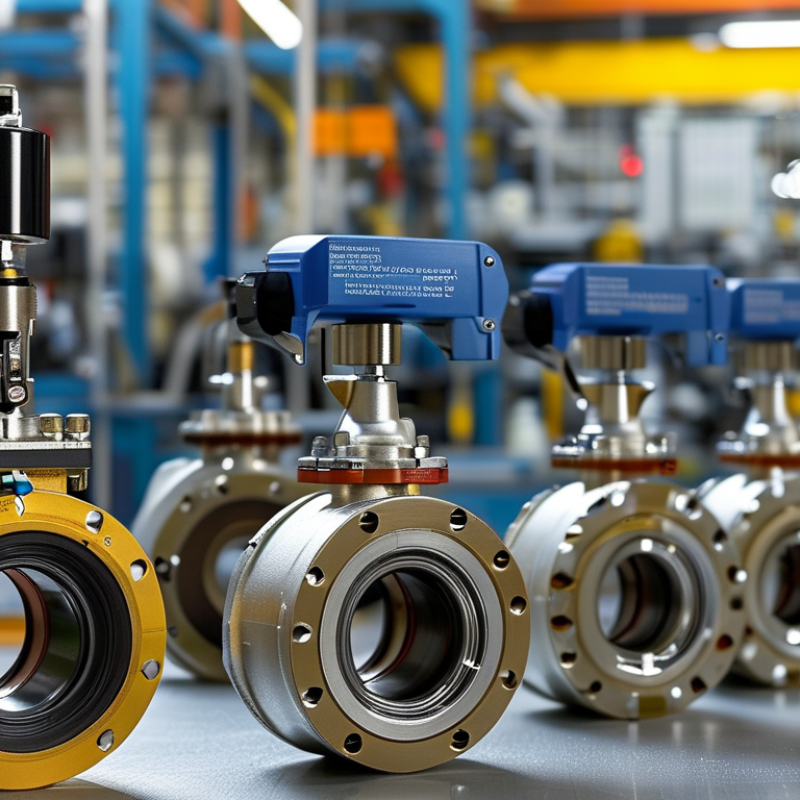
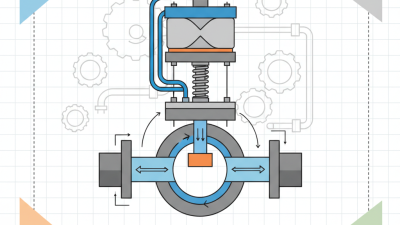
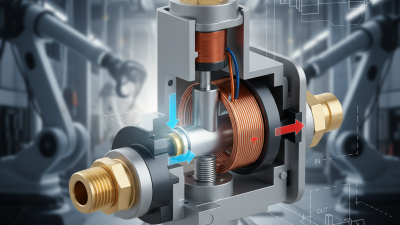
Pneumatic valves control compressed air and direct it toward mechanical actuators. They work as switching points in an air circuit. When an internal spool or poppet moves, it connects the supply port to an outlet. Another passage releases air through the exhaust port. A solenoid, manual lever, or pilot signal can trigger this movement. The actuator then converts air pressure into linear or rotary motion.
A common directional valve uses three or five ports. A 3/2 valve can operate a single-acting cylinder. A 5/2 valve usually controls a double-acting cylinder. In a workshop, tubing size and exhaust flow often affect speed more than expected. A regulator may maintain air near 6 bar, but pressure can drop during several simultaneous cycles. Filters remove moisture and particles, while silencers reduce exhaust noise. Small leaks still matter.
Choosing a pneumatic valve requires practical checking. The required pressure, flow rate, response time, temperature, and seal material should match the application. Dirty air can cause sticking. Excessive flow can create harsh cylinder movement. A clean schematic is not enough. Real systems need leak testing, cycle observation, and periodic inspection. I have found that installation assumptions are often less reliable than measured behavior. Even a correctly rated valve may perform poorly with narrow tubing or unstable air supply.
A practical comparison of common pneumatic valve types, operating principles, specifications, and industrial applications
| Valve Type | How It Works | Typical Number of Ports / Positions | Common Actuation Method | Typical Operating Pressure | Typical Flow-Path Function | Common Applications | Key Selection Considerations |
|---|---|---|---|---|---|---|---|
| 2/2-Way Directional Valve | Opens or closes a single flow path. The actuator moves a valve element between the normally closed or normally open position. | 2 ports / 2 positions | Solenoid, pneumatic pilot, manual, or mechanical actuator | Depends on design; compressed-air control systems commonly operate around 2–10 bar | On/off isolation or air admission | Air supply shutoff, blow-off circuits, simple clamping, and air-saving systems | Port size, flow coefficient, response time, normally open or normally closed configuration, and sealing material |
| 3/2-Way Directional Valve | Connects one common port to either a pressure port or an exhaust port. It is frequently used to control single-acting actuators. | 3 ports / 2 positions | Solenoid, pneumatic pilot, pushbutton, roller, or lever | Commonly used within approximately 2–10 bar in industrial pneumatic systems | Pressurizes and exhausts one actuator chamber | Single-acting cylinders, pneumatic grippers, ejectors, and pilot control circuits | Exhaust capacity, spring-return behavior, port arrangement, and compatibility with the actuator |
| 4/2-Way Directional Valve | Alternates pressure and exhaust connections between two actuator ports, reversing the movement of a double-acting actuator. | 4 ports / 2 positions | Solenoid, pneumatic pilot, or manual actuator | Commonly applied in systems operating around 2–10 bar | Controls forward and reverse actuator movement | Double-acting cylinders, lifting equipment, and basic motion-control circuits | Flow capacity, switching force, installation orientation, and whether spring return is required |
| 5/2-Way Directional Valve | Uses one pressure port, two working ports, and two exhaust ports to alternate air supply to a double-acting actuator. | 5 ports / 2 positions | Single-solenoid spring return, double-solenoid, or pneumatic pilot | Typically selected for compressed-air systems operating around 2–10 bar | Extends or retracts a double-acting cylinder | Factory automation, packaging machinery, assembly equipment, and material handling | Switching reliability, exhaust arrangement, coil voltage, flow rate, and manual override design |
| 5/3-Way Directional Valve | Provides three spool positions, allowing the actuator to be pressurized, exhausted, or held depending on the center-position design. | 5 ports / 3 positions | Double-solenoid or pneumatic pilot with spring-centered spool | Commonly used in systems operating around 2–10 bar | Motion control with exhaust-center, pressure-center, or closed-center behavior | Intermediate positioning, machine safety functions, and controlled stopping | Center condition, residual pressure, stopping accuracy, and safe-state requirements |
| Proportional Pneumatic Valve | Adjusts air pressure or flow continuously in response to an electrical command rather than switching only between fixed states. | Variable output | Electronic command signal, commonly 0–10 V or 4–20 mA | Application-dependent; the permissible range is defined by the valve and control system | Modulates pressure, flow, or actuator speed | Pressure regulation, tension control, robotics, process control, and precision motion | Linearity, hysteresis, repeatability, signal type, feedback, and response time |
| Check Valve | Permits airflow in one direction and automatically blocks reverse flow using a poppet, ball, diaphragm, or similar element. | 2 ports / 1 direction | Automatic differential-pressure operation | Selected according to system pressure and the valve’s rated maximum pressure | One-way flow protection | Backflow prevention, pressure-holding circuits, and actuator isolation | Cracking pressure, reverse leakage, flow direction, response time, and pressure drop |
| Quick Exhaust Valve | Exhausts air directly near the actuator instead of routing it back through the directional valve, reducing exhaust resistance. | 3 ports | Automatic pressure differential | Usually installed within the operating range of the connected pneumatic circuit | Rapidly vents actuator air to atmosphere | High-speed cylinders, presses, pick-and-place equipment, and repetitive automation | Exhaust capacity, silencing, mounting position, contamination resistance, and noise level |
| Pressure Regulator | Reduces and maintains downstream pressure at a set value despite changes in upstream pressure or downstream demand. | 2 ports | Spring-loaded diaphragm or piston with manual or electronic adjustment | Input and regulated ranges vary by model; compressed-air regulators commonly handle industrial supply pressures | Pressure reduction and stabilization | Point-of-use air preparation, actuator force control, and instrument-air protection | Regulation accuracy, flow rate, relieving or non-relieving design, gauge connection, and filtration needs |
| Flow Control Valve | Restricts airflow through an adjustable orifice. A one-way flow-control version permits free flow in one direction and metered flow in the other. | 2 ports | Manual needle adjustment or electronic control | Suitable pressure range depends on construction and sealing materials | Controls actuator extension or retraction speed | Cylinder speed adjustment, cushioning, sequencing, and synchronized motion | Meter-in versus meter-out installation, adjustment resolution, flow capacity, and locking mechanism |
| Air-Operated Process Valve | Compressed air moves a diaphragm, piston, or rotary actuator to open or close a process-fluid valve. | Application-specific | Pneumatic spring-return or double-acting actuator | Actuator supply is commonly within industrial compressed-air ranges; process pressure is valve-specific | Controls liquids, gases, steam, or other process media | Water treatment, chemical processing, food production, utilities, and general process automation | Process medium, temperature, pressure rating, fail-open or fail-closed action, and body material |
| Rotary Pneumatic Actuator Valve | Converts compressed-air energy into rotary motion to operate quarter-turn valves such as ball or butterfly valves. | Quarter-turn operation | Rack-and-pinion or scotch-yoke pneumatic actuator | Actuator supply is commonly around 2–8 bar, subject to the specific design | Rotates a valve stem through approximately 90 degrees | Process isolation, flow diversion, tank systems, and pipeline automation | Torque requirement, breakaway torque, duty cycle, operating temperature, and emergency position |
| Vacuum Valve | Controls or isolates airflow in a vacuum circuit, often using a diaphragm, poppet, or spool mechanism designed for low absolute pressure. | Application-specific | Solenoid, pneumatic pilot, or mechanical actuation | Specified by vacuum level and allowable pressure differential rather than supply pressure alone | Vacuum generation, isolation, release, or switching | Vacuum lifting, packaging, pick-and-place systems, and material handling | Leak rate, vacuum compatibility, response time, port size, and contamination control |
Note: Pressure ranges and performance values are typical engineering references, not universal ratings. Always verify the manufacturer’s technical datasheet, applicable standards, media compatibility, temperature limits, and safety requirements before selection.


©Copyright 2020 Gosco Valves. All rights reserved.