Please upgrade your web browser now. Internet Explorer 6 is no longer supported.>

China Top Spring Return Actuator Manufacturers?

Selecting a reliable Chinese spring return actuator manufacturer requires more than comparing prices or catalog torque figures. These devices must drive a valve reliably, then return it to a defined safe position when air or power fails. In real installations, that means checking spring torque across the full stroke, not just at the end position. Also inspect the actuator’s mounting interface, enclosure rating, cycle-life evidence, and documented testing.

Market reports offer useful context, but not a ready-made supplier ranking. Grand View Research’s Industrial Valves Market report valued the global market at about USD 76.5 billion in 2023 and projected continued growth through 2030. IMARC Group’s industrial-valve analysis also tracks expanding demand across process industries. These estimates cover broad valve categories; they do not isolate spring return actuator sales or verify individual factories. That distinction matters. A large market is not proof of consistent product quality.

For this guide, manufacturers should be assessed through traceable specifications, factory quality controls, material options, and responsive engineering support. Ask for torque tables, pressure limits, cycle-test conditions, and inspection records. Where possible, compare drawings with the actual mounting arrangement on your valve. ISO 5211 compatibility can help, but it does not replace application checks. Small details matter. A spring package sized for one pressure range may not suit another. Supplier claims deserve verification, and public information is sometimes incomplete. The comparisons ahead therefore focus on evidence, not promotional rankings, while recognizing that suitability depends on the operating conditions at each site.

China Top Spring Return Actuator Manufacturers?

What Is a Spring Return Actuator and How Does It Work?

China Top Spring Return Actuator Manufacturers?

What Is a Spring Return Actuator and How Does It Work?

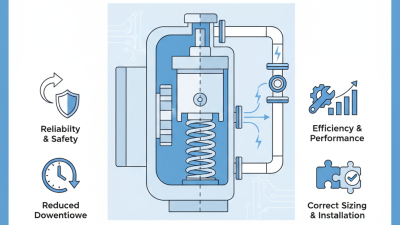
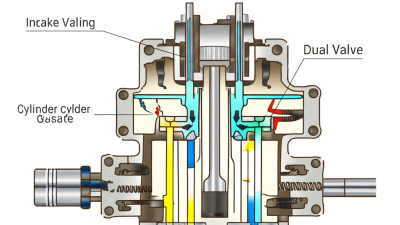
A spring return actuator moves a valve or damper, then returns it when power fails. An electric motor compresses or winds an internal spring during normal operation. When electricity stops, stored spring energy drives the shaft to its preset safe position. That position may be normally open or normally closed. The choice depends on smoke control, ventilation, heating, or process safety requirements.

The mechanism sounds simple. It is not always simple in practice. Engineers must match torque, shaft size, rotation angle, operating temperature, and cycle frequency. A damper with dirt buildup may require far more starting torque than laboratory testing suggests. During commissioning, installers should verify the actual fail position, not trust the wiring label alone. Manual override systems also need careful inspection.

This component matters because buildings consume about 30% of global final energy, according to the International Energy Agency’s Buildings 2023 report. The U.S. Department of Energy also identifies HVAC as a major commercial building energy load, often near 40%. Accurate actuator control can reduce unnecessary airflow and heating demand. Chinese manufacturers increasingly provide torque curves, ingress protection ratings, and endurance-test records. Still, documentation quality varies. Buyers should request independent test evidence, clear spring-return timing, and service instructions before comparing prices.

Key Types and Specifications of Spring Return Actuators

When evaluating China’s top spring return actuator manufacturers, begin with actuator type, not catalog ranking. Electric spring return models suit HVAC dampers and valves requiring automatic fail-safe positioning. Pneumatic versions provide rapid movement but need clean, stable air. Common configurations include normally open, normally closed, and adjustable fail positions. The right choice depends on system risk.

Key specifications include torque, operating angle, voltage, spring return time, duty cycle, and protection rating. For rotary dampers, buyers should verify the actual running torque, not only the advertised maximum. A practical safety margin of 20–30% helps manage friction, aging, and cold starts. IP54 may suit protected plant rooms, while outdoor installations often require higher ingress protection. Manual override, auxiliary switches, thermal protection, and position feedback also deserve attention.

The International Energy Agency reports that buildings consume about 30% of global final energy, making reliable control hardware increasingly important. Recent HVAC controls market reports also identify building automation and energy efficiency as major growth drivers. Yet specifications can remain vague. A low price is not proof of value. Ask for spring-cycle testing, torque curves, wiring diagrams, and traceable inspection records. I would also question unverified claims about millions of cycles. A factory test at room temperature may not represent a humid rooftop or a freezing warehouse. Specification sheets should state tolerances clearly, even when the numbers look less impressive.

China’s Spring Return Actuator Manufacturing Landscape

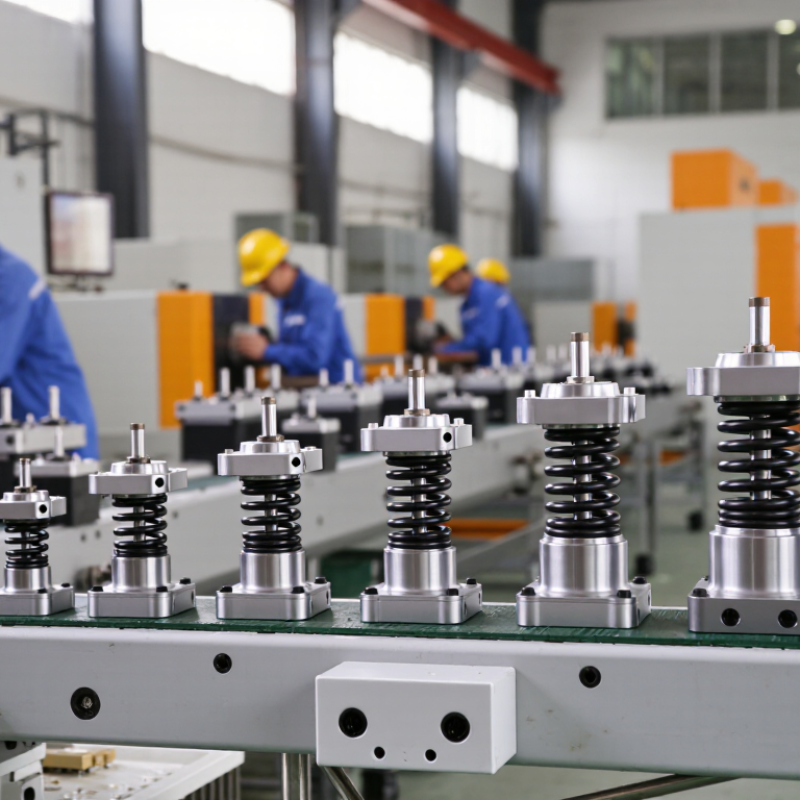
China’s spring return actuator manufacturing landscape has expanded from basic pneumatic assemblies to engineered units for process control, HVAC, fire protection, and industrial automation. Many factories now combine CNC machining, automated assembly, and pressure testing under one roof. This integration can shorten lead times, but it does not guarantee consistent quality.

Experienced buyers inspect more than catalog specifications. They review spring fatigue data, corrosion resistance, torque curves, and seal performance across temperature ranges. A reliable actuator should return to its safe position after air or power loss. Factory technicians often test this function repeatedly, sometimes under dusty or humid conditions. Small details matter, such as shaft alignment and fastener torque.

Manufacturing capability varies widely across China. Some suppliers offer custom mounting patterns, position feedback, and stainless-steel housings. Others remain focused on standardized models and larger production volumes. During audits, buyers should examine calibration records, incoming material checks, and batch traceability. These records reveal how seriously a supplier manages risk.

The market is competitive. That helps control pricing. It can also encourage rushed substitutions. A lower-cost spring or seal may pass a short test and fail later. No factory gets every detail right. Even strong suppliers need practical feedback from installation sites. Clear drawings, sample validation, and scheduled inspections usually prevent costly misunderstandings. Factory communication can still be imperfect, especially when technical terms are translated too literally.

Spring-return actuators are commonly manufactured across these nominal torque classes. Lower torque models are typically used for HVAC dampers and small valves, while higher torque classes are applied to larger valves and industrial flow-control systems. Actual specifications vary by design, operating pressure, safety position, enclosure rating, and control requirements.

How to Evaluate Chinese Spring Return Actuator Manufacturers

Evaluating Chinese spring return actuator manufacturers requires more than comparing prices. Check engineering evidence first. Ask for torque curves, spring-end torque, cycle-life results, and fail-safe response times. Confirm compatibility with ISO 5211 mounting dimensions and relevant valve actuator standards. A reliable supplier should provide material certificates, serial-number traceability, and factory acceptance test records. The U.S. Department of Energy reports that compressed-air systems can lose 20–30% of their air through leaks. For pneumatic actuators, this makes seal quality and leakage testing commercially important.

Tips: Request one production sample, not only a catalog unit. Test it under low and high air pressure. Record closing time, output torque, noise, and temperature rise. Ask who investigates failures after delivery. A vague answer matters.

Review the manufacturer’s production experience carefully. Inspect machining controls, spring heat treatment, coating thickness, and final assembly checks. ISO 9001 certification helps, but it does not prove actuator performance. Independent testing is stronger evidence. Compare test methods, because “one million cycles” means little without load, pressure, temperature, and failure criteria. The International Energy Agency continues to identify motor-driven and compressed-air systems as major industrial energy users, so efficient operation affects total ownership cost. I would also examine spare-part availability and technical response times. A beautiful audit file can hide weak field support. That risk deserves a small pilot order before long-term purchasing.

China Top Spring Return Actuator Manufacturers? - How to Evaluate Chinese Spring Return Actuator Manufacturers

No. Evaluation Dimension Recommended Benchmark Evidence to Request Weight Scoring Guide
1 Application and Product Fit The actuator should be selected according to valve type, rotation angle, fail position, operating frequency, and required safety function. Completed technical questionnaire, valve interface drawing, operating sequence, and application-specific selection sheet. 15% 5 = Full application match; 3 = Minor adaptations; 1 = Generic recommendation only.
2 Torque and Safety Margin Published spring and pneumatic torque curves should cover the valve breakaway, running, and seating torque requirements. A project-defined engineering margin should be documented rather than assumed. Torque curves at the specified air pressure, spring-return direction, temperature, and duty cycle; calculation showing actuator-to-valve compatibility. 15% 5 = Verified curves and margin; 3 = Partial data; 1 = Nominal torque only.
3 Mechanical Construction Corrosion-resistant housing, accurately machined drive components, protected spring cartridges, reliable bearings, and a clearly defined mounting interface. Material specifications, exploded drawing, dimensional drawings, spring-module design, surface-treatment details, and sample inspection report. 10% 5 = Robust and traceable design; 3 = Acceptable standard construction; 1 = Limited documentation.
4 Environmental Protection The enclosure rating should match the installation environment. For outdoor or washdown applications, request a suitable IP rating under IEC 60529 and verify temperature and corrosion requirements. IP test report or certificate, operating-temperature range, humidity limits, corrosion-resistance information, and installation restrictions. 10% 5 = Application-specific verified protection; 3 = Standard rating only; 1 = No supporting evidence.
5 Fail-Safe Performance Spring-return action must reliably reach the specified fail-open or fail-closed position after loss of air or power, subject to the defined load and temperature conditions. Loss-of-supply test records, fail-position verification, cycle results, spring-module inspection procedure, and safety-function test plan. 15% 5 = Repeated documented testing; 3 = Basic functional test; 1 = Verbal assurance only.
6 Cycle Life and Reliability The supplier should state the tested cycle life, test conditions, maintenance requirements, and failure criteria. Cycle ratings should not be compared without matching load and operating conditions. Endurance-test report, sample size, load profile, air pressure, cycle speed, failure definition, and corrective-action records. 10% 5 = Independent or well-documented testing; 3 = Internal test data; 1 = No cycle evidence.
7 Quality Management and Traceability A documented quality system should control incoming materials, machining, assembly, calibration, final inspection, and nonconforming products. Quality certificate, process-control plan, inspection checklist, calibration records, serial-number system, and batch traceability procedure. 10% 5 = Auditable and traceable; 3 = Basic documented controls; 1 = Inconsistent records.
8 Standards and Compliance Documentation Documentation should identify applicable product, electrical, pressure-equipment, and environmental requirements for the destination market. Certificates must correspond to the actual model and configuration. Declarations, test reports, manuals, technical files, material declarations, and model-specific compliance documents. 10% 5 = Complete model-specific file; 3 = General certificates; 1 = Unverifiable claims.
9 Customization and Engineering Support The manufacturer should support mounting variations, spring combinations, travel adjustment, accessories, control options, and application-specific documentation without compromising validated performance. Engineering response time, drawings, prototype process, change-control procedure, and examples of customized configurations. 5% 5 = Fast, technically documented support; 3 = Standard customization; 1 = Limited engineering capability.
10 Delivery, Service, and Total Cost Evaluate total cost over the product life, including actuator price, accessories, testing, spare parts, lead time, warranty, training, and after-sales support. Formal quotation, production lead time, warranty terms, spare-parts list, service procedure, packaging specification, and referenceable delivery records. 10% 5 = Competitive total value and dependable support; 3 = Acceptable commercial offer; 1 = Unclear cost or service terms.
Suggested evaluation method: Rate each dimension from 1 to 5, multiply the rating by the listed weight, and compare the weighted totals. Confirm all safety-critical claims with model-specific test records and a representative sample before approval.

Leading Chinese Manufacturers and Their Product Strengths

China Top Spring Return Actuator Manufacturers?

China has become a major source of spring return actuators for HVAC, process control, and fire safety systems. Leading Chinese manufacturers often combine compact designs with flexible production capacity. Their product strengths include stable torque output, quick fail-safe movement, and customizable mounting patterns. Many factories support both standard and project-specific valve connections.

In practical inspections, housing quality matters. A strong aluminum body should show clean casting, even coating, and secure fasteners. Electrical terminals also need clear labeling. Small details can reveal larger quality habits.

Tips: Ask for torque curves, cycle-test records, and material certificates. Check performance under low voltage and repeated power loss. Request samples before approving large orders. A factory may promise broad compatibility, but real testing can expose limits. Do not judge an actuator by appearance alone.

Reliable suppliers usually maintain documented assembly procedures and traceable inspection points. Their stronger products may offer manual override features, adjustable switches, and corrosion-resistant components. Some manufacturers also provide custom wiring, feedback signals, and emergency operation options.

These features can reduce installation work on complex projects. However, specifications are not always comparable between suppliers. One manufacturer’s rated torque may use different testing conditions. This is easy to miss.

Buyers should review operating temperature, spring return time, enclosure protection, and expected service life. Factory communication is another useful measure. Clear technical answers often indicate stronger engineering support, though no supplier is perfect.