Global sourcing decisions increasingly depend on dependable actuation, not purchase price alone. A spring return valve can close or open automatically when instrument air or electrical power fails. That response protects equipment, limits product loss, and supports safer shutdown strategies.
Market evidence supports closer attention. Grand View Research estimates the global industrial valves market reached approximately USD 78 billion in 2023. Mordor Intelligence projects continued growth through 2030, driven by energy, water, chemical, and manufacturing investments. These reports do not isolate the spring return valve segment. That limitation matters. Still, they reveal expanding demand for reliable flow-control hardware across international projects.
Béla G. Lipták, a respected control-engineering author, stated, “The control valve is the final control element.” His point is simple. The valve must perform when the process needs it most. For global buyers, that means checking failure position, spring durability, actuator torque, cycle testing, corrosion protection, and documentation before comparing quotations. A low-cost valve can become expensive after shipping delays, mismatched interfaces, or unavailable repair kits. I have seen specifications overlook ambient temperature and mounting orientation. That is an avoidable weakness.
A well-selected spring return valve offers practical value in compact skids, pipelines, water treatment systems, and process plants. Buyers should request traceable materials, pressure-test records, ISO 5211 compatibility, and clear warranty terms. Supplier audits and sample testing add time. They also reduce uncertainty. Reliability is rarely proven by a brochure alone.
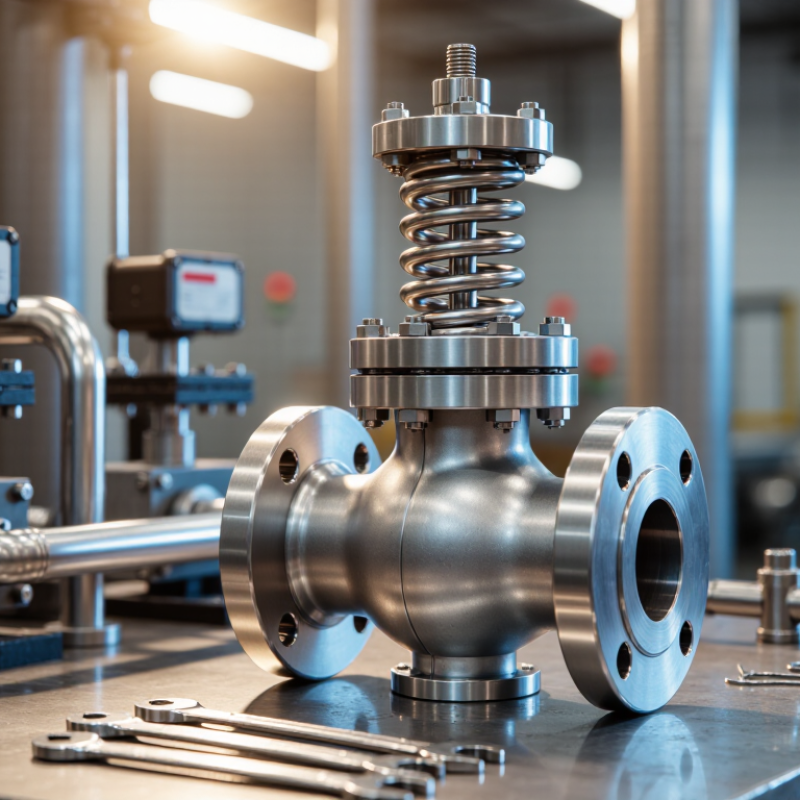
When a process valve must move to a safer position after air or power loss, a spring-return actuator offers a direct solution. Its spring stores mechanical energy during normal operation. If the control signal disappears, the spring drives the valve toward its configured safe position. That position may be closed, open, or occasionally a defined intermediate state. The choice depends on process hazards, not purchasing habit. In practical commissioning work, technicians often discover that “fail-safe” describes movement, not guaranteed protection. A stuck valve, wrong rotation, or undersized spring can still defeat the design.
Actuator selection should begin with the valve’s breakaway and running torque. Add a sensible safety margin for friction, temperature, pressure, and seat wear. Pneumatic spring-return units suit fast isolation and frequent cycling where reliable instrument air exists. Electric spring-return models can simplify installation where air systems are unavailable, but their response time and battery or capacitor support deserve scrutiny. Check the complete torque curve, not only the advertised maximum. The actuator must also match the valve rotation and required fail direction. A small mismatch can leave a butterfly valve partly open when operators expect isolation.
Global sourcing adds practical questions. Confirm material certificates, test records, enclosure ratings, spare spring availability, and clear installation instructions. Ask suppliers to document factory testing under realistic pressure conditions. During acceptance testing, remove the control signal and measure actual travel time. Repeat the test after several cycles. It may reveal sluggish motion or excessive impact. Engineers should also review local temperature, corrosion exposure, maintenance skills, and replacement lead times. The cheapest actuator can become expensive when one spring is difficult to source. Some specifications still overlook manual override behavior; that omission deserves correction before ordering.
A practical comparison of spring-return valve configurations, actuator options, and sourcing criteria for process, utility, and automated isolation applications.
| Selection Dimension | Pneumatic Spring-Return Actuator | Electric Spring-Return Actuator | Hydraulic Spring-Return Actuator | Recommended Evaluation | Global Sourcing Checkpoint |
|---|---|---|---|---|---|
| Fail-Safe Principle | Stored spring energy moves the valve to its defined safe position when instrument air is lost. | An internal spring or reserve mechanism returns the valve when electrical power is interrupted, depending on actuator design. | Stored spring energy returns the valve when hydraulic pressure is lost. | Confirm the safe position from the process hazard analysis. | Require documented fail-action testing and clear fail-open or fail-closed identification. |
| Typical Fail Position | Fail-closed for fuel, steam, and hazardous-media isolation; fail-open for cooling or emergency depressurization duties. | Fail-closed or fail-open according to the actuator and valve assembly configuration. | Commonly selected for high-force applications where a controlled return stroke is required. | Choose the position that places the system in the lowest-risk state. | Verify that the valve body, actuator, and accessories are supplied as one compatible assembly. |
| Energy Source | Compressed air, commonly supplied at approximately 3 to 8 bar(g), subject to the actuator specification. | Electrical power, commonly 24 V DC, 110 V AC, or 230 V AC, subject to the selected actuator. | Pressurized hydraulic fluid, often used where high force and compact equipment are required. | Compare available utility reliability, backup capacity, and maintenance requirements. | Check voltage, air quality, fluid compatibility, connection type, and local service capability. |
| Return Speed | Usually fast and adjustable with suitable flow-control accessories; actual time depends on valve size and air volume. | Typically slower than pneumatic operation, with timing affected by motor, gearing, and load. | Can provide rapid movement, but speed control and hydraulic circuit design are essential. | Specify maximum allowable closing or opening time to reduce surge and process risk. | Request measured cycle-time data at the intended operating conditions rather than nominal estimates. |
| Torque or Thrust Requirement | Available output torque depends on air pressure, actuator size, spring range, and stroke position. | Output torque depends on motor capacity, gearing, duty rating, and supply voltage. | Suitable for high torque or thrust demands, with output determined by pressure and piston area. | Size the actuator using the valve manufacturer’s breakaway, running, seating, and safety margins. | Obtain certified torque tables for the complete pressure, temperature, and media range. |
| Common Valve Pairing | Quarter-turn ball valves and butterfly valves; linear diaphragm or globe valves may use suitable linear actuators. | Quarter-turn valves and selected linear valves where electrical actuation is preferred. | Large quarter-turn valves and demanding process isolation duties. | Match actuator travel type, mounting pattern, shaft dimensions, and rotation direction. | Confirm dimensional drawings, mounting standards, shaft adapters, and replacement-part availability. |
| Control and Accessories | Solenoid valve, positioner, air filter-regulator, limit switches, and optional manual override. | Limit switches, position feedback, local controls, torque protection, and optional emergency override. | Directional control valves, accumulators, pressure controls, position feedback, and emergency controls. | Specify required feedback signals, ingress protection, hazardous-area needs, and control protocol. | Request wiring diagrams, pneumatic or hydraulic schematics, certificates, and spare-part lists. |
| Environmental Suitability | Well suited to explosive-risk areas when the complete assembly uses appropriately certified components. | Suitable when electrical infrastructure and enclosure protection meet site conditions. | Suitable for high-force applications, provided seals, fluid, and temperature limits are compatible. | Evaluate ambient temperature, humidity, corrosion, vibration, dust, and hazardous-area classification. | Check enclosure rating, material certificates, coating system, test reports, and regional compliance documents. |
| Maintenance Profile | Requires clean, dry air and inspection of seals, springs, tubing, and solenoid components. | Requires inspection of gears, motor, limit switches, seals, and electrical connections. | Requires hydraulic-fluid cleanliness and inspection of hoses, seals, cylinders, and pressure controls. | Compare total lifecycle cost rather than purchase price alone. | Confirm service intervals, repair procedures, spare spring availability, and technical support coverage. |
| Key Safety Advantage | Fail-safe movement is available without relying on continuous electrical power. | Can provide fail-safe operation where compressed air is unavailable, subject to actuator design. | High stored energy can support reliable emergency movement for large or high-load valves. | Use spring return when automatic movement to a predetermined safe state is required. | Require factory acceptance testing that demonstrates loss-of-energy behavior and final valve position. |
| Primary Limitation | Spring force reduces available output torque at some positions and requires correctly sized air supply. | Emergency return may be limited by battery, capacitor, spring mechanism, or load conditions. | More complex infrastructure can increase installation and maintenance demands. | Balance fail-safe performance, operating frequency, response time, and installation complexity. | Compare complete delivered cost, including actuator, accessories, testing, packaging, freight, and documentation. |
| Best-Fit Application | Process isolation, gas service, water treatment, chemical handling, and automated utility systems. | Remote installations, electrically controlled utilities, heating systems, and applications without plant air. | Large-diameter pipelines, high-pressure systems, offshore equipment, and heavy-duty process isolation. | Select the energy source that remains dependable during the most credible failure scenario. | Prioritize standardized specifications, traceability, interchangeable accessories, and after-sales support. |



©Copyright 2020 Gosco Valves. All rights reserved.